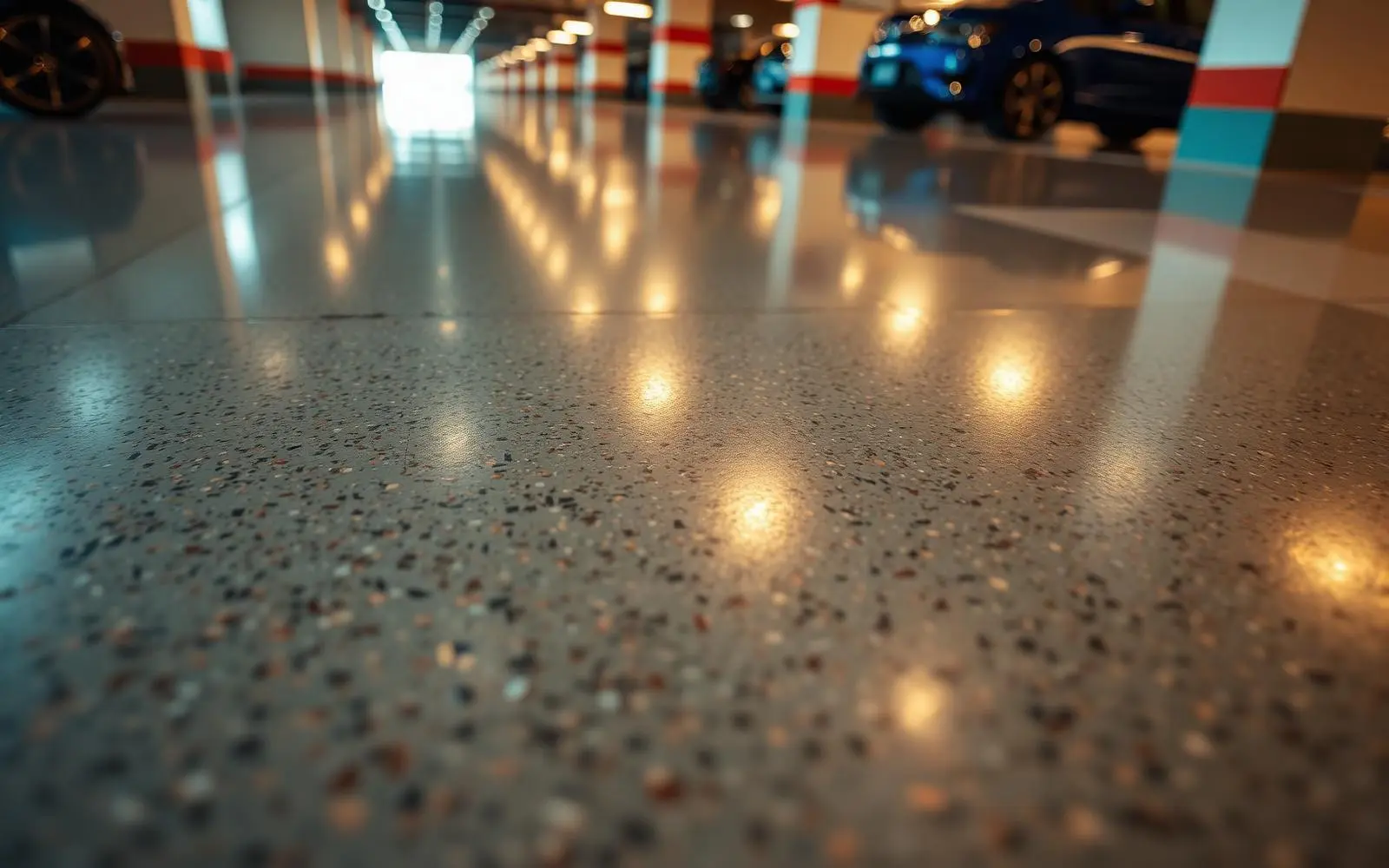
Polyurea / Polyaspartic
1-day install. 25-year UV stability. Premium flagship.
- Resin
- Aliphatic polyaspartic
- Build
- 20 mil topcoat
- Cure (drive)
- 24 hours
- UV stability
- 25 years, no yellowing
- Hot tire pickup
- Eliminated
- Warranty
- 15-year adhesion
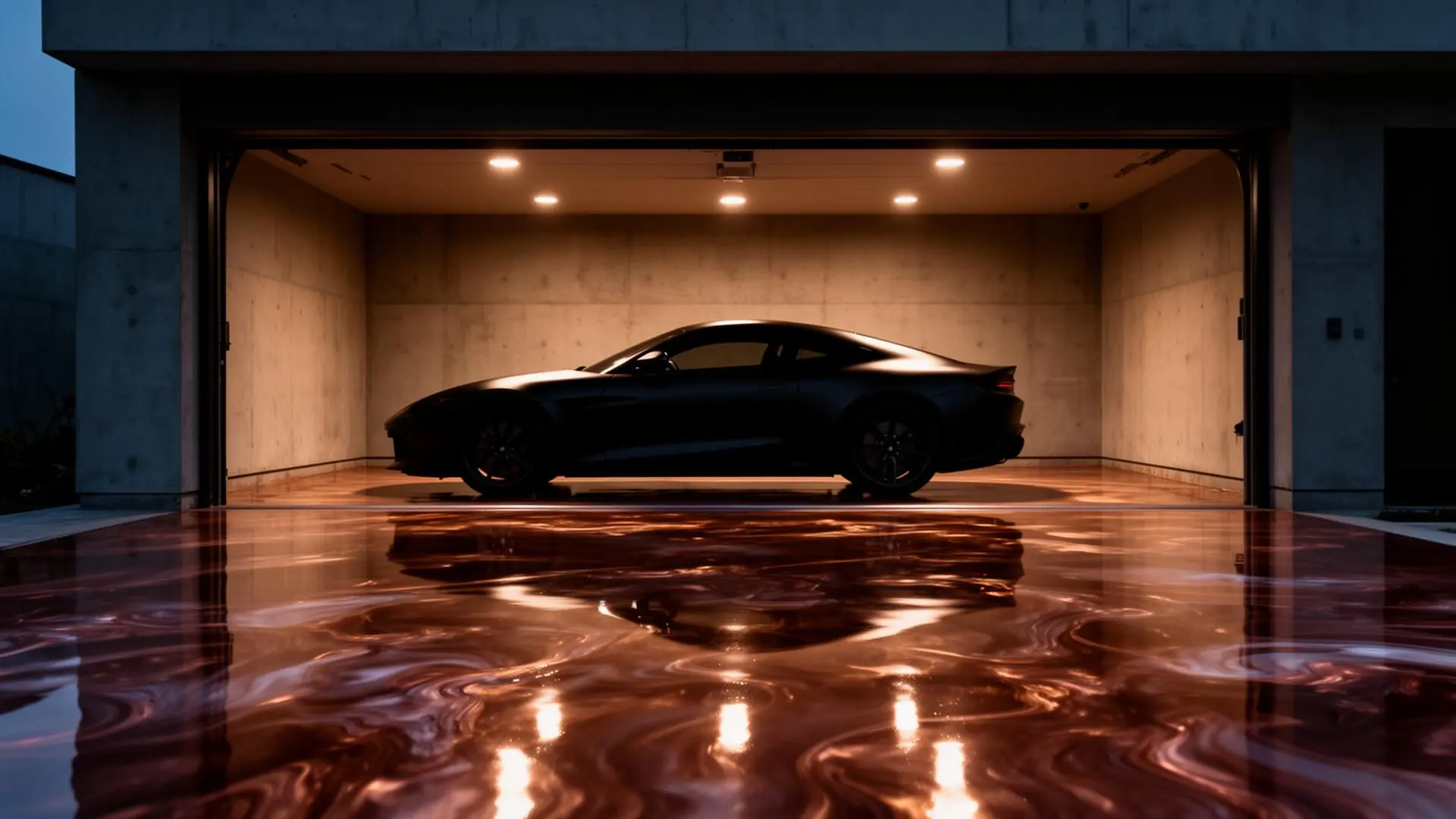
A luxury garage floor is an engineered coating system — not a paint job. Diamond-ground concrete profiled to ICRI CSP 2–3, moisture-tested per ASTM F1869, and finished in aliphatic polyaspartic, 100%-solids metallic epoxy or full-broadcast chip. Specified to your substrate, your daily use, and your finish.
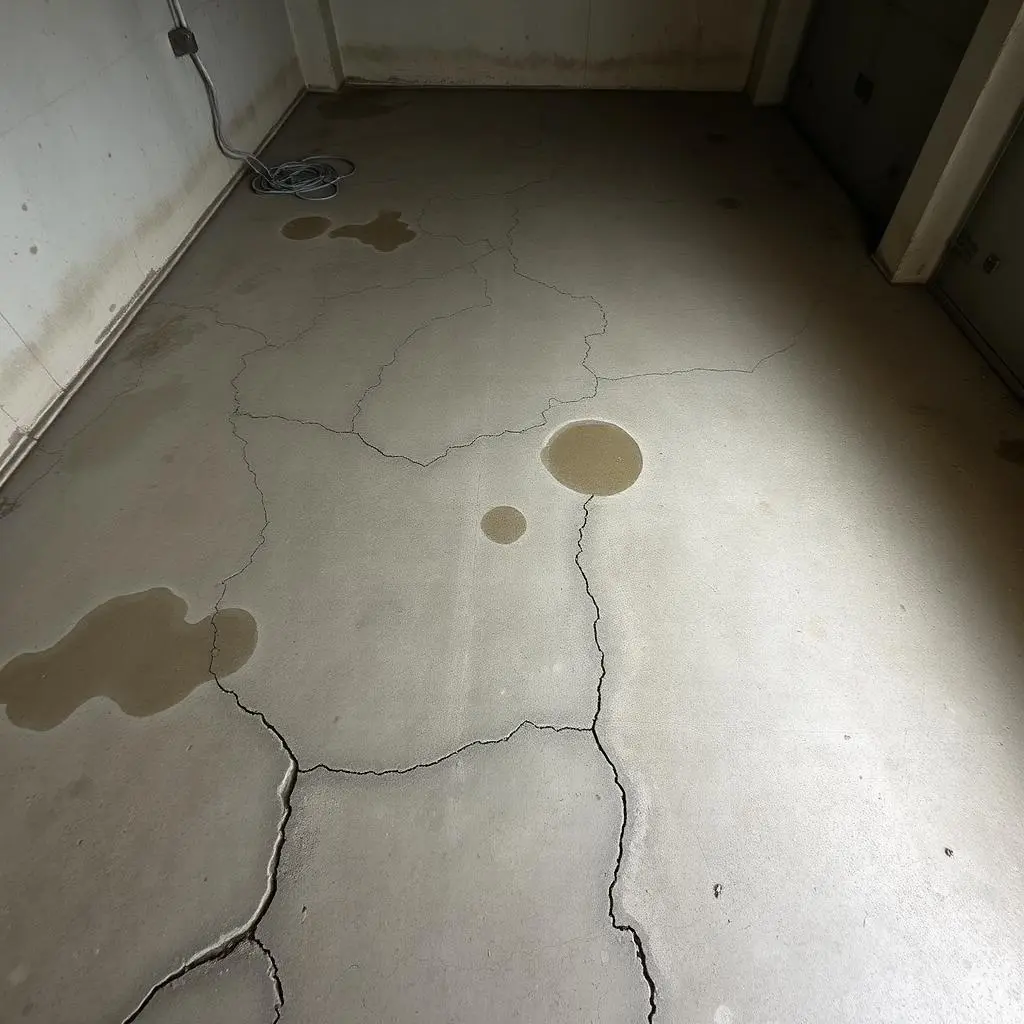
Want the complete remodel with storage? See Full Garage RemodelsBare concrete shows every oil drop, dusts perpetually, and absorbs the chemistry of your hobby — brake fluid, battery acid, transmission fluid — into a substrate you can't clean. By year two it looks like a service bay.
Box-store DIY kits ship with water-based 2-part epoxy at 3–5 mils dry. They specify acid etch (which fails to produce an ICRI CSP 2 profile) and skip moisture testing entirely. Hot tire pickup begins inside the first SoCal summer; full delamination follows within 1–3 years.
Traveling-sales polyaspartic crews quote $4/sq ft, run a single grinder pass, skip moisture testing, and use aromatic chemistry that yellows under UV. The install looks great on day one. By month six the bond line is failing at the door threshold and the topcoat has ambered.
Each system is engineered to a specific use case. The right choice depends on cure window, UV exposure, decorative goal and lifecycle.
1-day install. 25-year UV stability. Premium flagship.
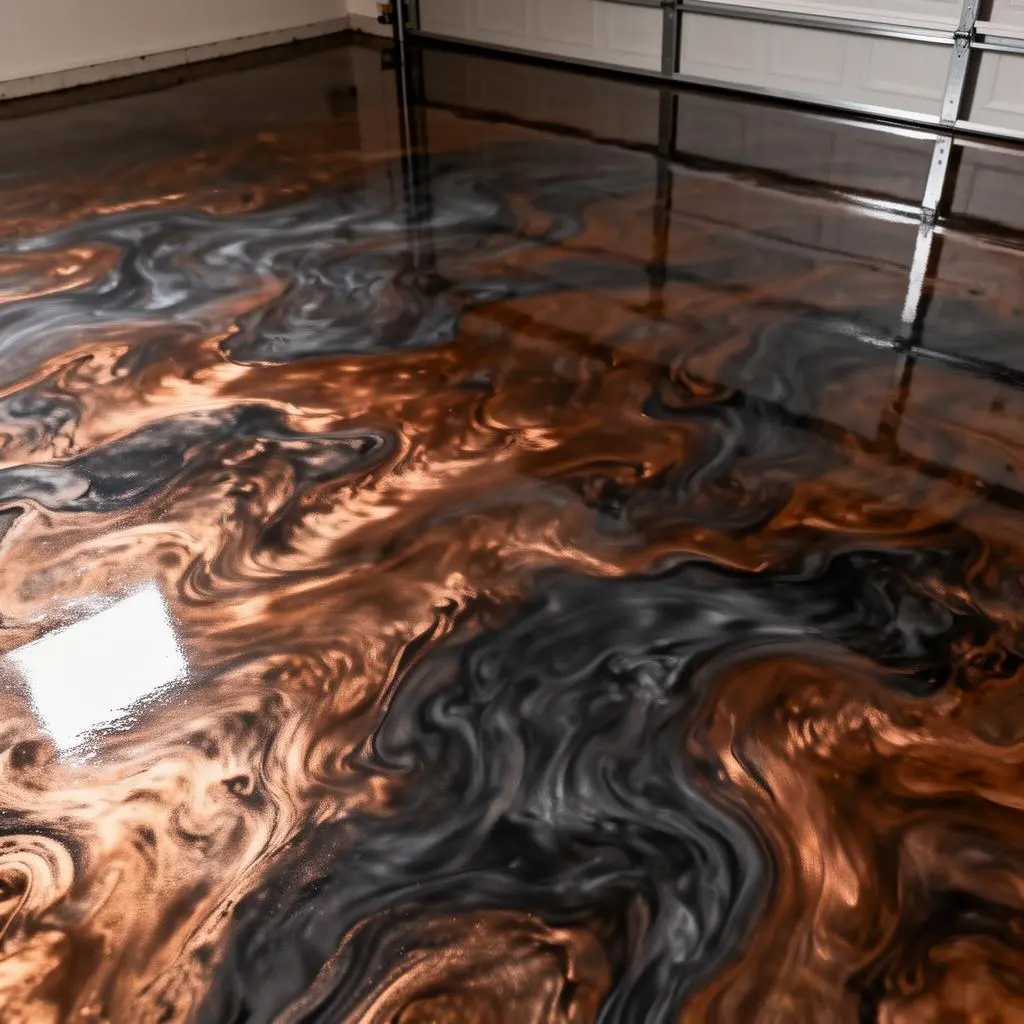
Three-dimensional, marbled, no two installs alike.
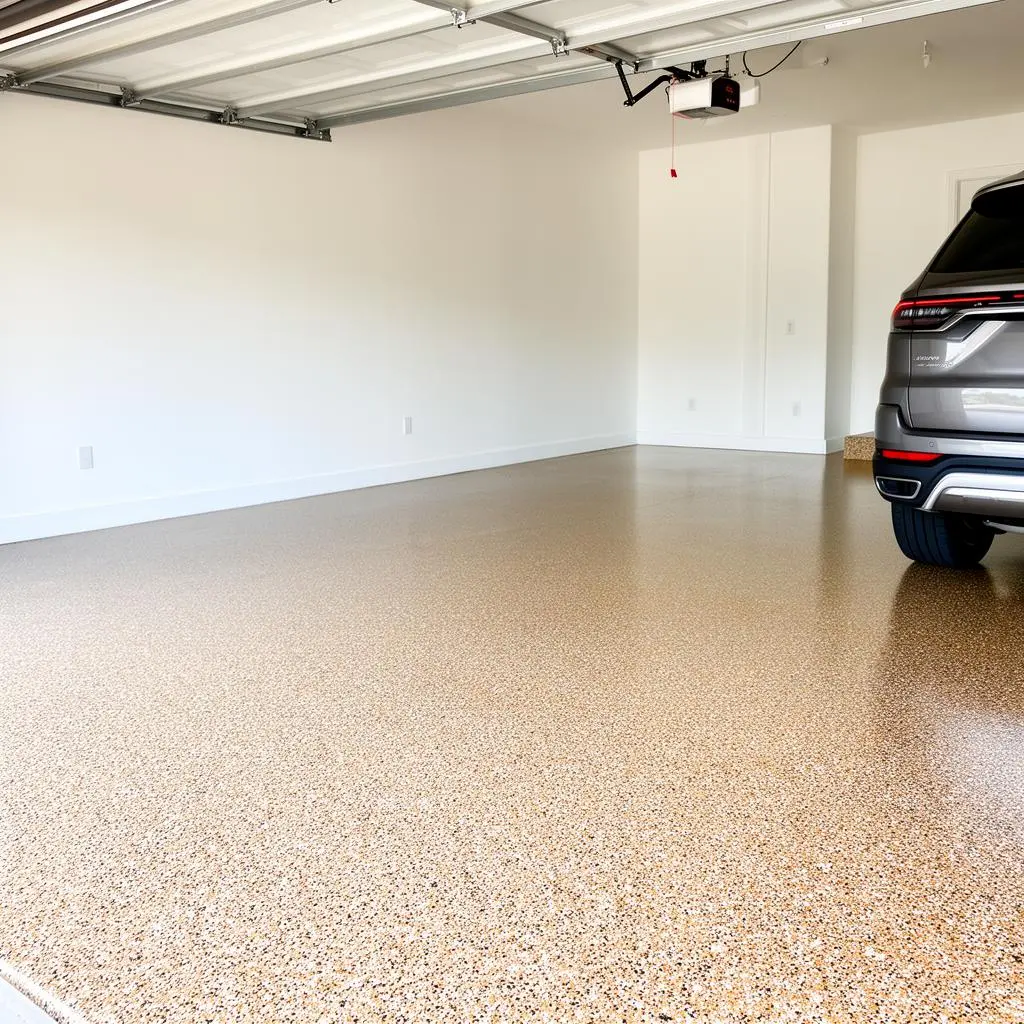
Workhorse durability. Custom flake palette.
Polyaspartic is the flagship of the modern garage floor — a 1-day install with 25-year UV stability. The chemistry is aliphatic polyurea modified with polyaspartic ester, which gives the resin a long enough pot life to install in real-world conditions while curing through hard in 4–6 hours.
Aliphatic chemistry is the critical specification: aromatic polyureas (cheaper, common in low-bid quotes) amber visibly within months under SoCal UV. Aliphatic resists yellowing, chemical attack and hot-tire pickup at glass transition temperatures (Tg) above 130 °F.
Install time: 1 day · Vehicle-ready: 24 hours · Best for: daily drivers, fast turnaround, open-door garages with UV exposure.
Polyaspartic spec sheetMetallic epoxy is the showpiece — a 60–80 mil decorative pour that produces three-dimensional, marbled depth no two installs share. Built on 100%-solids epoxy carrier with reflective metallic pigment dispersions from Elite Crete Systems and Westcoat, then sealed under UV-stable polyaspartic or polyurethane topcoat.
The decorative effect comes from solvent and air movement during cure — leopard, cloud, river or marble patterns are technique-driven, not pre-mixed. Each install is one-of-one. Cure cycle is longer (5–7 days to vehicle return) because the decorative pour must fully crosslink before topcoat.
Install time: 3–5 days · Vehicle-ready: 5–7 days · Best for: showpiece garages, collector cars, design-led builds.
Metallic epoxy spec sheetChip broadcast is the workhorse — a quarter-inch full-broadcast system built for high-traffic family garages. Pigmented epoxy base, full vinyl chip broadcast to refusal, scraped, vacuumed, and topcoated in polyaspartic or polyurethane for chemical and UV resistance.
Custom flake palettes (Torginol, Elite Crete and proprietary blends) let us match cabinets, vehicle paint or interior tile. The exposed chip texture self-sets a 0.55–0.70 wet DCOF (ANSI A326.3) — the most slip-resistant of the three systems out of the box.
Install time: 2 days · Vehicle-ready: 72 hours · Best for: high-traffic family garages, custom color matching, best $/sq ft.
| Polyaspartic | Metallic Epoxy | Chip Broadcast | |
|---|---|---|---|
| Install time | 1 day | 3–5 days | 1–2 days |
| Vehicle-ready | 24 hours | 5–7 days | 72 hours |
| UV stability (ASTM G154) | 25 years, aliphatic | Indoor / UV topcoat req. | 10+ years w/ topcoat |
| Hot tire pickup resistance | Excellent (Tg > 130 °F) | Excellent | Excellent |
| Slip rating (ANSI A326.3 wet DCOF) | 0.55–0.65 w/ aggregate | 0.50–0.60 | 0.55–0.70 (chip texture) |
| Cost (SoCal, installed) | $9–$14/sq ft | $13–$22/sq ft | $7–$11/sq ft |
| Best for | Daily drivers, fast turnaround | Showpiece garages, collector cars | High-traffic, family garages |
Square footage, substrate condition and decorative complexity move the number. Below is what most SoCal residential installs land at. On-site quote is exact.
Prep is 70% of lifespan. The nine steps below are non-negotiable on every install — documented in your job file.
| SoCal Luxury | DIY Kit | Box-Store Installer | |
|---|---|---|---|
| Surface prep | Diamond grind, CSP 2–3 | Acid etch / hand sand | Single-pass grind, undersized |
| Moisture testing | ASTM F1869 + F2170, documented | None | Rarely documented |
| Crack repair | 100% polyurea, ground flush | Caulk fill (will telegraph) | Vinyl patch over crack |
| Resin chemistry | Aliphatic polyaspartic / 100% solids epoxy | Water-based 2-part epoxy | Solvent epoxy + clear |
| Mil thickness (dry) | 20–80 mil | 3–5 mil | 8–14 mil |
| UV stability | 25 yr (aliphatic) | Yellows in months | 5–8 yr |
| Warranty | 10–15 year adhesion (transferable) | None | 1–5 year limited |
| Realistic lifespan | 20–30+ years | 1–3 years | 5–10 years |
| Cost | $7–$22/sq ft | $1.50–$3/sq ft (DIY) | $3–$6/sq ft |
Hot-tire pickup happens when a softened tire compound bonds to a coating with a low glass-transition temperature (Tg). A box-store epoxy with a Tg around 110 °F will soften under a tire that has been baking on SoCal asphalt at 140 °F+ — the coating literally lifts off the slab when the car parks.
Aliphatic polyaspartic and 100%-solids epoxy systems we install have Tg values above 130 °F and crosslink density well above the threshold tire compounds can release. Combined with a properly profiled substrate (ICRI CSP 2–3) and a clean primer bond line, the lift force a hot tire can generate is several orders of magnitude below the bond's tensile strength.
Diamond grinding is the other half of the equation. An acid-etched or lightly sanded slab gives the resin no mechanical key — even premium chemistry will lift. Profile and chemistry together eliminate hot-tire pickup permanently.
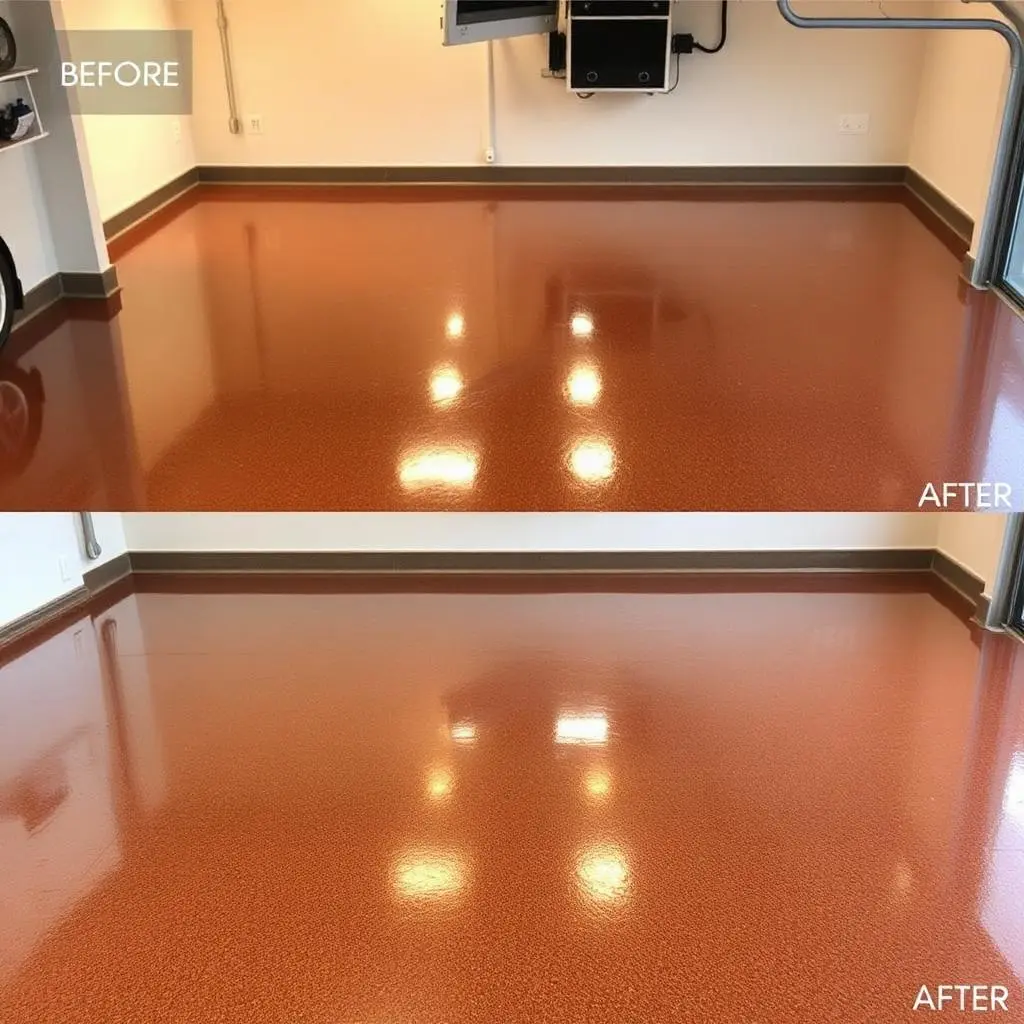
Eight recent SoCal installs. [REPLACE: 8 before/after pairs from project archive.]
"They moisture-tested in three locations before quoting. The competitors didn't even ask. Two years in — flawless."
"We had three quotes for the metallic. Only SoCal Luxury walked us through the polyaspartic topcoat spec and showed sample boards on real concrete. Easy decision."
Our audience asks specifics. We answer them.
Last updated: April 2026
Reply within two business hours. On-site consult, written specification, and itemized quote — never a high-pressure sales visit.
(619) 304-6501