SoCal Luxury Surfaces
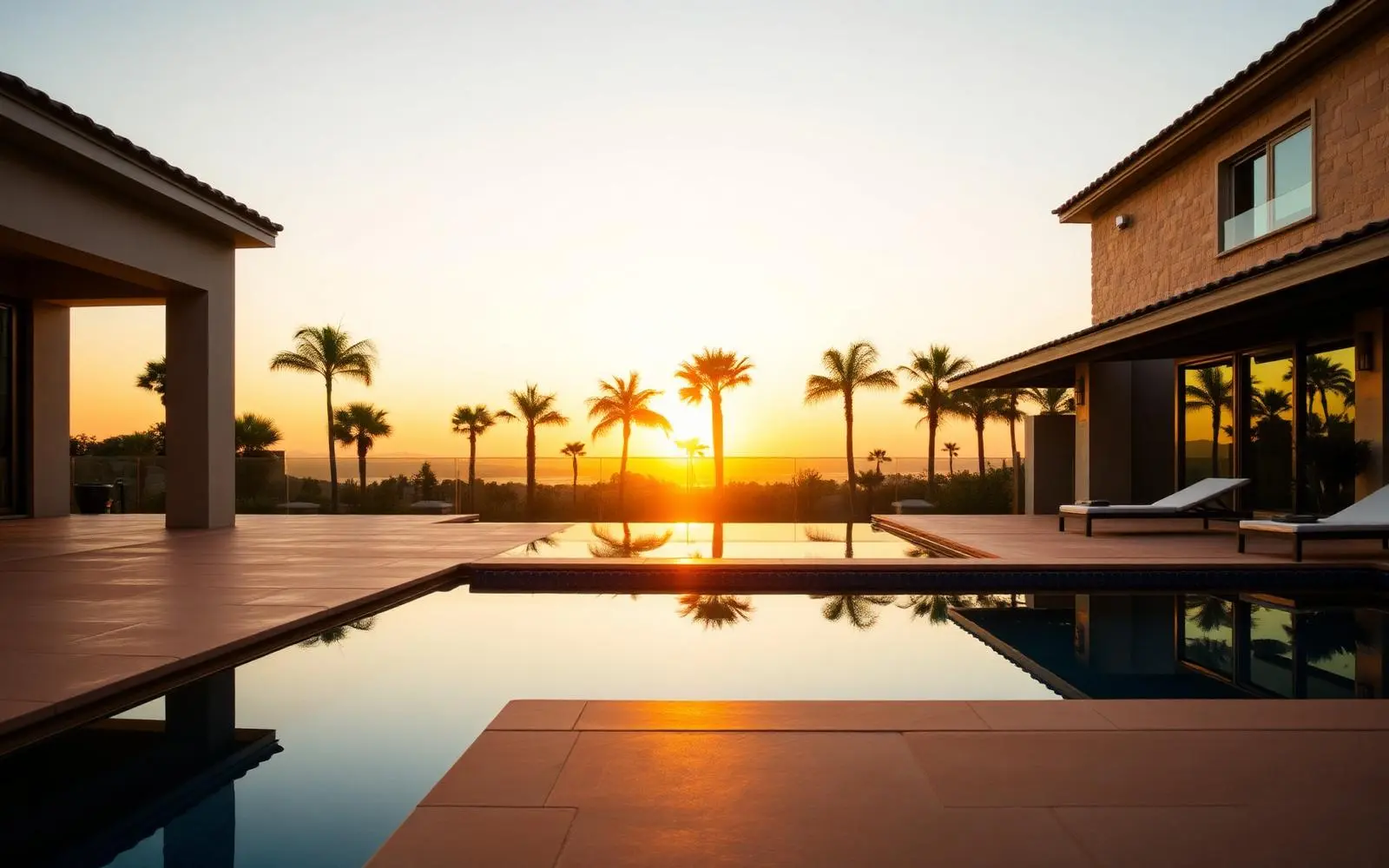
Cool-deck pool surround in SoCal
· Residential · Pool Decks

Cool underfoot. Gripped when wet.

A pool deck in SoCal must be cool to walk on at 95°F, slip-safe wet to ANSI A326.3 DCOF 0.6, UV-stable for 15+ years, and chlorine-resistant — fail any one and the deck either burns, slips, fades or chalks within two seasons..

20+
Years installing
2,400+
Floors completed
5.0 ★
Google rating
10–15 Yr
Written warranty
— TL;DR

The five-second answer.

  • Cost $4–$14/sq ft installed.
  • Wet DCOF target ≥ 0.6 (ANSI A326.3) — what your insurer will ask for.
  • Cool-deck cementitious or acrylic systems run 20–30°F below bare concrete.
  • Polyaspartic with quartz broadcast: 25-yr UV, slip-rated, chlorine-stable.
— The problem

Most pool decks fail the wet-foot test.

A pool deck takes the worst combination of loads on the property: full UV, surface temperatures that exceed 140°F on dark concrete, constant chlorinated water, sunscreen oils, and bare feet expecting to grip wet. Painted concrete and aromatic epoxy fail in 12 months. Tile is slick wet and hot. The right answer is a textured cementitious or acrylic cool-deck system, or a polyaspartic with engineered quartz broadcast — both engineered for the four loads, both warranted against the failure modes that kill cheap pool decks.

What we engineer around.

Substrate, environment, downtime — every spec gets evaluated before product is selected.

Wet DCOF ≥ 0.6

ANSI A326.3 standard for pool surrounds. Aggregate broadcast or textured cementitious — non-negotiable.

Cool-touch

Light pigments and textured surfaces target ≤ 110°F surface temp at midday in direct SoCal sun.

Chlorine resistance

Acrylic and aliphatic polyaspartic sealers tolerate chlorinated splash. Aromatic epoxy will yellow and degrade.

UV stability

Aliphatic chemistry only. 15-yr minimum UV warranty on the topcoat.

Chemical exposure

Sunscreen oils, salt water, and pool chemistry are tested against the topcoat before specification.

Coping & drainage

Detail at the coping line and any deck drains is mechanically locked and elastomeric — not just sealed.

— Typical timeline

3–5 days. Drain and pump-out, prep, base coat day 1, broadcast day 2, top-coat day 3. Light foot traffic at 24 hr, full use at 72 hr.

— Typical cost range

$4–$14/sq ft installed. Cool-deck acrylic at the low end; polyaspartic + quartz at the high end.

Final spec quoted on-site after substrate evaluation.

— Frequently asked

Specifics matter.

What's the cool deck coating that's actually cool?
+
True cool-deck systems combine three things: light reflective pigment, micro-textured surface that breaks the conductive path, and a cementitious or acrylic chemistry that doesn't store heat the way bare concrete does. Field-measured surface temperature on a properly spec'd cool-deck in 95°F SoCal sun runs 105–115°F vs. 140–150°F on adjacent bare grey concrete. Walkable barefoot. Cheap painted 'cool-deck' spray that's just textured paint won't deliver this.
Will a polyaspartic deck be slippery wet?
+
Not when spec'd correctly. We double-broadcast aluminum oxide or rounded quartz aggregate into the basecoat to reach ANSI A326.3 DCOF 0.6+ wet, then lock with a thin polyaspartic topcoat. The texture is grippy under bare wet feet without being abrasive. Smooth polyaspartic without aggregate is slick when wet — that's not the spec for a pool deck. Always ask for the wet DCOF test number.
Will pool chlorine attack the coating?
+
Aliphatic polyaspartic and quality acrylic systems are chlorine-stable for the splash-zone exposure a deck sees. (A liner or coping coating that sits in the water itself is a different spec entirely.) We've installed polyaspartic decks adjacent to saltwater chlorinators that look as new at year five. Aromatic epoxy is the wrong call here — it yellows, hot-tire-style, from chlorinated splash and UV combined.
Can you resurface a cracked existing pool deck?
+
Yes. Crack inventory is documented, static cracks are chased and filled with polyurea, dynamic cracks get an elastomeric joint that telegraphs through the topping intentionally rather than randomly. The bond coat then covers the corrected substrate. Severely heaved or settled decks need partial tear-out and re-pour at the bad sections — we'll flag that on-site rather than overlay something that will fail.
What about saltwater pools?
+
Saltwater pool chemistry is gentler on coatings than traditional chlorinated systems — fewer aggressive oxidizers in the splash zone. All recommended systems (cool-deck, acrylic, polyaspartic) handle saltwater without modification. The bigger spec consideration with saltwater pools is the surrounding soil and substrate moisture; we'll test for chloride ingress in the slab if salt staining is visible.
Get a Free Estimate

Ready to spec your pool deck?

Reply within two business hours. On-site consult, written specification, and itemized quote — never a high-pressure sales visit.

(619) 304-6501
Start in 10 seconds

We'll prefill the rest. No spam, no pressure — your details only go to our estimating team.