Polished Concrete vs. Epoxy: Which Floor Wins in a Modern SoCal Home?
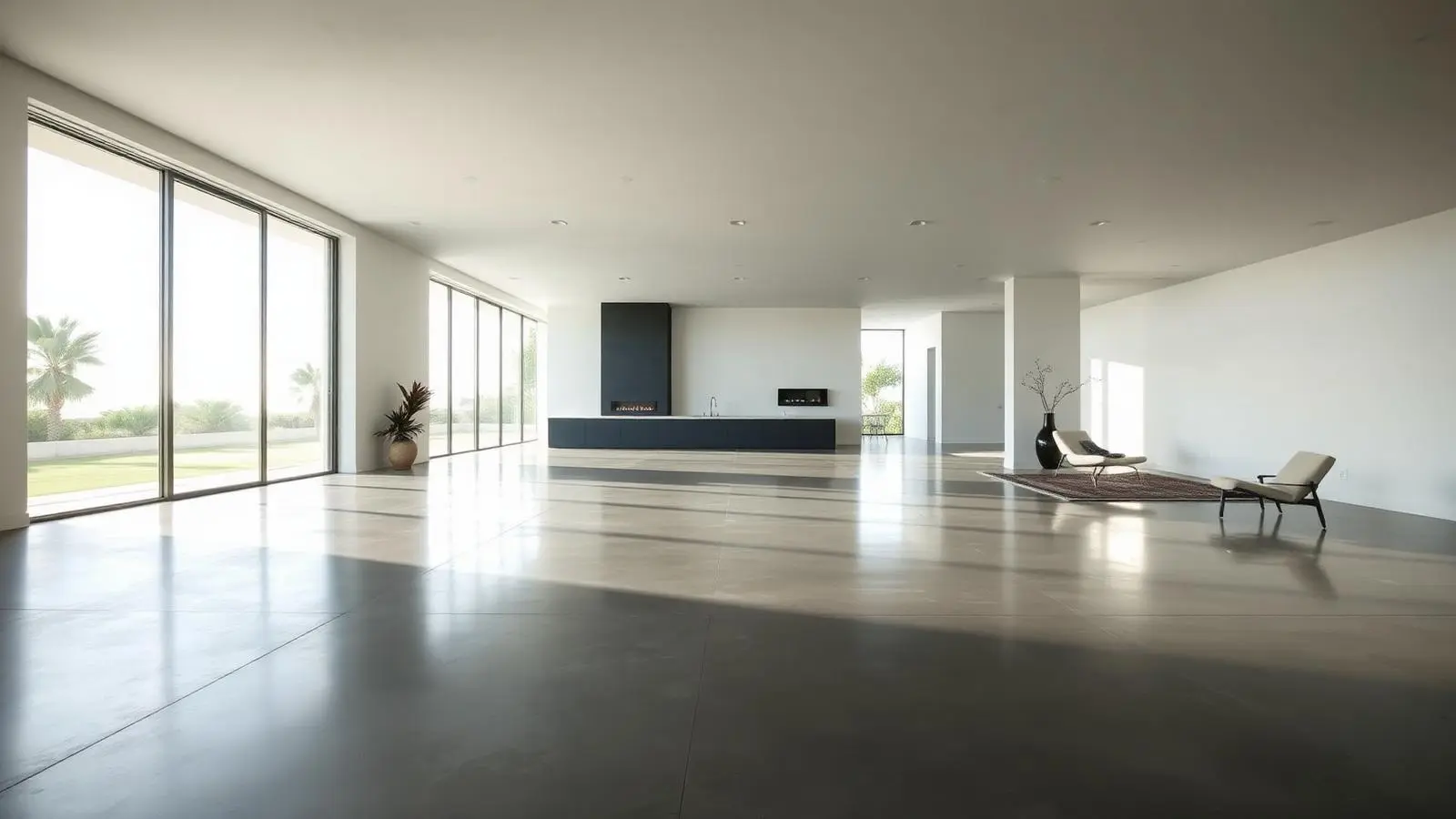
When a designer hands me a set of plans for a contemporary home in La Jolla, Manhattan Beach, or Hidden Hills, the floor question is almost never tile vs. wood — it's polished concrete vs. epoxy. Both deliver the seamless, monolithic, modernist look that drove them to the spec in the first place. Both are extraordinary when done right and brutal when done wrong.
Here's how I help owners and designers choose between the two when the project is a primary residence, not a warehouse.
- ·Polished concrete is the existing slab, mechanically refined to a 400–3000-grit finish and protected with a densifier and stain guard. It is part of the building.
- ·Epoxy resin is a topical floor system poured over the slab — a coating that mimics the density of polished concrete but with infinite color, pattern, and gloss flexibility.
- ·Polished concrete wins on cost, longevity, and authenticity. Epoxy wins on design control, repair-ability, and forgiveness of bad slabs.
- ·Both demand a surgically prepped slab and an experienced crew — neither is a DIY-friendly finish at a luxury level.
How each system is built
Polished concrete is a subtractive process. The crew grinds the existing slab through a progression of metal-bonded and resin-bonded diamond pads — typically 30, 80, 200, 400, 800, 1500, and finally 3000 grit. Between key passes the slab is densified with lithium silicate, which reacts with free calcium hydroxide in the cement and turns the wear surface into a hard, dense skin. A penetrating sealer or stain guard finishes the job.
Epoxy resin is the opposite — additive. The slab is ground to CSP 2–3, primed, then a 100% solids epoxy or hybrid resin is poured over it, often with metallic, quartz, or pigment additions. A polyaspartic or polyurethane topcoat is applied for chemical and UV resistance.
Design — where each one excels
Polished concrete is honest. You see the aggregate, the color of the original mix, the saw cuts, sometimes the trowel marks. For a brutalist or warm-modern aesthetic — think exposed wood beams, plaster walls, monolithic kitchens — that authenticity is exactly the point. You can stain or dye it, but you can never disguise the fact that it is the building.
Epoxy is theatrical. You can pour a 12-foot-deep ocean swirl, embed a pearl seabed, or color-match a Pantone exactly. Designers who want a floor to be a statement rather than a backdrop almost always default to metallic or pigmented epoxy.
Cost — the numbers SoCal owners should expect
On a 2,000 sq ft open-plan first floor:
- 01Polished concrete on existing slab, salt-and-pepper to medium aggregate exposure: $7–12/sq ft
- 02Polished concrete with full aggregate exposure or dye: $10–16/sq ft
- 03Metallic epoxy with UV topcoat: $14–22/sq ft
- 04Designer multi-pour metallic with custom blend: $20–30/sq ft
Comfort and acoustics
Both floors are hard. Both reflect sound. In a great room with high ceilings, expect to invest in soft furnishings, drapery, and area rugs to manage acoustics regardless of which system you choose. There is no acoustic difference between polished concrete and epoxy — they are essentially the same density.
Underfloor heating works beautifully under both systems if it's installed before the resin pour or before the polishing process begins. Retrofitting heat under either floor is impractical.
Maintenance, repair, and the 10-year reality
Polished concrete is the easier daily floor: mop with a neutral pH cleaner, re-burnish every 2–3 years, re-densify every 5–7. The hard part is repair — a chip in polished concrete is permanent unless you re-grind a large area, which can leave a tonal patch.
Epoxy is more vulnerable to scratching but more forgiving of repair: a damaged section can be sanded, re-poured locally, and re-topcoated to nearly invisible. For a home with kids, dogs, and dropped pans, that repair-ability matters.
When polished concrete is the wrong call
If the existing slab is heavily cracked, soft (low PSI), patched with multiple generations of repair material, or contaminated with deep oil staining, polishing it will showcase every flaw. In those cases, an epoxy or self-leveling overlay is the better path — it builds a new, controlled surface on top of the imperfect one.
Frequently asked questions
Can you polish a slab that already has an old coating on it?
Only if the coating can be fully removed first. Shot blasting and grinding will strip most coatings, but the underlying slab has to be evaluated for staining and damage that the coating may have been hiding.
Which floor is better with radiant heat?
Both are excellent thermal masses for radiant heat. Polished concrete is slightly more efficient because there's no resin layer between the heat source and the room, but the difference is small.
How long does each system take to install?
A 2,000 sq ft polished concrete floor takes about 4–6 working days. A 2,000 sq ft metallic epoxy floor takes about 3–4 working days, plus 72 hours of cure before furniture.
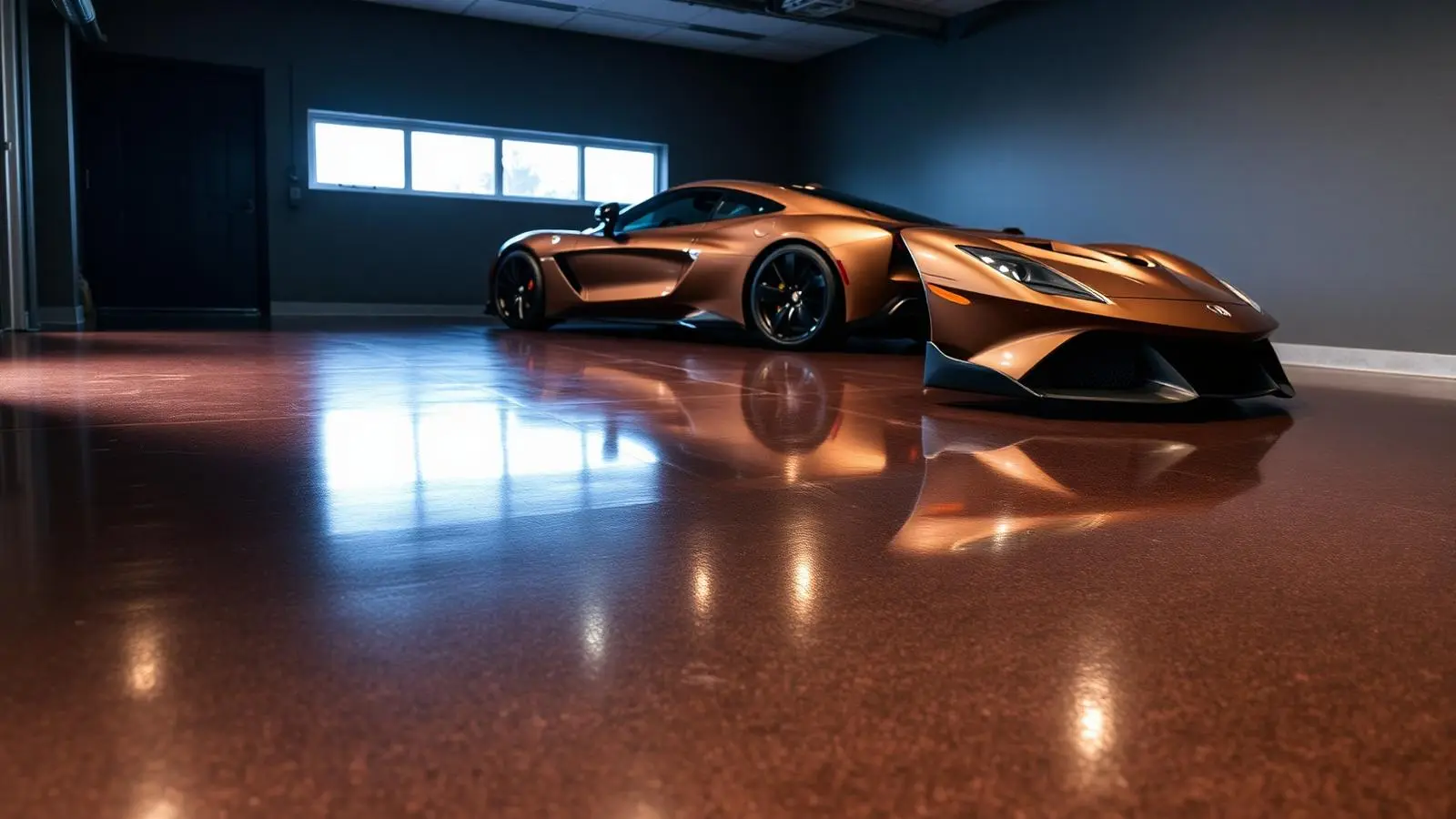
Metallic Epoxy vs. Polyaspartic: Which Floor Belongs in a Southern California Garage?
A field-tested comparison of metallic epoxy and polyaspartic floor systems for Southern California garages — durability, UV behavior, cost, install timeline, and resale value.
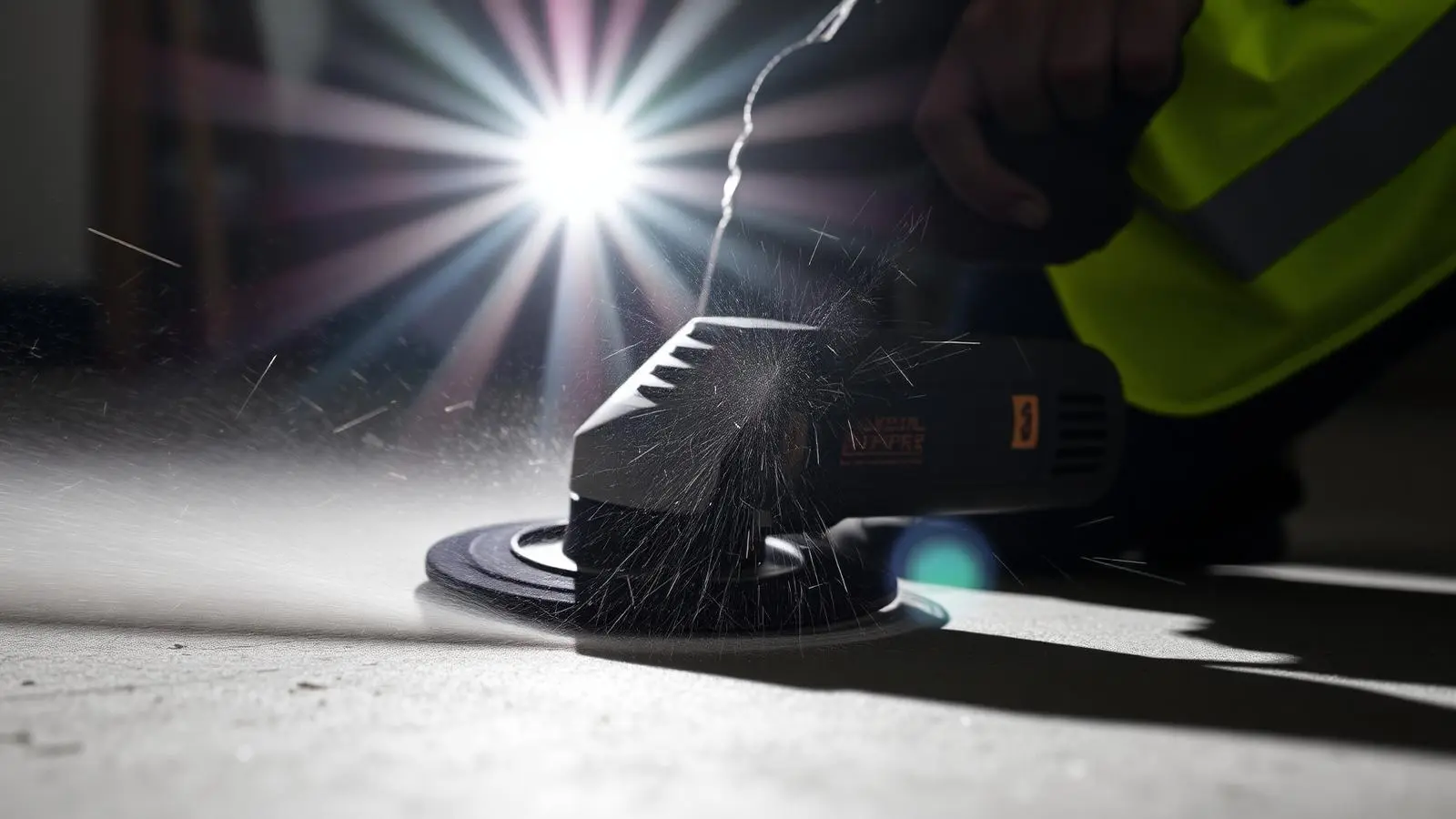
Surface Prep Standards Explained: CSP, ICRI 310.2R, and Why Your Floor Will Fail Without Them
A working specifier's guide to ICRI surface prep standards (CSP 1–9), what each profile is for, and why proper mechanical prep is the single biggest predictor of a resin floor's lifespan.
Ready to specify your floor?
Reply within two business hours. On-site consult, written specification, and itemized quote — never a high-pressure sales visit.
(619) 304-6501