
Commercial Kitchen Floor Systems: Why Urethane Cement Is the Only Honest Answer
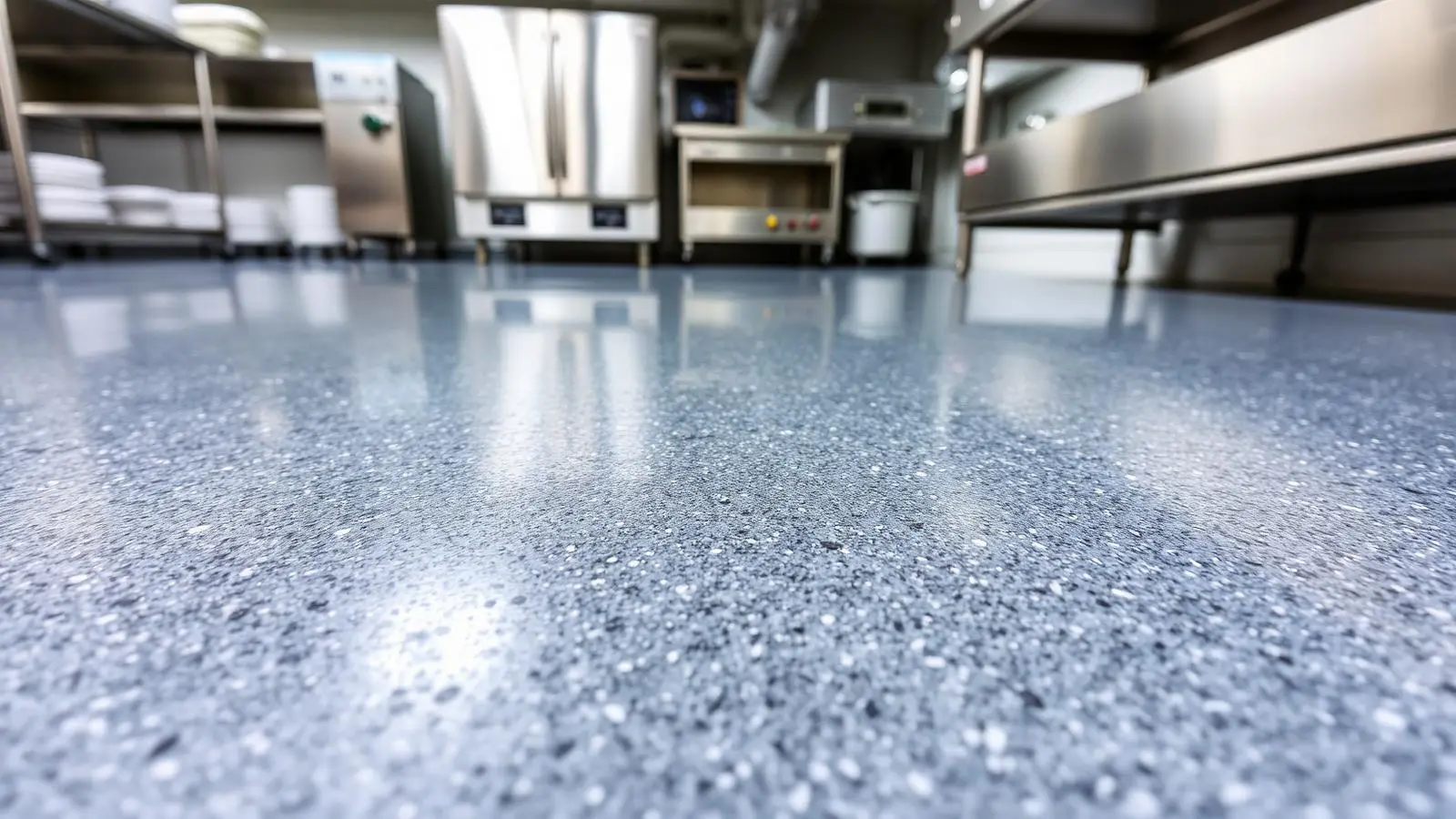
Every restaurateur in San Diego County who has ever stripped a failed epoxy quartz kitchen floor and replaced it with urethane cement has had the same experience: the second floor outlasts the first by triple, takes daily abuse without complaining, and costs almost the same when you amortize it over the lifespan.
Yet most commercial kitchen quotes still default to epoxy quartz because it's familiar. Here's why urethane cement is almost always the right specification for a real working kitchen, and where the exceptions are.
- ·Epoxy quartz fails in kitchens because epoxy softens at 140 °F and degrades fast under animal fats and citric acid.
- ·Urethane cement holds dimensional stability up to 250 °F, resists organic acids and fats, and survives steam cleaning.
- ·Urethane cement costs roughly 25–40% more than epoxy quartz upfront but typically lasts 2–3x longer in kitchen service.
- ·Cove base, floor drains, and slope are non-negotiable details — they're what separate a sanitary kitchen floor from a grease trap.
Why epoxy quartz fails in kitchens
Epoxy resins have a glass transition temperature (Tg) around 140 °F. A kitchen with steam cleaning, dishwasher discharge, and pot pulls exposes the floor to surface temperatures that exceed Tg routinely. Above Tg, epoxy softens, loses dimensional stability, and starts releasing from the slab.
Add animal fats and citric acid (ubiquitous in any kitchen with citrus, tomato, or vinegar prep) and the resin begins chemical breakdown. The first symptom is loss of gloss; the second is texture loss; the third is the floor releasing in sheets near the dish pit.
What urethane cement is
Urethane cement (also called urethane mortar or polyurethane cement) is a tri-component system: a urethane resin, an aliphatic isocyanate hardener, and a Portland cement-based aggregate. It cures into a rock-hard, thermally stable, chemically inert floor that behaves more like concrete than like a coating.
Common products in the SoCal commercial market include Sherwin-Williams General Polymers FasTop, Stonhard Stonclad UT, and Westcoat ALX urethane. All of them deliver the same fundamental properties: 250 °F service temperature, immunity to organic acids and fats, and steam-cleaning compatibility.
The cost picture
On a 1,500 sq ft commercial kitchen with cove base and full prep:
- 01Epoxy quartz, 1/4" broadcast: $9–13/sq ft installed
- 02Urethane cement, 1/4" troweled: $12–18/sq ft installed
- 03Urethane cement, 3/8" with integral aggregate: $16–22/sq ft installed
Where epoxy quartz is still the right call
There are kitchen-adjacent spaces where epoxy quartz works well: walk-in coolers (no thermal cycling), front-of-house service areas (no fats or steam), and back-bar areas without dish washing. The decision rule is simple — if the floor will see steam, fats, or organic acids on a daily basis, specify urethane cement. Otherwise, epoxy quartz is fine.
The details that make a kitchen floor pass health inspection
A urethane cement floor without proper cove base, drain integration, and slope-to-drain detailing is just an expensive flat floor. Health departments in California require:
- 014–6" coved base at all wall transitions, integral with the floor (no caulked seam)
- 02Slope of 1/4" per foot to all floor drains in wet zones
- 03Drains flashed and integral to the resin system, not silicone-sealed afterward
- 04Wall-to-floor radius of at least 1" at all coves to prevent bacterial harborage
Install timing — kitchens are hard
A 1,500 sq ft kitchen install typically requires 4–7 days end-to-end including cure: demo and prep on day one, primer and base coat on day two, broadcast and troweled topcoat on days three and four, cure and sealer on days five through seven. Most operators close fully for the install — partial-operation installs are possible but always extend the timeline and risk contamination of fresh resin.
Frequently asked questions
Can urethane cement be installed in an operating restaurant overnight?
No. Urethane cement requires a minimum 24-hour cure before light traffic and 72 hours before grease and steam exposure. Plan a closure of at least 4 days for a small kitchen.
Does urethane cement crack like concrete?
It can if expansion joints aren't honored. We mirror every existing slab joint into the urethane cement and sealant-fill them — this prevents reflective cracking.
What does a urethane cement floor look like?
It has a slightly textured, matte-to-satin finish similar to a polished trowel concrete. Color is integral and limited to about 12 standard colors. It is not a designer floor — it is a working floor.
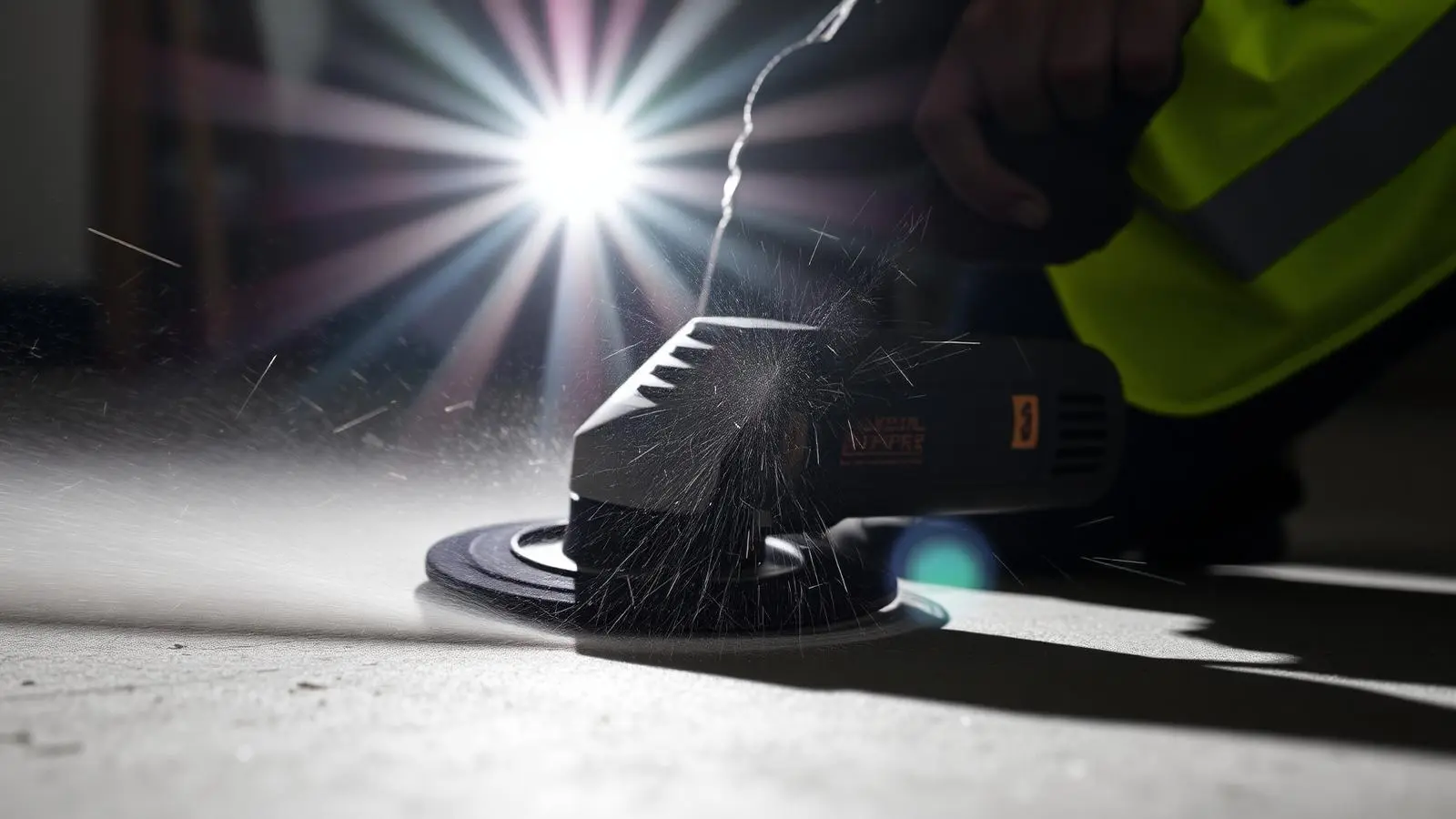
Surface Prep Standards Explained: CSP, ICRI 310.2R, and Why Your Floor Will Fail Without Them
A working specifier's guide to ICRI surface prep standards (CSP 1–9), what each profile is for, and why proper mechanical prep is the single biggest predictor of a resin floor's lifespan.

Moisture Testing in Southern California: Why ASTM F1869 and F2170 Decide Whether Your Floor Survives
A practical explanation of moisture testing for resin floor systems in Southern California — when each test is required, what the numbers mean, and why coastal slabs almost always need a moisture mitigation primer.

Auto Dealership Flooring: How to Specify a Showroom and Service Bay That Outlast the Brand Refresh
What separates a dealership floor that lasts ten years from one that fails before the first remodel — system selection for showrooms, service bays, and detail areas.
Ready to specify your floor?
Reply within two business hours. On-site consult, written specification, and itemized quote — never a high-pressure sales visit.
(619) 304-6501