Garage Floor Coating Cost in San Diego: A 2025 Buyer's Guide
If you've gathered three quotes for a garage floor coating in San Diego, you already know the problem: one company quoted $1,500, the next quoted $4,800, and the third quoted $9,200. Same garage. The customer is left wondering if anyone is being honest.
The short answer is that all three quotes can be honest — they are quoting three different products. This guide breaks down what drives garage floor coating pricing in San Diego in 2025, what each tier actually buys you, and the line items that quietly separate a five-year floor from a twenty-year floor.
- ·Bargain coatings ($2–4/sq ft) are usually one-day acid-etch installs with a single-coat polyaspartic over a small-flake broadcast. They look great at year one and start failing in year three.
- ·Mid-tier professional polyaspartic chip systems run $7–12/sq ft installed and last 12–20 years with proper prep.
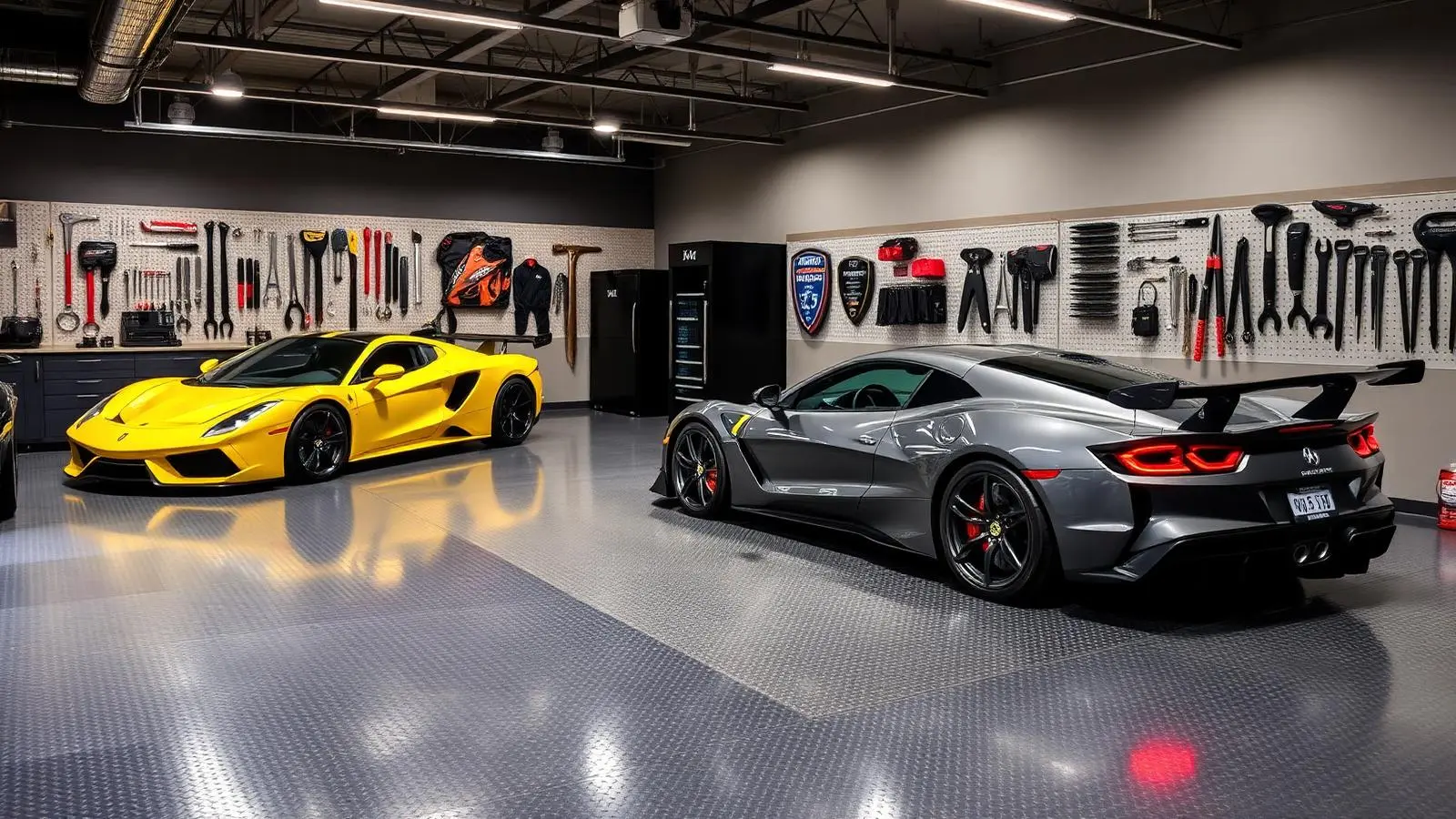
- ·Premium systems — full broadcast, double clear coat, moisture mitigation, integral cove base — run $12–18/sq ft installed and behave like a sealed warehouse floor in a residential setting.
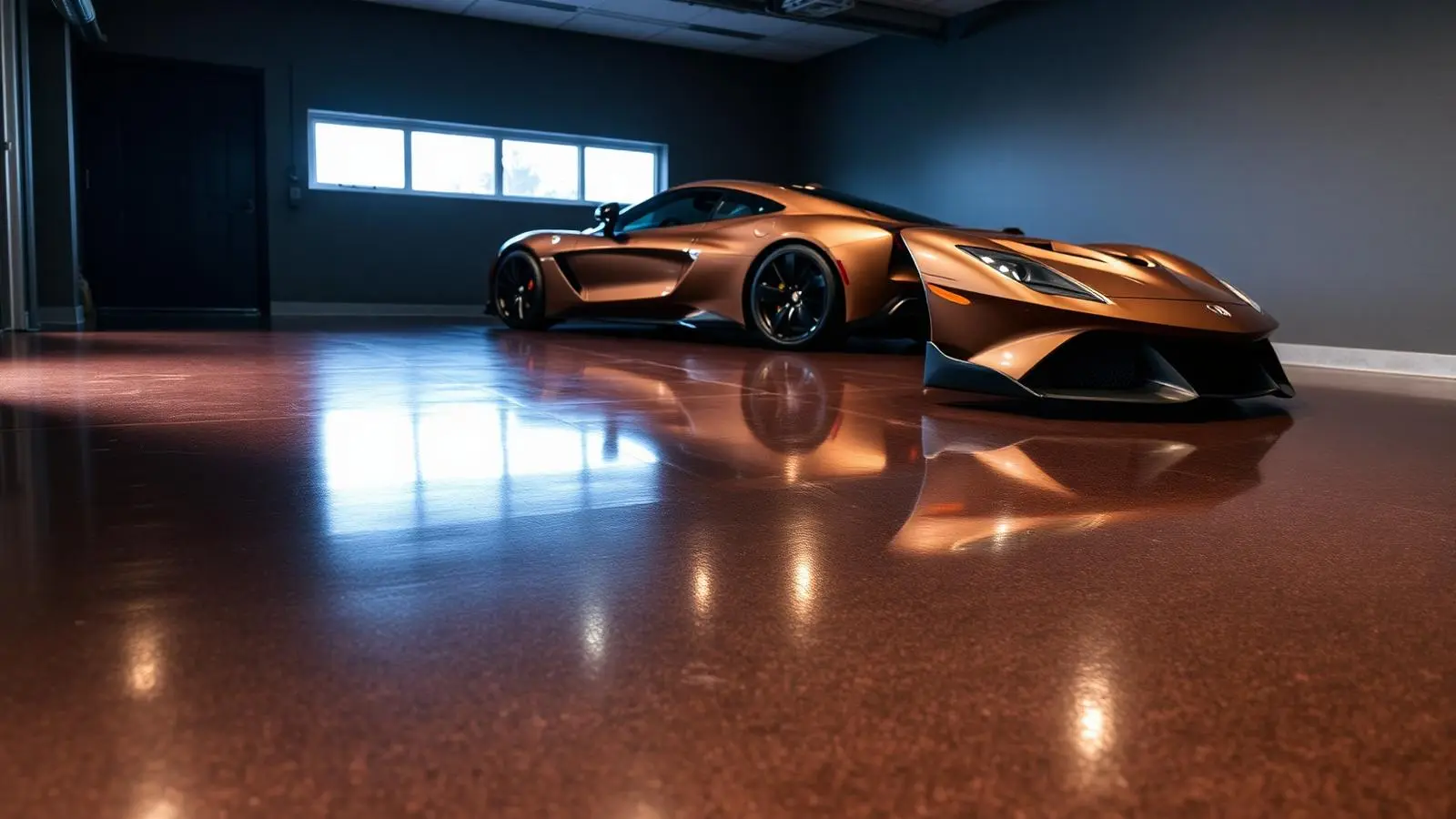
- ·Designer metallic with UV topcoat sits at $15–25/sq ft installed.
What the price actually pays for
Roughly 60% of a professional garage coating quote is labor and equipment time, not material. The diamond grinder, the dust extractor, the moisture meter, the pull tester, the trained crew — those are what separate a floor that stays bonded from one that releases in sheets when the first hot tire hits it.
The remaining 40% is material, and within that, the resin itself is a small fraction. The expensive line items are the high-build aliphatic topcoat, the moisture mitigation primer (if needed), the polymer-modified patching mortar, and the vinyl flake broadcast.
The four tiers you'll see in San Diego
After thousands of quotes across San Diego County, almost every coating job lands in one of four tiers. Knowing which tier you're being quoted is more important than the dollar amount.
- 01Tier 1 — Acid-etch one-day ($2–4/sq ft): No diamond grind, no moisture test, single broadcast, single clear. Common with national franchises. Expect 3–5 years.
- 02Tier 2 — Standard professional ($5–8/sq ft): Diamond grind to CSP 1–2, single broadcast, single high-build clear. Decent value, 8–12 year service life.
- 03Tier 3 — Premium polyaspartic chip ($9–14/sq ft): CSP 2–3 grind, polymer-modified crack repair, full broadcast, double clear coat, integral cove base optional. 15–20 year service life.
- 04Tier 4 — Designer metallic with UV topcoat ($15–25/sq ft): Same prep as Tier 3 plus designer metallic pour, sand, and aliphatic high-build topcoat. Indefinite service life with maintenance.
Why San Diego pricing is higher than national averages
Three things push San Diego coating prices above the national average. First, slab condition: most garages here were poured in the 1970s–90s without vapor barriers, which means roughly 30% of slabs we test require a moisture mitigation primer that adds $1.50–2.50 per sq ft.
Second, coastal humidity slows polyaspartic cure windows in spring and fall, which means crews can do fewer jobs per week. Third, labor and insurance costs in coastal Southern California are simply higher than in Phoenix, Las Vegas, or Houston, where many national franchise pricing models originate.
Line items that should be on every honest quote
If you're handed a one-line quote that says "epoxy floor coating — $X," send it back. A real garage floor coating quote in San Diego in 2025 should itemize at minimum:
- 01Surface profile method (diamond grind, shot blast, or shot-blast + grind) with target CSP
- 02Crack chase and patch with named product (e.g., polymer-modified mortar)
- 03Moisture test result (ASTM F1869 calcium chloride or ASTM F2170 RH) with the actual reading
- 04Primer and resin manufacturer and product name ("epoxy" is not a product)
- 05Topcoat product, mil thickness, and number of coats
- 06Color flake brand, blend, and broadcast rate (full broadcast vs. light)
- 07Cove base detail at wall transition (yes/no and material)
- 08Written warranty with what is and isn't covered
What drives the price up — beyond your control
Some cost drivers come with the slab. Heavy oil contamination requires solvent extraction or shot blasting before any resin can bond. Severe spalling or cracks wider than 1/8" require full chase, fill, and re-profile. Slabs with high moisture vapor emission rates (MVER) need a moisture mitigation primer. None of these are upsells — they're the difference between a floor that lasts and a floor that doesn't.
If a quote skips these conditions, the installer is either gambling that nothing is wrong or planning to add them as a change order on install day. Both are bad outcomes.
What you can do to lower the price honestly
There are a few legitimate ways to bring a San Diego garage coating price down without buying a worse floor. Bundling neighbors on the same week saves mobilization cost — installers will often offer 10–15% off if two or three garages on the same street are scheduled together. Choosing a single-color polyaspartic chip instead of a custom blend saves on flake. Skipping integral cove base when there's no wash-down need saves $1–2 per linear foot of wall.
What you should never trade away: prep, moisture mitigation, and the topcoat. Those three line items are the floor's actual lifespan.
Frequently asked questions
Why do prices vary so much between companies?
Because they're quoting different products. A $2/sq ft quote and a $15/sq ft quote are not the same coating with different markup — they're different systems, different prep methods, different topcoats, and different expected lifespans.
Is financing available for a garage floor coating?
Yes — most reputable installers in San Diego offer financing for projects over $3,000 through partners like GreenSky or Synchrony, typically with 6–24 month no-interest options for qualified buyers.
Does a coating add to home value?
A professionally installed coating typically returns 60–80% of its cost at resale and significantly improves time-on-market in luxury garages, especially when the garage is visible from the street or used as part of the home's living space.
Metallic Epoxy vs. Polyaspartic: Which Floor Belongs in a Southern California Garage?
A field-tested comparison of metallic epoxy and polyaspartic floor systems for Southern California garages — durability, UV behavior, cost, install timeline, and resale value.
Surface Prep Standards Explained: CSP, ICRI 310.2R, and Why Your Floor Will Fail Without Them
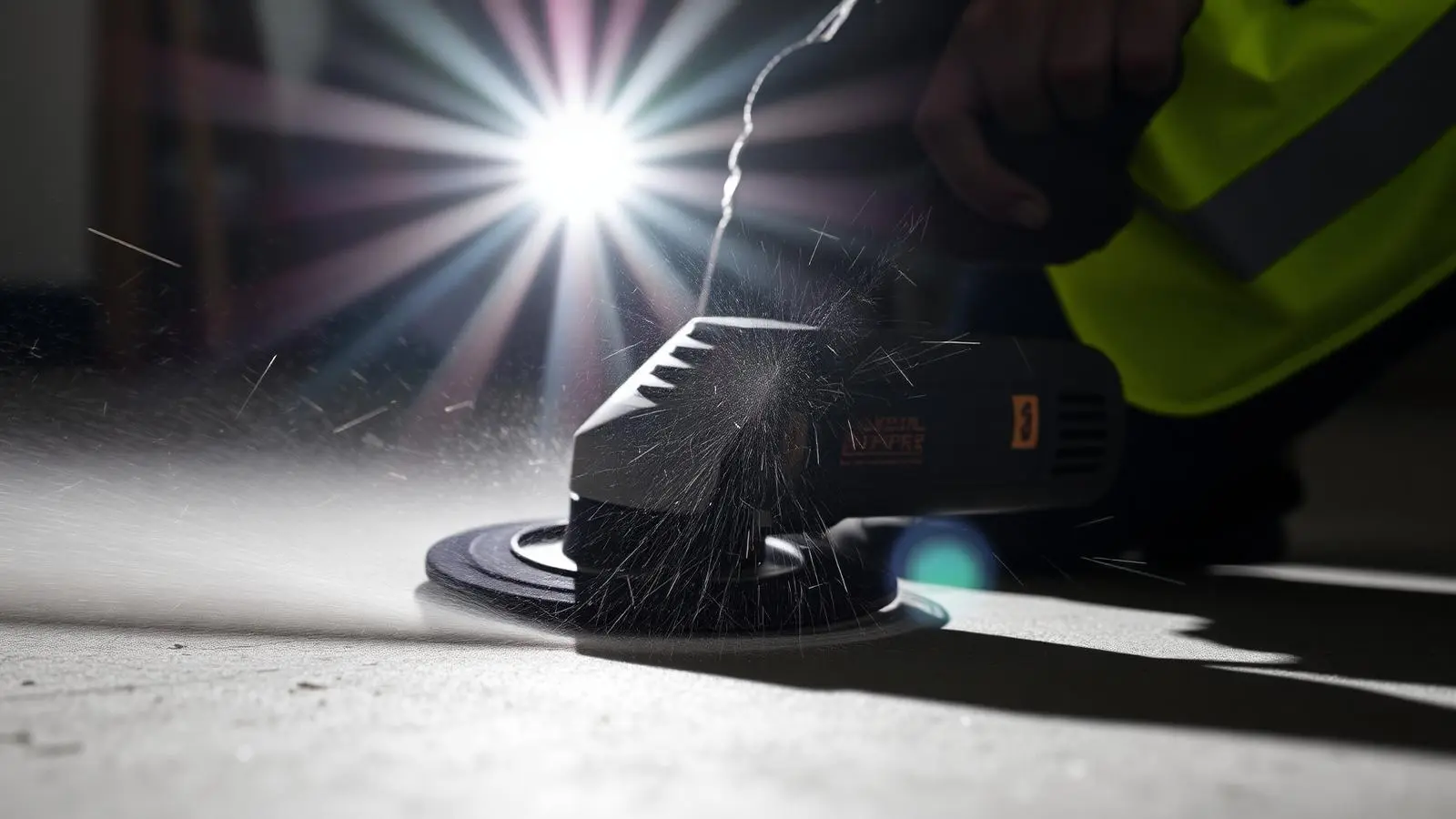
A working specifier's guide to ICRI surface prep standards (CSP 1–9), what each profile is for, and why proper mechanical prep is the single biggest predictor of a resin floor's lifespan.
Moisture Testing in Southern California: Why ASTM F1869 and F2170 Decide Whether Your Floor Survives
A practical explanation of moisture testing for resin floor systems in Southern California — when each test is required, what the numbers mean, and why coastal slabs almost always need a moisture mitigation primer.
Ready to specify your floor?
Reply within two business hours. On-site consult, written specification, and itemized quote — never a high-pressure sales visit.
(619) 304-6501