Coastal Corrosion: How Salt Air Destroys Resin Coatings (and What Stops It)
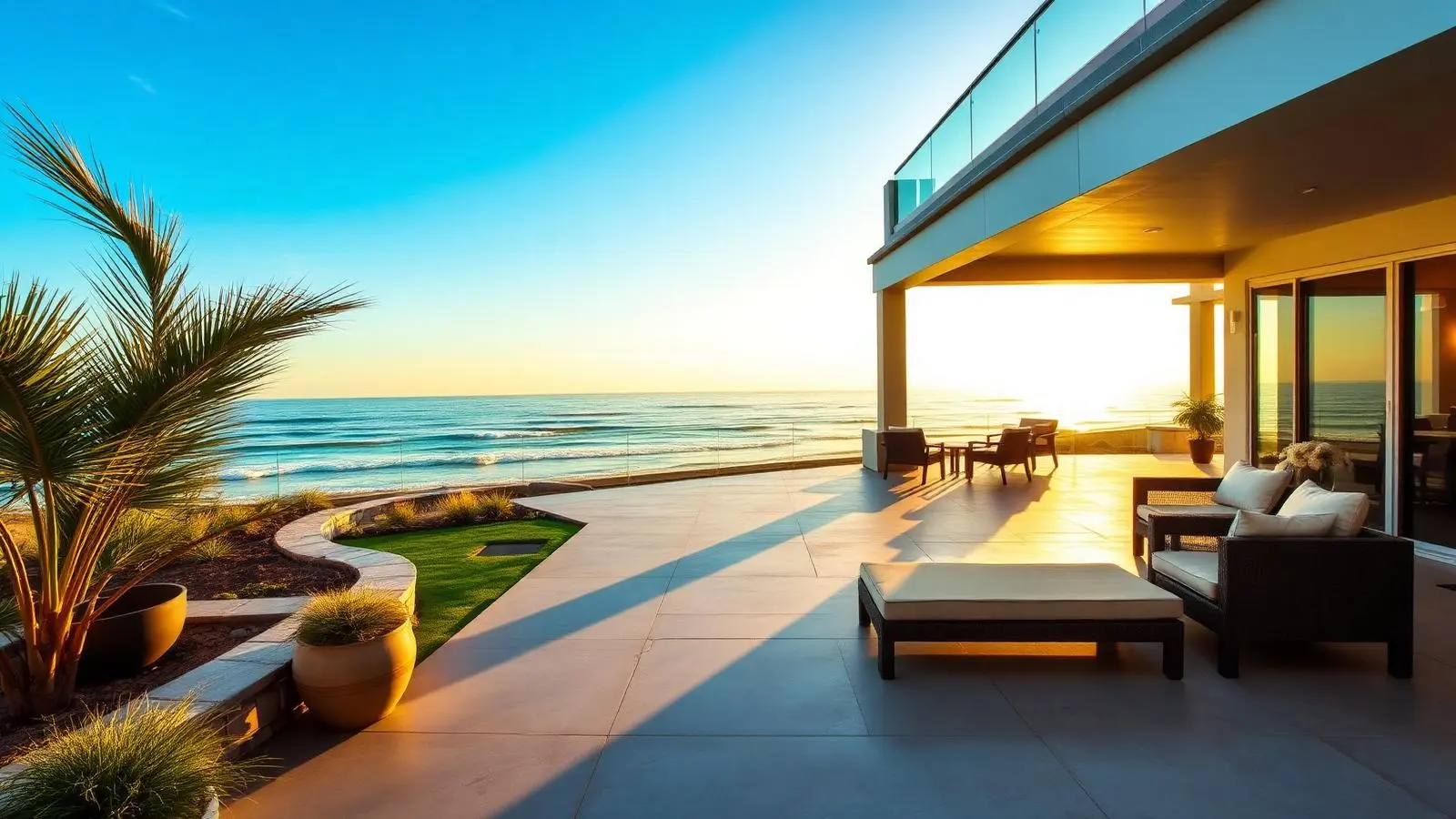
If your home or business is within five miles of the Pacific from San Diego to Ventura, the air your floor breathes is fundamentally different from the air ten miles inland. Salt fog deposits chloride ions onto every horizontal surface every night. Combined with the high UV index of Southern California sunshine, that chloride exposure cuts the lifespan of a typical resin coating roughly in half.
I've replaced more than a few three-year-old coatings in Cardiff, La Jolla, and Newport Beach that should have lasted a decade. They didn't fail because of bad install; they failed because the wrong system was specified for a coastal environment.
- ·Coastal SoCal coatings need to be aliphatic (UV stable) and chloride-resistant — most aromatic urethanes and standard epoxies don't qualify.
- ·Polyaspartic, polyurea, and aliphatic polyurethane topcoats are the survivors in salt-fog environments.
- ·Surface prep matters more on coastal slabs because chloride intrusion below the slab surface compromises bond strength.
- ·Expect to re-topcoat every 7–10 years on coastal exterior installations vs. 12–15 years inland.
How salt actually attacks a coating
Salt damage to a coating happens at two interfaces. At the surface, chloride ions and UV combine to break the resin's polymer chains — the floor goes chalky, loses gloss, and starts micro-cracking. At the substrate interface, chloride that has migrated through hairline cracks and pinholes attacks the resin-to-concrete bond, causing blistering and delamination.
Aromatic resins (most standard urethanes, all standard epoxies) lack UV stability. Once the resin starts to chain-break under UV, chloride accelerates the breakdown geometrically. Aliphatic resins are more stable on both fronts, which is why they dominate quality coastal specifications.
The systems that work near the ocean
After two decades of installations from Imperial Beach to Malibu, three system families consistently outperform in coastal exposure:
- 01Aliphatic polyaspartic over polyurea basecoat — the gold standard for coastal exterior decks and patios
- 02Pure aliphatic polyurethane high-build — used where chemical resistance also matters (coastal commercial)
- 03Cementitious overlay with polymer-modified acrylic and aliphatic sealer — best for textured pool decks and walkways
Maintenance is non-optional on the coast
An exterior coating that goes 10 years without maintenance inland might go 4 years on the coast before showing wear. The right protocol: pressure rinse with fresh water quarterly to remove chloride deposits, inspect annually for chalking or pinholes, and re-topcoat preventively at year 7 rather than reactively at year 10. A re-topcoat is a fraction of the cost of a full system replacement.
Substrate decisions specific to coastal SoCal
Coastal slabs older than 30 years often have chloride contamination throughout the concrete itself, not just on the surface. In those cases, a moisture mitigation primer with chloride resistance (some products specifically rated for marine environments) is required regardless of what the moisture test reads. A standard moisture mitigation primer can fail in chloride-saturated concrete.
When to walk away from a coating spec
There are coastal slabs I won't put a high-build resin on at all: severely spalled with rebar exposure, slabs where chloride testing reveals contamination above 0.4% by weight of cement, or slabs with active alkali-silica reaction. In those cases the right answer is structural repair first, then a textured cementitious overlay rather than a thin-film coating. A thin-film resin over a failing slab is just expensive cosmetic theater.
Frequently asked questions
How close to the ocean is "coastal" for coating purposes?
Within five miles you should assume coastal exposure rules apply. Within one mile, salt deposition is high enough that aromatic resins should be excluded from the specification entirely.
Will a coating prevent salt damage to the slab itself?
A properly specified coating slows salt intrusion dramatically and extends the slab's life. It does not stop chloride that has already penetrated the slab from continuing to migrate.
Can interior floors near the coast get away with cheaper systems?
Conditioned interior space largely escapes salt-fog exposure, so aromatic systems work. The exception is garages with the door open — those see coastal exposure even though they're technically interior.
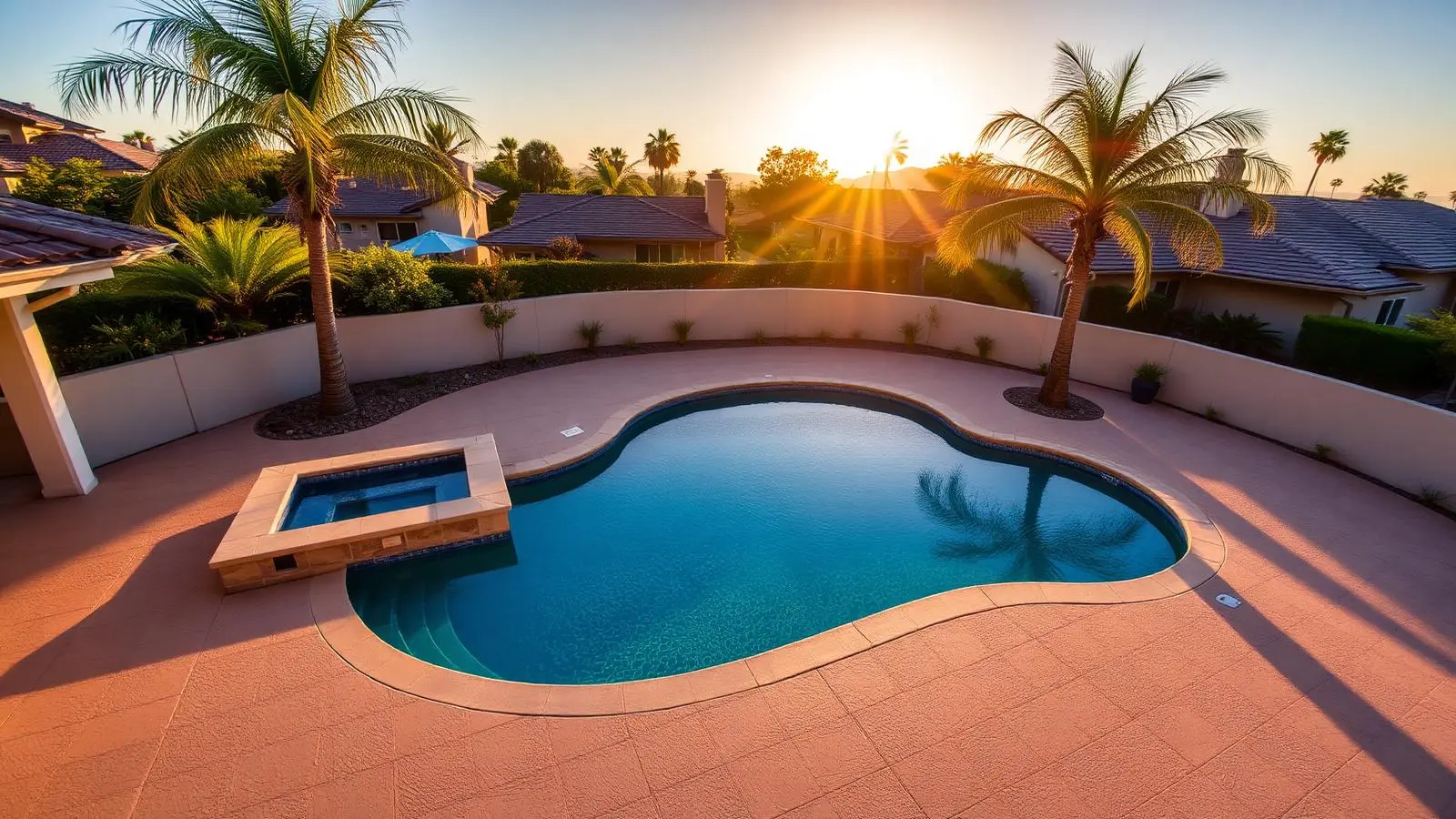
Pool Deck Coatings That Survive Southern California Summer Heat
How to specify a pool deck coating that stays cool, slip-resistant, and crack-free through Southern California summers — texture systems, reflective pigments, and what to avoid.
Moisture Testing in Southern California: Why ASTM F1869 and F2170 Decide Whether Your Floor Survives
A practical explanation of moisture testing for resin floor systems in Southern California — when each test is required, what the numbers mean, and why coastal slabs almost always need a moisture mitigation primer.
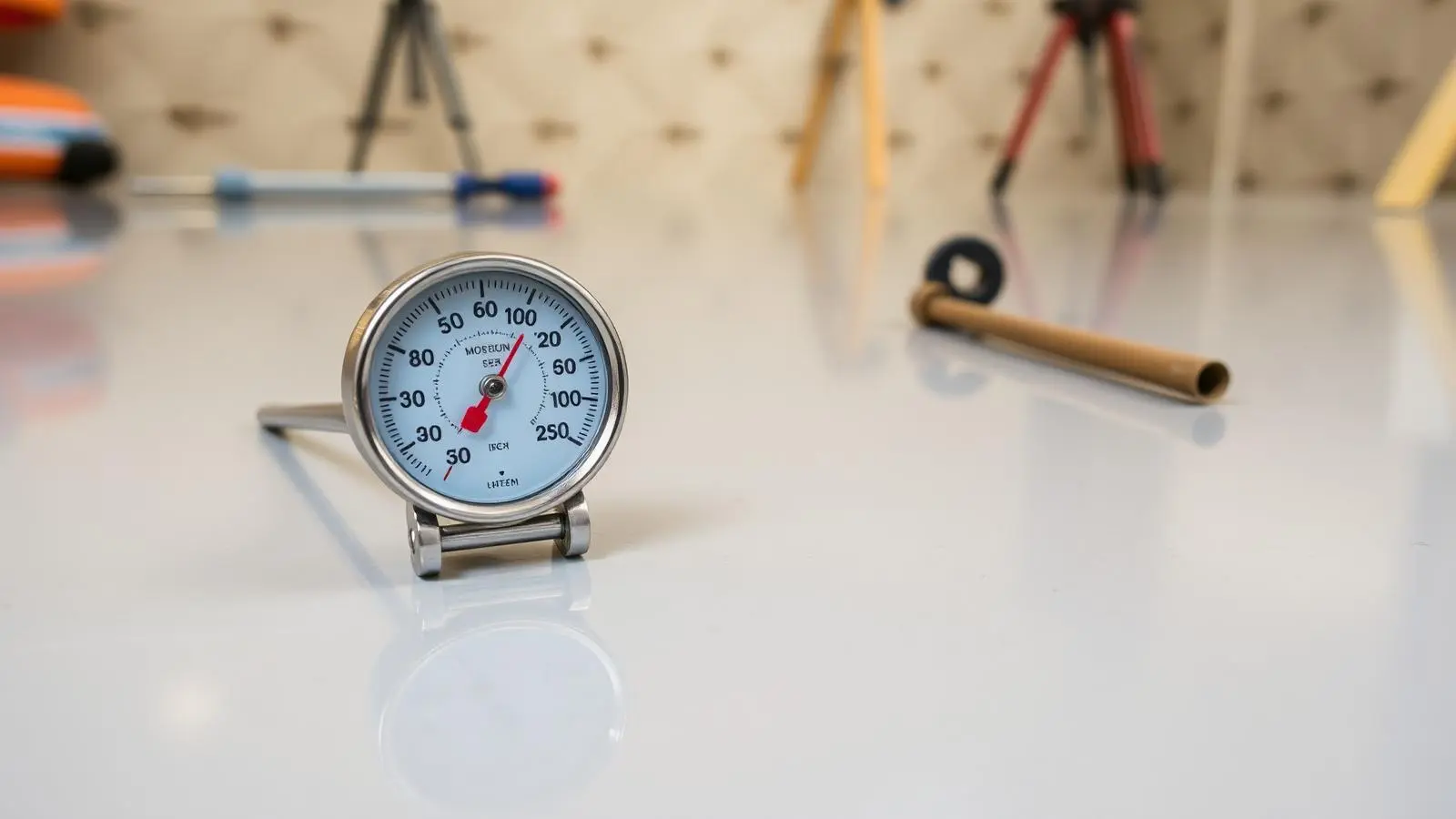
Why Concrete Coating Cure Times Lie in a Southern California Summer
How heat, humidity, and slab temperature change the cure window of polyaspartic, epoxy, and polyurethane systems — and why the data sheet is just a starting point in SoCal summers.
Ready to specify your floor?
Reply within two business hours. On-site consult, written specification, and itemized quote — never a high-pressure sales visit.
(619) 304-6501