Pool Deck Coatings That Survive Southern California Summer Heat
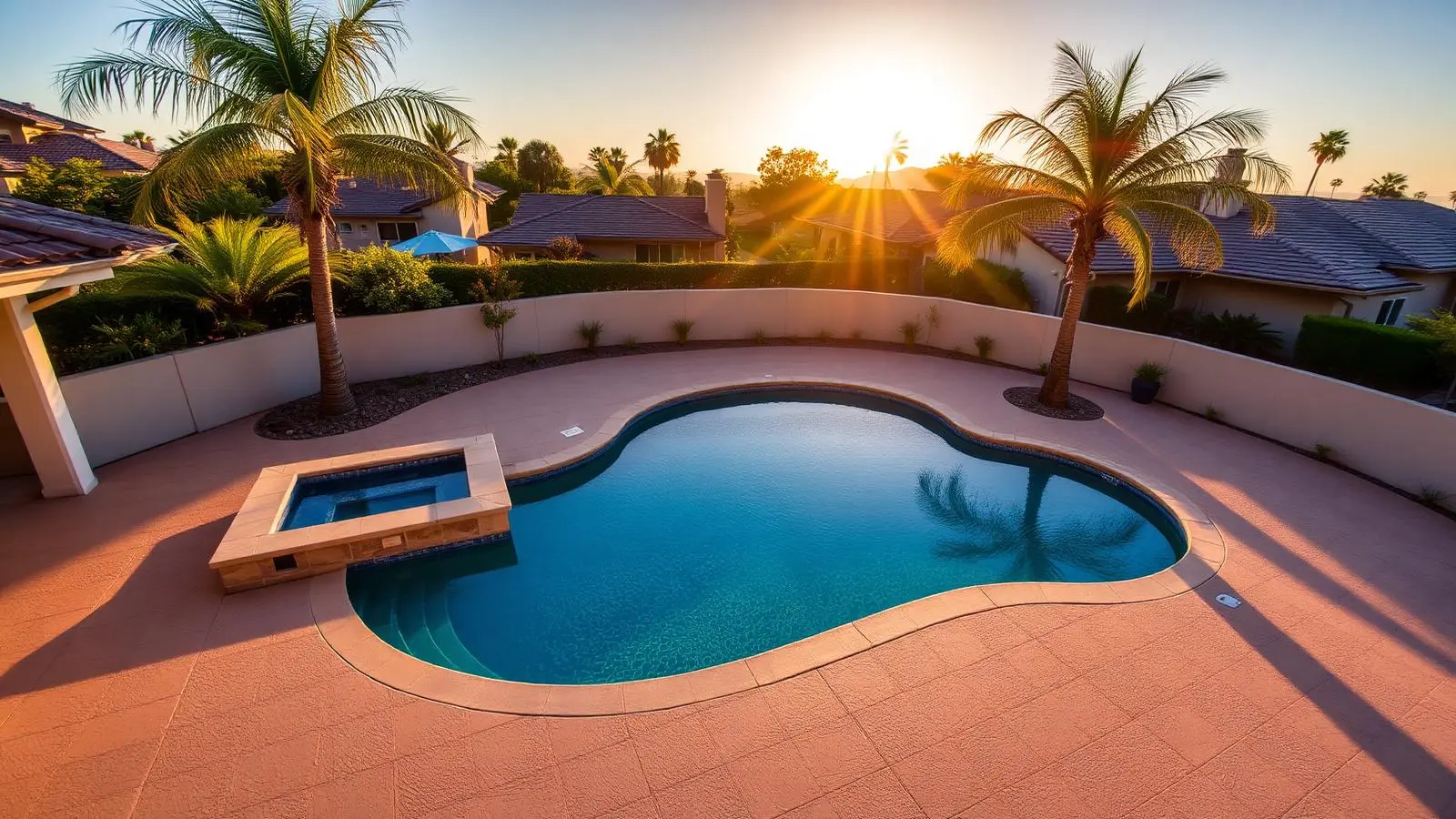
In July and August, an untreated concrete pool deck in Inland San Diego, Riverside, or Temecula can hit 145 °F surface temperature. Bare feet blister at 122 °F. The right pool deck coating is not a cosmetic decision — it is a thermal one.
I've installed pool deck systems from Coronado to La Quinta, and the systems that survive aren't the prettiest ones in a brochure. They're the ones engineered for textured slip resistance, reflective pigment, and the differential expansion of a deck that's wet every day and 130 °F on dry afternoons.
- ·Reflective acrylic textured deck coatings ("cool-deck" systems) lower surface temperatures 15–25 °F vs. bare concrete.
- ·Polyurea hybrid systems with a texture broadcast handle the most aggressive UV and salt exposure but cost more.
- ·Smooth, glossy resin systems are wrong for pool decks — they become dangerous when wet and overheat in direct sun.
- ·Expansion joints at every 100–150 sq ft are non-negotiable in inland SoCal climates.
What "cool deck" actually means
Cool-deck systems use two thermal strategies. First, light-colored reflective pigments — usually titanium dioxide-based — reflect 60–80% of solar radiation rather than absorbing it. Second, textured surfaces increase the surface area exposed to ambient air, which accelerates convective cooling. Together, they typically deliver a 15–25 °F surface temperature reduction in mid-afternoon sun.
The original cool-deck systems were knock-down acrylic textures developed in Arizona in the 1960s. Today's premium versions are polymer-modified cementitious overlays or polyurea-based broadcast systems with the same thermal principles but vastly better adhesion and lifespan.
The three systems that work in SoCal
After installing pool decks across coastal, valley, and desert microclimates, three systems consistently outperform:
- 01Acrylic textured cool-deck — Polymer-modified acrylic with knock-down or sprayed texture and reflective pigment. Most affordable ($5–9/sq ft), 7–12 year service life, easiest to recoat.
- 02Polymer-modified cementitious overlay — A 1/8" to 1/4" overlay troweled, stamped, or stenciled with integral color and a sealer. More design flexibility ($8–14/sq ft), 10–15 year service life.
- 03Polyurea hybrid with quartz or vinyl broadcast — The premium system: aggressive UV and chemical resistance, full broadcast for slip texture, holds color in chlorine and salt exposure. ($12–18/sq ft), 15–20 year service life.
What to avoid on a pool deck
Three product categories show up on pool deck quotes that should not be there. Smooth, high-gloss epoxy or polyaspartic systems become hazardous when wet and concentrate solar heat — beautiful in a garage, dangerous around water. Standard exterior latex deck paint has no slip texture and chalks within two summers in SoCal sun. Tinted concrete sealers without a texture broadcast offer no thermal benefit and minimal slip resistance.
Microclimate matters
I size and spec systems differently across SoCal microclimates. Coastal decks (Carlsbad, Encinitas, Coronado) deal with constant salt fog — polyurea hybrid is worth the premium because it survives chloride exposure where acrylic systems chalk. Inland valley decks (Escondido, Temecula, Murrieta) deal with thermal extremes — reflective acrylic with a knock-down texture is the workhorse here. Desert decks (Palm Desert, La Quinta, Indio) deal with UV intensity that destroys aromatic resins — only aliphatic polyurea or acrylic with a high-grade UV stabilizer survives.
Expansion joints, cracks, and the unsexy stuff
Pool decks crack. They expand in heat, contract at night, and shift seasonally with soil moisture. Any coating system that ignores this fails by year three. Proper expansion joint placement (100–150 sq ft maximum field size in inland SoCal), full crack chase and flexible polyurethane sealant in working cracks, and a coating system that bridges hairline cracks with elastomeric primer are the unglamorous details that make a deck last 15 years instead of three.
Maintenance reality check
A textured cool-deck needs a soft brush and pressure rinse twice a year, plus a re-seal or re-topcoat every 5–7 years for acrylic systems and 8–12 years for polyurea. Skipping the re-seal interval is the most common reason a deck "suddenly" looks worn — the coating wore through, then the substrate started absorbing chlorine and UV.
Frequently asked questions
Can a pool deck coating be installed over an existing deck?
Often yes — if the existing surface is sound and properly prepped. Existing cool-deck or kool-deck systems usually require shot blasting and a primer before a new system is installed.
How long after installation can I use the pool?
Acrylic systems are walk-on in 24 hours and pool-use in 72. Polyurea hybrid systems are walk-on in 4–6 hours and pool-use in 24.
Do these systems work with salt water pools?
Polyurea hybrids are the right choice for salt pools. Acrylic systems work but require a more aggressive maintenance schedule due to chloride exposure.
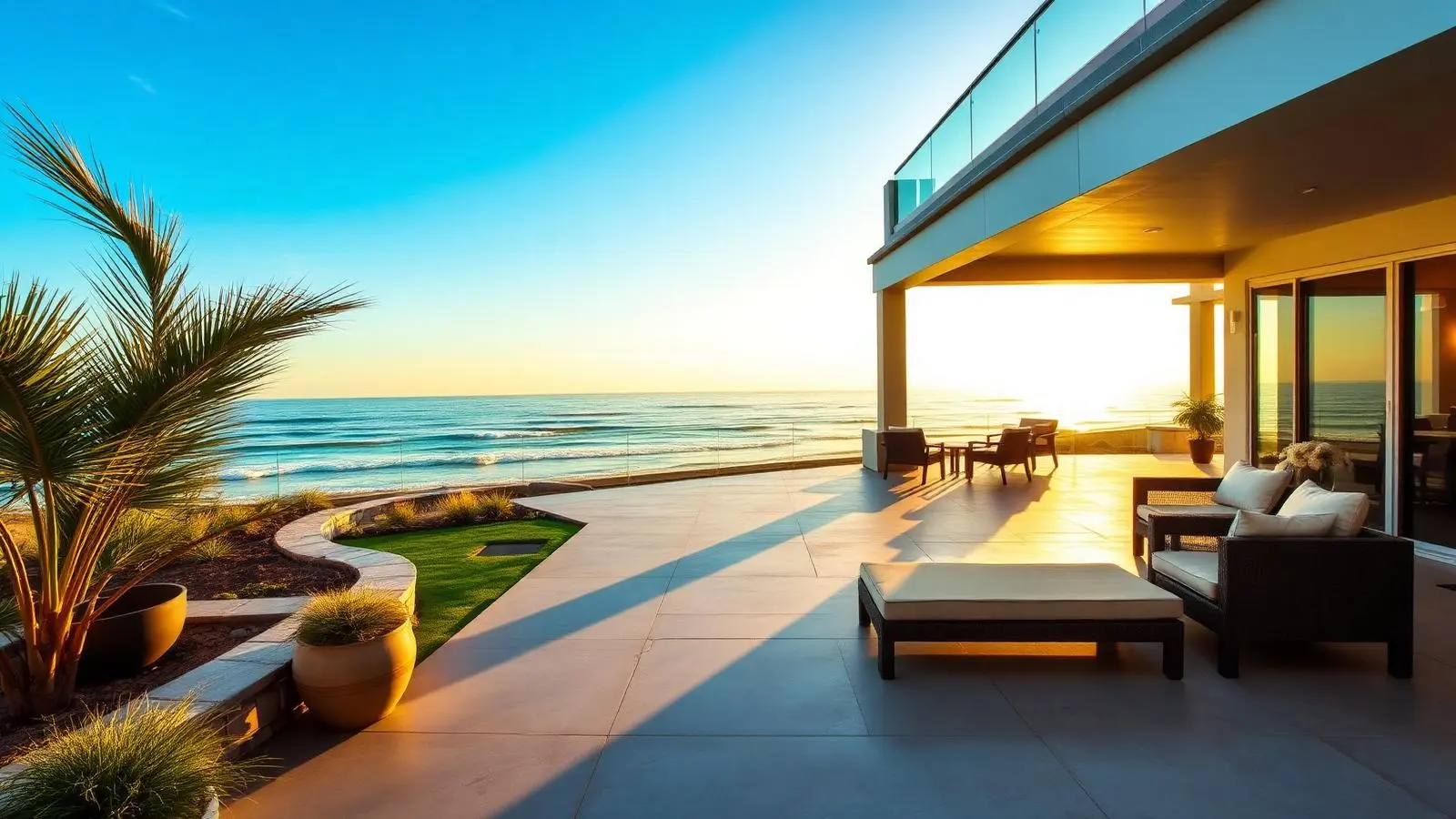
Coastal Corrosion: How Salt Air Destroys Resin Coatings (and What Stops It)
Why coatings fail faster within five miles of the SoCal coast — how salt fog, chloride intrusion, and UV combine to attack resin systems, and which products survive a beach environment.
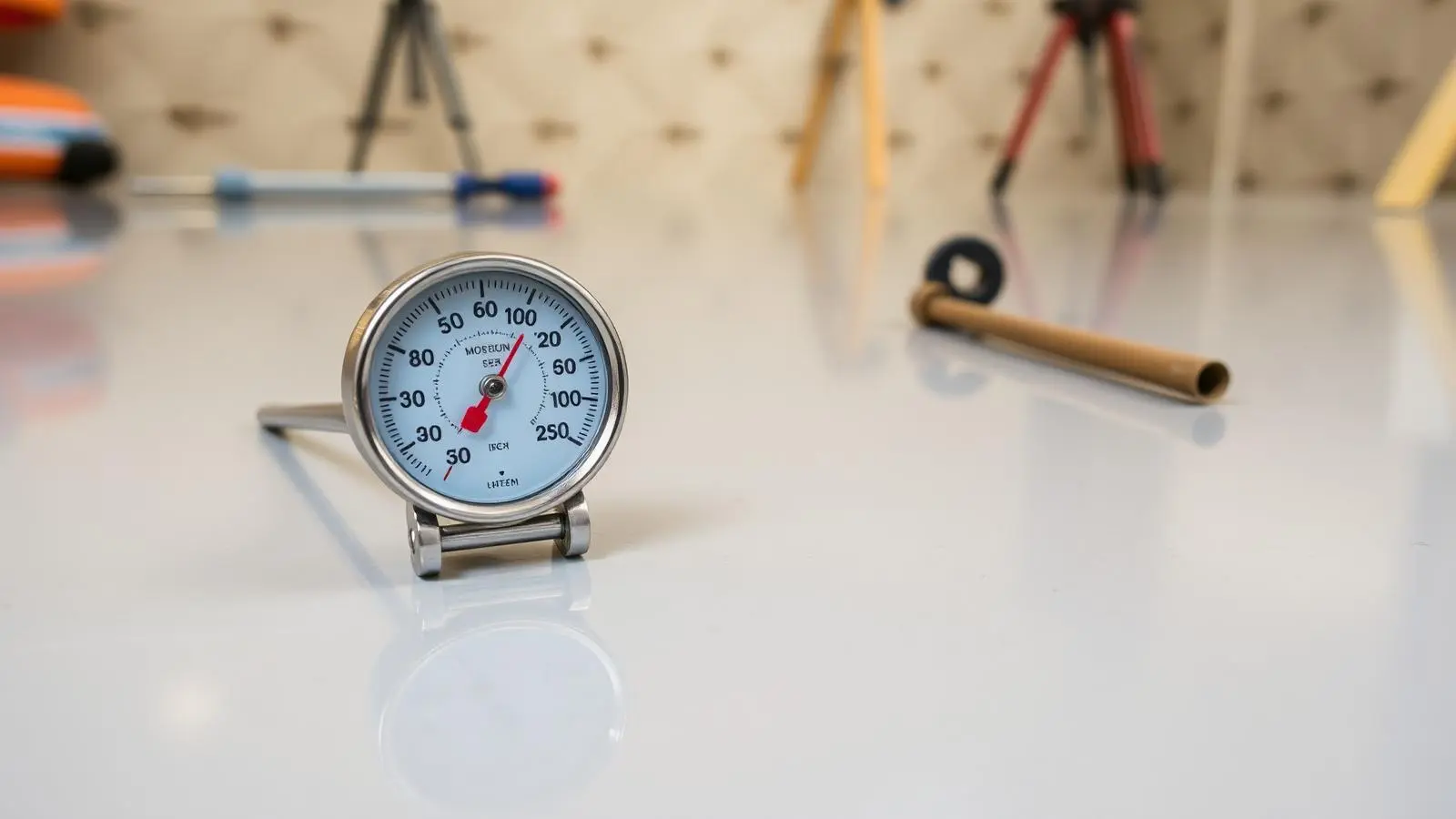
Why Concrete Coating Cure Times Lie in a Southern California Summer
How heat, humidity, and slab temperature change the cure window of polyaspartic, epoxy, and polyurethane systems — and why the data sheet is just a starting point in SoCal summers.
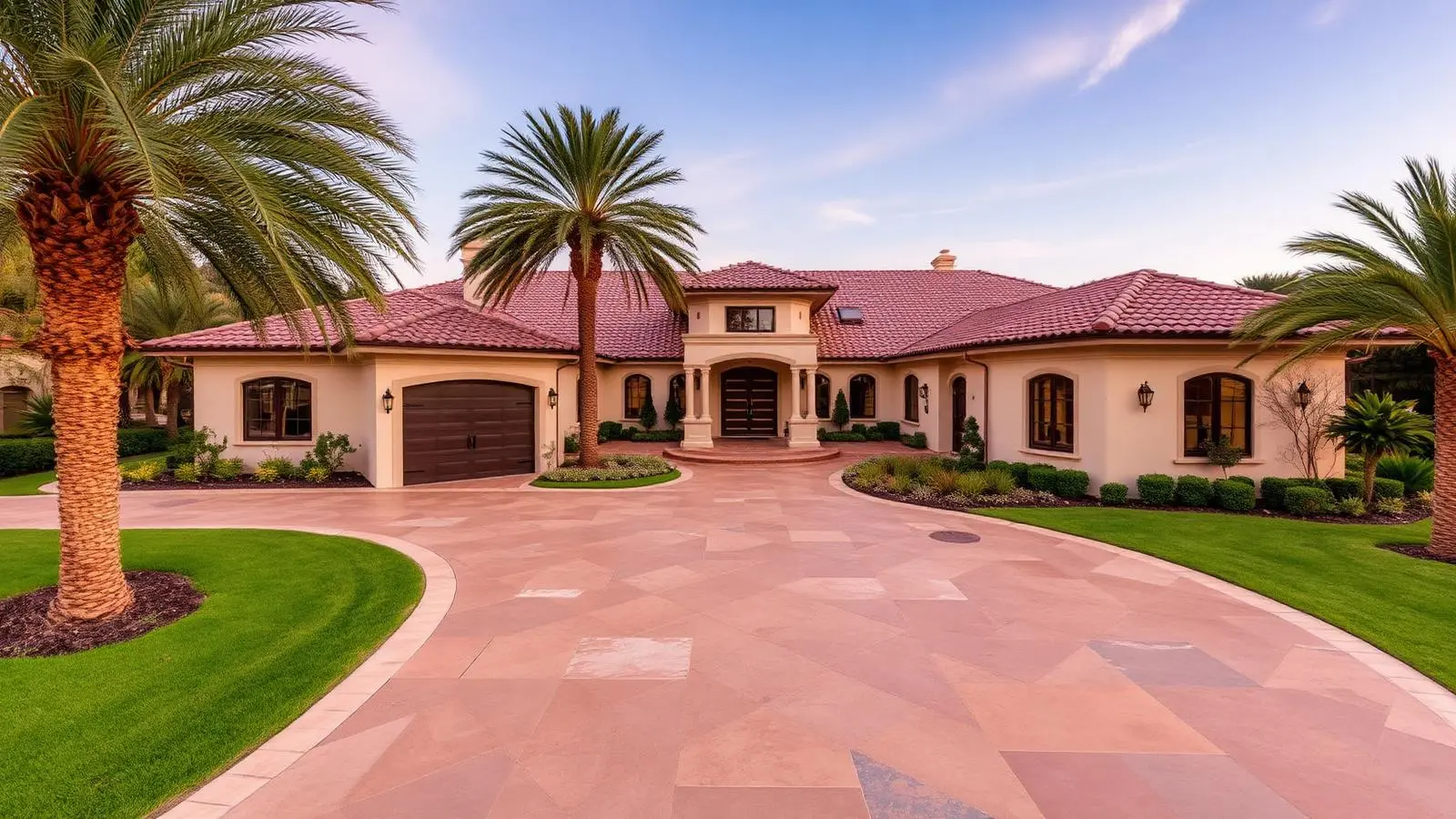
Driveway Staining and Decorative Concrete in Rancho Santa Fe and the SoCal Estate Market
How decorative concrete driveways are specified for luxury Southern California estates — staining methods, sealer choices, and the maintenance reality of an exterior decorative finish.
Ready to specify your floor?
Reply within two business hours. On-site consult, written specification, and itemized quote — never a high-pressure sales visit.
(619) 304-6501