
Why Concrete Coating Cure Times Lie in a Southern California Summer
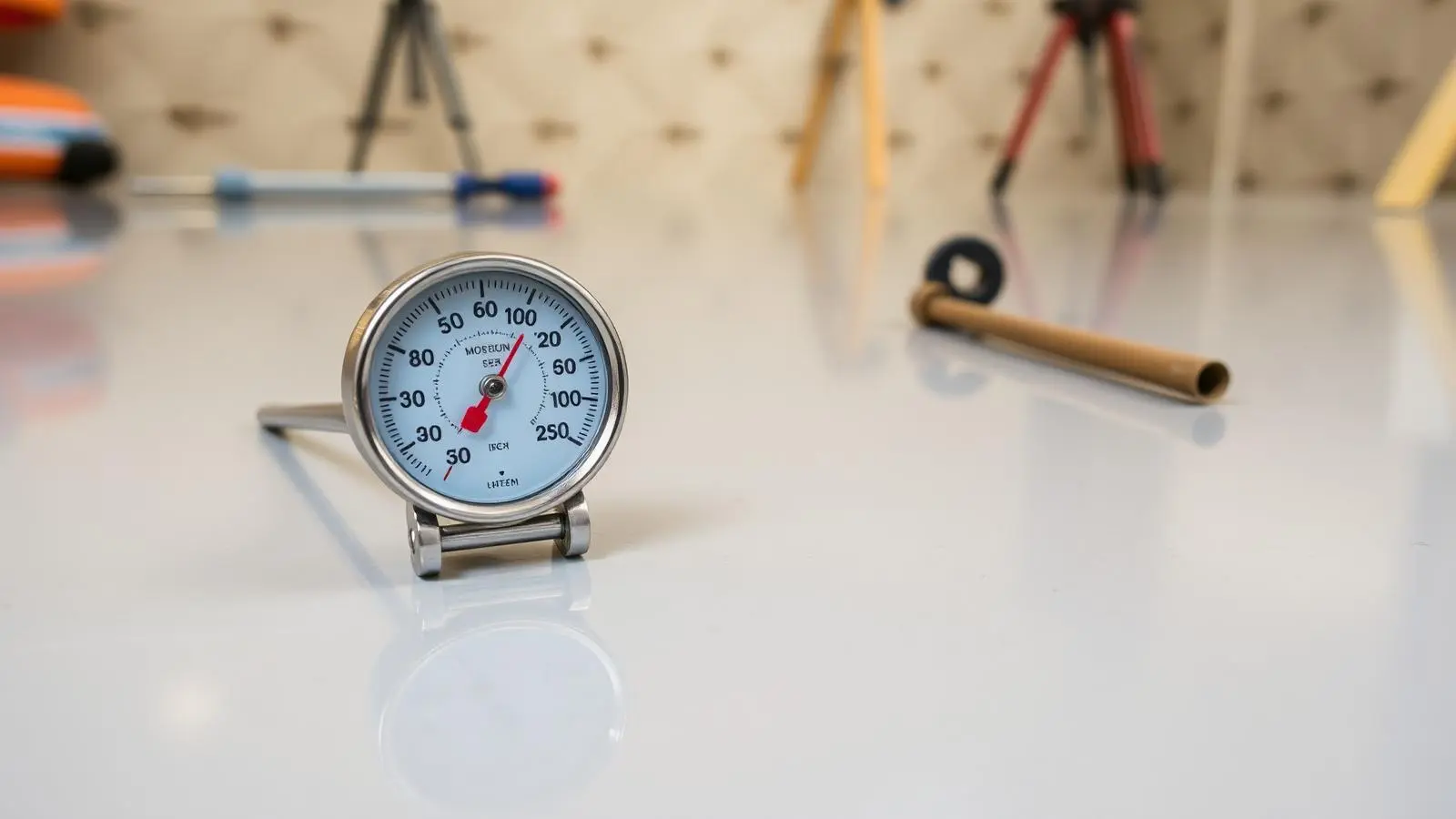
Every resin product data sheet quotes pot life and cure time at 77 °F and 50% relative humidity. In a Southern California summer install — Temecula in August, Palm Desert in September, Riverside any time after May — those numbers are wishful thinking. A polyaspartic that has a 30-minute pot life on the data sheet might give you 8 minutes on a 110 °F slab.
Knowing how cure windows actually behave in heat is what separates a clean install from a textured-cobweb mess. Here's what changes and how working installers compensate.
- ·Resin cure rates roughly double for every 18 °F above 77 °F — meaning pot life is cut in half on a hot slab.
- ·High slab temperatures cause flash-curing, surface skinning, and trapped solvent that ruins finished gloss.
- ·Working in early morning, using slower hardener formulations, and shading the slab are how installers keep summer installs sound.
- ·Push install dates to early morning windows or fall/spring when possible — the result is always a better floor.
Why heat compresses cure windows
Resin cure is a chemical reaction. Like most chemical reactions, the rate roughly doubles for every 18 °F (10 °C) increase in temperature — Arrhenius behavior. A polyaspartic with a 30-minute pot life at 77 °F has roughly a 15-minute pot life at 95 °F and a 7-minute pot life at 113 °F. On a slab that's been baking in afternoon Temecula sun, you're often working with single-digit minutes from mix to final placement.
The same compression hits cure-to-walk and cure-to-recoat windows. A floor that says "recoat in 4 hours" on the data sheet may need to be recoated in 90 minutes during a summer install — miss that window and the next coat won't bond properly.
What goes wrong when the cure compresses
Three failure modes show up in heat-rushed installs. Surface skinning — the resin surface cures before the bulk does, trapping solvent and air, leaving pinholes and orange peel. Flash gel — the resin gels in the bucket before it can be placed, leaving rope marks and lap lines. Lift edges — earlier coats keep curing past the recoat window and become too hard to chemically bond, so the new coat sits on top mechanically and peels at edges within months.
How professional crews compensate
There are five practical adjustments that experienced SoCal crews make in summer installs:
- 01Start at sunrise — most polyaspartic chip installs in summer happen between 5 a.m. and 11 a.m., done before the slab climbs above 95 °F
- 02Switch to slow-cure hardener formulations — most major resin lines offer a slow-cure SKU rated for 90–110 °F installs
- 03Shade the slab — pop-up canopies, tarps, and even commercial shade structures over driveways add 10–20 °F of working margin
- 04Pre-cool the resin — store kits in air-conditioned space until just before mix; warm resin cures faster
- 05Mix smaller batches more frequently — a 5-gallon kit poured in 5 minutes beats a 10-gallon kit that gels at minute 8
When to push the install date
Honestly, the best heat compensation is to not install in heat at all. For high-end installs in inland SoCal, I steer clients toward March–May or October–November installs. The floor cures cleanly, the crew works at normal pace, and the finish quality is visibly better. A two-week schedule slip is almost always cheaper than a re-do.
Coastal SoCal installs (where slab temps rarely climb above 90 °F even in August) are more forgiving and can run year-round with normal cure-window planning.
What homeowners should ask
If you're scheduling a summer install in inland SoCal, two questions tell you whether your installer is taking the heat seriously: "Are you using the slow-cure version of the resin for this install?" and "What time will you be on-site, and when do you plan to be done with the broadcast?" If the answer is "standard cure, on-site at 9 a.m., done by 5 p.m.," you're going to get a heat-rushed floor.
Frequently asked questions
Is there a temperature too hot to install at all?
Most resin systems have a maximum slab temperature of 95–100 °F regardless of hardener formulation. Above that, the only honest answer is to wait or work overnight.
Does shading the slab really make a measurable difference?
Yes — a shaded slab in 100 °F ambient air typically runs 15–25 °F cooler than one in direct sun. That's the difference between a 7-minute pot life and a 15-minute one.
Can humidity affect cure too?
Polyurea and polyaspartic systems are moisture-cured to varying degrees, so high humidity can actually accelerate cure. Coastal morning humidity in summer is usually neutral-to-helpful, while desert dry heat is the worst combination.
Pool Deck Coatings That Survive Southern California Summer Heat
How to specify a pool deck coating that stays cool, slip-resistant, and crack-free through Southern California summers — texture systems, reflective pigments, and what to avoid.
Coastal Corrosion: How Salt Air Destroys Resin Coatings (and What Stops It)
Why coatings fail faster within five miles of the SoCal coast — how salt fog, chloride intrusion, and UV combine to attack resin systems, and which products survive a beach environment.
Moisture Testing in Southern California: Why ASTM F1869 and F2170 Decide Whether Your Floor Survives
A practical explanation of moisture testing for resin floor systems in Southern California — when each test is required, what the numbers mean, and why coastal slabs almost always need a moisture mitigation primer.
Ready to specify your floor?
Reply within two business hours. On-site consult, written specification, and itemized quote — never a high-pressure sales visit.
(619) 304-6501