SoCal Luxury Surfaces
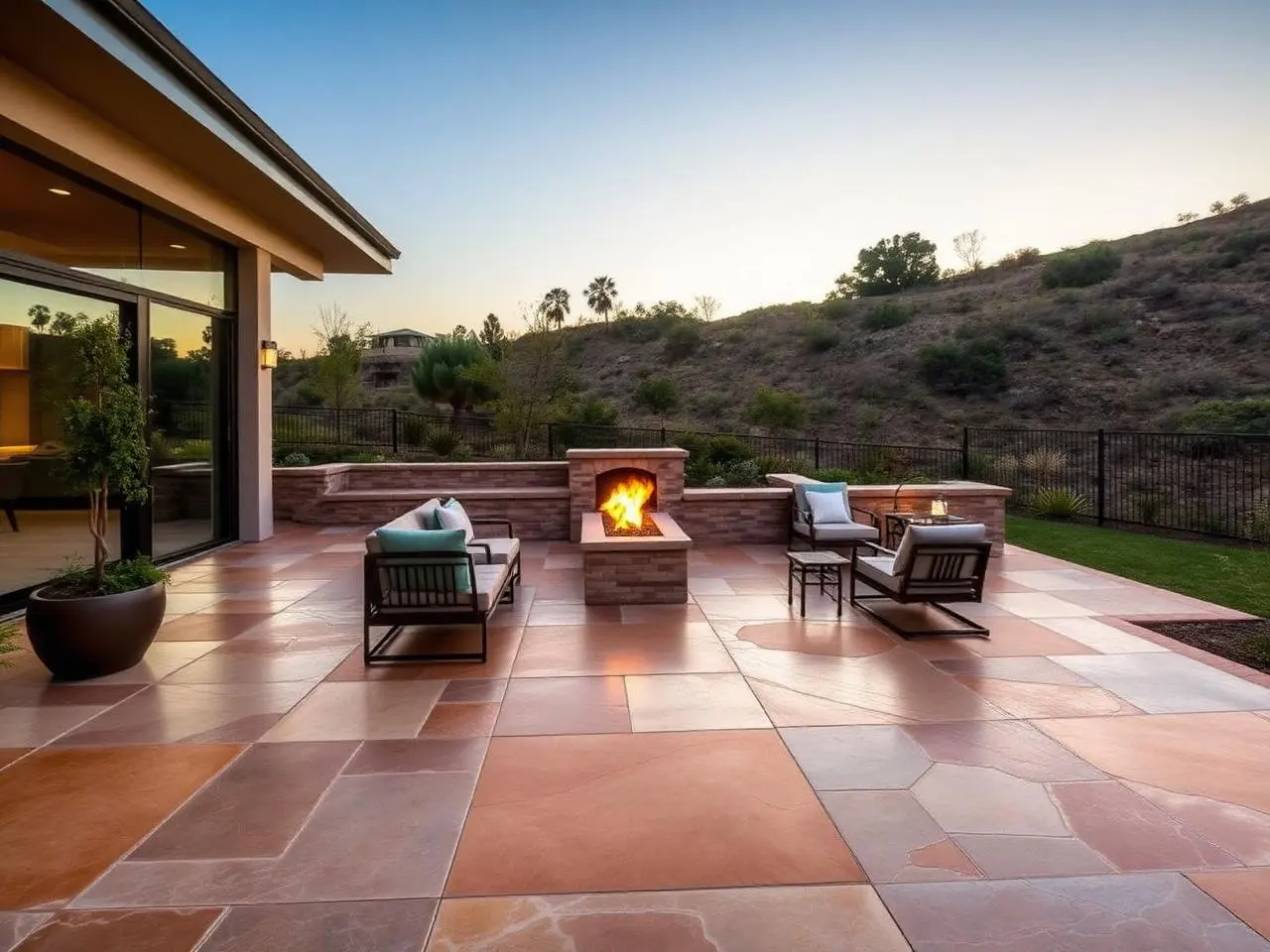
Sealed concrete patio with wet-look topical sealer
· Service · 13 / 15

Invisible film, or wet-look gloss.

Concrete sealers fall into two families: penetrating sealers (silicate, silane / siloxane) that bond chemically with the slab and leave no visible film, lasting 5–15 years; and topical sealers (acrylic, epoxy, polyaspartic, urethane) that build a visible film for gloss and stain resistance, lasting 3–10 years. Cost: $2–$6/sq ft installed.

20+
Years installing
2,400+
Floors completed
5.0 ★
Google rating
10–15 Yr
Written warranty
— TL;DR

The five-second answer.

  • Two families: penetrating (chemical bond, invisible) and topical (visible film, gloss).
  • Penetrating: silicate, silane / siloxane — 5–15 year life, no recoat needed.
  • Topical: acrylic, epoxy, polyaspartic, urethane — 3–10 year life, recoatable.
  • Cost: $2–$6/sq ft installed.
— Definition

What is Concrete Sealing?

Concrete sealing is the application of a chemical or polymeric sealant to a prepared slab to reduce porosity, block staining and extend service life. Penetrating sealers (sodium / lithium silicate densifiers, silane / siloxane water repellents) react with calcium hydroxide in the slab or bond chemically inside the capillary structure — they leave no visible film and do not change appearance. Their life is measured in 5 to 15 years and they are not typically recoated; instead the slab is re-densified at the next service. Topical sealers (acrylic, epoxy, polyurethane, polyaspartic) build a visible film 1 to 20 mil thick that delivers gloss, color enhancement (wet look) and higher stain resistance, but wears at the surface and recoats on a 3 to 10 year cycle. Selection drives off use, gloss target, slip rating, breathability and budget.

System specification.

The numbers we'll write into your job file before any product is opened.

Penetrating — silicate
5–15 year life · invisible · interior polish stabilizer
Penetrating — silane / siloxane
5–10 year life · invisible · exterior water repellent
Topical — acrylic
3–7 year life · 8–20 mil · semi-gloss to wet-look
Topical — epoxy
10–20 year life · 10–40 mil · high gloss · interior
Topical — polyaspartic
10–25 year life · 8–20 mil · UV-stable · gloss
Topical — urethane
5–10 year life · 4–10 mil · matte to satin
VOC content (water-based)
<100 g/L
VOC content (solvent-based)
<400 g/L (jurisdictional limits apply)
Slip rating (ANSI A326.3 wet DCOF)
0.42–0.65 with ceramic-bead additive
Warranty
5–10 year material adhesion (system-dependent)

Best for.

Where this system outperforms the alternatives. Linked to detailed application pages.

Our install process.

Documented, photographed and signed off step-by-step. Prep is 70% of lifespan.

  1. 01
    Substrate evaluation & sealer selection
    Surface profile, prior sealers, use, gloss target and breathability requirement reviewed. Sealer family (penetrating vs. topical) selected before product order.
  2. 02
    Pressure wash or grind
    Existing surface cleaned to remove contamination. Failed prior sealers ground or stripped to bare slab.
  3. 03
    Crack and spall repair
    Static cracks chased and filled with polyurea; spalls rebuilt with polymer-modified mortar.
  4. 04
    Drying to manufacturer-spec moisture
    Slab dried to sealer manufacturer's spec moisture content — too wet, sealer fails; too dry, penetration is shallow.
  5. 05
    Penetrating sealer flood (if specified)
    Silicate or silane / siloxane flooded over slab and worked in until refusal. Excess removed before drying.
  6. 06
    Topical sealer application (if specified)
    Two coats acrylic / epoxy / polyaspartic / urethane rolled or sprayed at full mil. Optional ceramic-bead additive for slip resistance.
  7. 07
    Cure & inspection
    Walk-on per sealer spec (4–24 hr), full traffic 24–72 hr. Gloss and DCOF spot-checked.
  8. 08
    Maintenance plan
    Recoat interval, cleaner spec and burnishing schedule documented. Refresh quoting included for end-of-cycle.
— Finish options

Color, texture, depth.

Sealers are clear or color-tinted. Topical sealers can be tinted with concrete-compatible color packs. Penetrating sealers do not affect color. Wet-look sealers darken slab color modestly; matte sealers preserve natural appearance.

[REPLACE: swatch grid — actual finish samples on concrete coupons]

Penetrating vs. topical sealer.

A practical head-to-head — what each system does well, and where the line is.

Recommended

Penetrating Sealer

  • Invisible — slab looks unsealed
  • 5–15 year life, no recoat
  • Breathable — slab moisture migrates
  • $2–$4/sq ft
Alternative

Topical Sealer

  • Visible film, gloss / wet-look
  • 3–10 year life, recoatable
  • Higher stain resistance
  • $3–$6/sq ft

Verdict: Penetrating wins for outdoor slabs with moisture migration concerns, polished interior floors and any project where the natural appearance of the slab should be preserved. Topical wins where gloss, color enhancement, higher stain resistance or recoat-able maintenance is the goal.

— Frequently asked

Specifics matter.

What does sealing concrete cost per square foot?
+
Concrete sealing runs $2–$6/sq ft in SoCal. Penetrating silicate or silane / siloxane sealers at the floor of the range; topical polyaspartic or epoxy sealers with surface prep at the top. Pricing reflects substrate prep, sealer family, mil build and decorative additives. Larger projects (5,000+ sq ft) drop to the lower end.
How long does a sealer last?
+
Penetrating silicate sealers last 10–15 years and are typically not recoated — they re-densify the slab during service. Silane / siloxane water repellents last 5–10 years. Topical acrylic sealers last 3–7 years. Topical polyaspartic and epoxy sealers last 10–25 years with proper maintenance. Recoat is fast and inexpensive when scheduled at end-of-life.
Will sealer change how my concrete looks?
+
Penetrating sealers do not change appearance. Topical sealers vary: matte sealers preserve natural appearance, semi-gloss adds slight sheen, wet-look sealers darken and saturate slab color noticeably. Sample boards on the actual slab before commitment — every concrete slab takes sealer differently.
Is sealed concrete slippery when wet?
+
Topical sealers without aggregate sit at wet DCOF 0.30–0.45 (ANSI A326.3) — below threshold for wet residential. We add a ceramic-bead or aluminum-oxide additive into topical sealers on any wet zone (pool surrounds, exterior walkways, mudrooms) to bring wet DCOF above 0.55. Penetrating sealers do not change slab traction.
Can sealer go over an existing coating?
+
Sometimes — depends on chemistry compatibility. Acrylic sealer over old acrylic: yes after pressure wash. Polyaspartic over old epoxy: yes after light grind and bond test. Sealer over an unknown prior coating: bond-test at three locations before quoting. Failed prior coatings must be ground off — we do not seal over delaminating film.
Why does my outdoor concrete keep getting stained?
+
Most likely the existing sealer has worn off. Outdoor sealers in SoCal sun typically need refresh every 3–7 years (acrylic) or 5–10 years (silane / siloxane). Once the sealer is gone, the slab absorbs oils, leaf tannins, BBQ drippings and rust — none of which clean off bare concrete easily. We strip and re-seal as the standard remediation.
Get a Free Estimate

Ready to seal your slab the right way?

Reply within two business hours. On-site consult, written specification, and itemized quote — never a high-pressure sales visit.

(619) 304-6501
Start in 10 seconds

We'll prefill the rest. No spam, no pressure — your details only go to our estimating team.