SoCal Luxury Surfaces
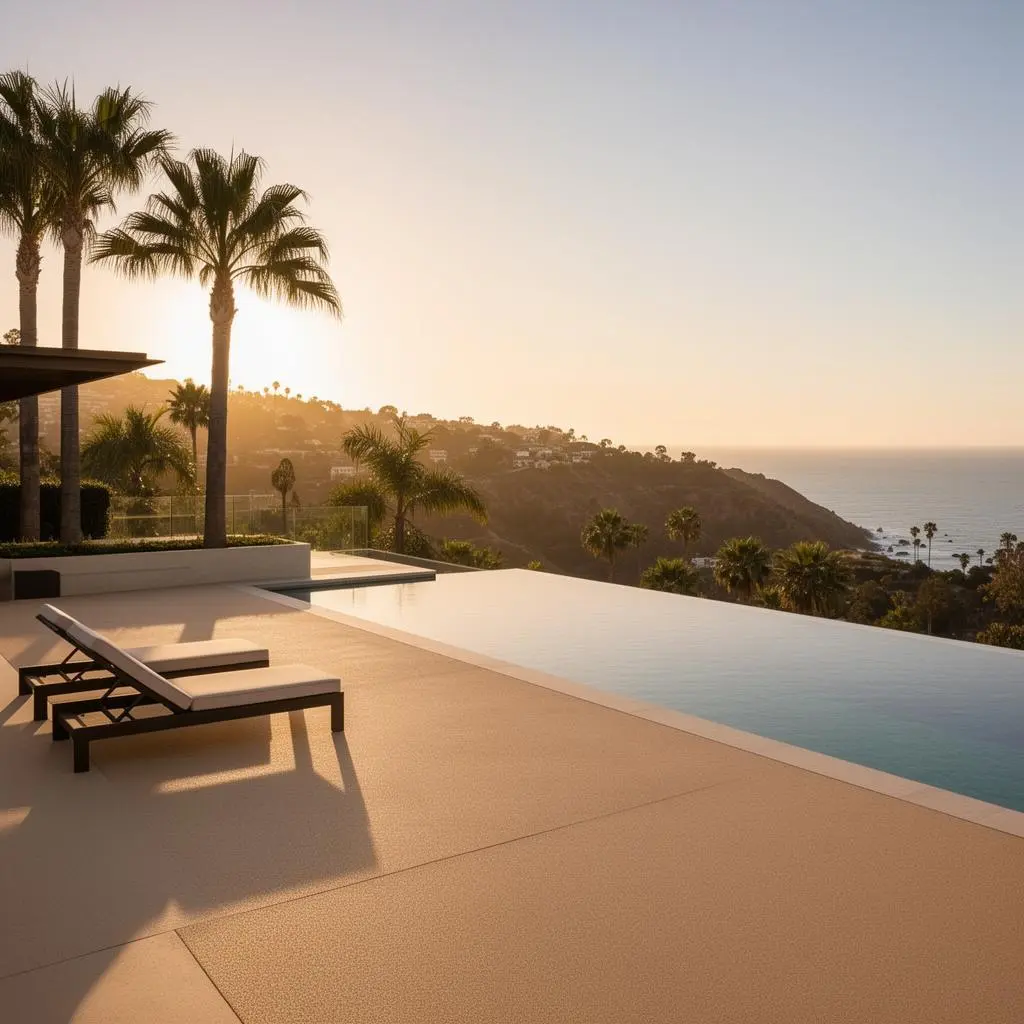
Acrylic cool deck pool surround in coastal Southern California
· Service · 06 / 15

Cool-deck comfort. Coastal-tough.

Acrylic flooring is a water- or solvent-based acrylic sealer and stain system applied to exterior concrete — pool decks, patios, walkways, breezeways. Cool-deck textures stay 20–30 °F cooler than bare concrete in SoCal sun, refresh on a 3–7 year cycle, and install at $3–$6/sq ft.

20+
Years installing
2,400+
Floors completed
5.0 ★
Google rating
10–15 Yr
Written warranty
— TL;DR

The five-second answer.

  • Water- or solvent-based acrylic sealers and stains for exterior concrete.
  • Cool-deck textures stay 20–30 °F cooler than bare concrete underfoot.
  • Refresh cycle: 3–7 years depending on UV and traffic.
  • Cost: $3–$6/sq ft installed across SoCal.
— Definition

What is Acrylic Flooring?

Acrylic flooring is an exterior decorative concrete system built around water- or solvent-based acrylic resins applied as primer, decorative texture (knockdown, splatter, lace, stencil) and UV-stable acrylic top sealer. The reflective acrylic film and textured top profile keep the deck 20–30 °F cooler than bare concrete in direct SoCal sun — the technical reason "cool deck" earned its name. Acrylic is permeable enough to let slab moisture migrate (unlike epoxy), which is why it remains the preferred system for pool surrounds, exterior patios and walkways. The trade-off is film life: acrylic refreshes on a 3–7 year cycle versus 15–25 years for resin systems.

System specification.

The numbers we'll write into your job file before any product is opened.

Resin
Water- or solvent-based acrylic
Mil thickness (dry)
8–20 mil with texture
Layers
Primer · texture coat · color coat · 2 sealer coats
Walk-on cure
4–8 hours
Full traffic cure
24–48 hours
UV stability
5–7 years before refresh
Slip rating (ANSI A326.3 wet DCOF)
0.65+ with knockdown texture
VOC content
<50 g/L water-based · <200 g/L solvent-based
Warranty
5-year material adhesion

Best for.

Where this system outperforms the alternatives. Linked to detailed application pages.

Our install process.

Documented, photographed and signed off step-by-step. Prep is 70% of lifespan.

  1. 01
    Substrate evaluation
    Existing surface (bare concrete, prior cool-deck, paint) evaluated for delamination and bond. Failed material removed before primer.
  2. 02
    Pressure wash & profile
    3,000+ psi pressure wash to remove contamination; mechanical scrub if oils or sealers present.
  3. 03
    Crack repair
    Static cracks chased and filled with acrylic-modified cementitious patch, feathered to grade.
  4. 04
    Acrylic primer
    Water-based acrylic primer rolled to seal substrate and lock bond.
  5. 05
    Texture coat
    Knockdown, splatter, lace or stencil texture sprayed and troweled to spec.
  6. 06
    Pigmented color coat
    Color rolled or sprayed at full coverage; second tone for accents.
  7. 07
    Sealer (2 coats)
    UV-stable acrylic top sealer rolled or sprayed at two coats for water resistance and color depth.
  8. 08
    Cure & walkthrough
    Walk-on 4–8 hours, full traffic 24–48 hours. Refresh schedule and care kit issued.
— Finish options

Color, texture, depth.

Standard cool-deck palette — adobe, sand, dove, slate, terracotta, sea-foam, oyster — plus custom blends matched to home exterior or hardscape. Knockdown, splatter and lace textures available.

[REPLACE: swatch grid — actual finish samples on concrete coupons]

Acrylic vs. polyaspartic for pool decks.

A practical head-to-head — what each system does well, and where the line is.

Recommended

Acrylic Cool-Deck

  • Cool to the touch — 20–30 °F cooler
  • Permeable, slab moisture migrates
  • Refresh every 3–7 years
  • $3–$6/sq ft
Alternative

Polyaspartic + Aggregate

  • Permanent UV-stable film
  • Higher chemical resistance
  • Hot underfoot in direct sun
  • $8–$12/sq ft

Verdict: Acrylic wins for pool surrounds and any deck where barefoot comfort and slab breathability matter. Polyaspartic wins where chemical exposure, longevity and zero-refresh maintenance matter more than thermal comfort underfoot.

— Frequently asked

Specifics matter.

How often does acrylic need to be refreshed?
+
Acrylic systems refresh every 3–7 years depending on UV exposure, traffic and pool chlorine load. Refresh is fast and inexpensive — pressure wash, recoat sealer at one to two coats. The texture and color stay; only the top sealer film wears. Refresh cost runs $1.50–$3/sq ft, less than half the original install. Schedule into your maintenance calendar like exterior paint.
What does acrylic cost per square foot?
+
Installed acrylic runs $3–$6/sq ft in SoCal residential work. Pricing reflects pressure wash, primer, texture, color and two sealer coats. HOA-scale projects (clubhouse decks, common-area walkways) at 5,000+ sq ft drop closer to $3/sq ft due to mobilization economy.
Why does acrylic stay cool when concrete bakes?
+
Two reasons: the reflective acrylic film bounces a portion of incoming solar radiation, and the textured top profile increases surface area for convective cooling. Combined, the deck reads 20–30 °F cooler than bare adjacent concrete in direct SoCal sun. The effect is real and measurable — handy on pool surrounds, brutal on bare slabs.
Is acrylic slip-resistant when wet?
+
Yes — knockdown and splatter textures self-aggregate to wet DCOF 0.65+ per ANSI A326.3, well above the 0.42 minimum for wet residential surfaces. Lace and stencil textures sit slightly lower. We spec texture aggressiveness based on pool depth, traffic and barefoot comfort during the on-site consult.
Can acrylic go over an existing pool deck coating?
+
Yes if the existing coating is sound. We test bond at three locations before quoting overcoat. Failed acrylic, peeling cool-deck or chalking paint must be removed by mechanical scrub or grind back to bare concrete. Most older cool-decks are recoatable — substrate replacement is rare.
Will acrylic handle SoCal coastal salt air?
+
Yes — acrylic is among the most salt-tolerant exterior decorative systems available. We use it routinely on pool surrounds in Newport, La Jolla, Malibu and Coronado. The acrylic film resists chloride attack and the permeable substrate lets slab moisture migrate without trapping under the film.
Get a Free Estimate

Ready to refresh your pool deck or patio?

Reply within two business hours. On-site consult, written specification, and itemized quote — never a high-pressure sales visit.

(619) 304-6501
Start in 10 seconds

We'll prefill the rest. No spam, no pressure — your details only go to our estimating team.