Driveway Staining and Decorative Concrete in Rancho Santa Fe and the SoCal Estate Market
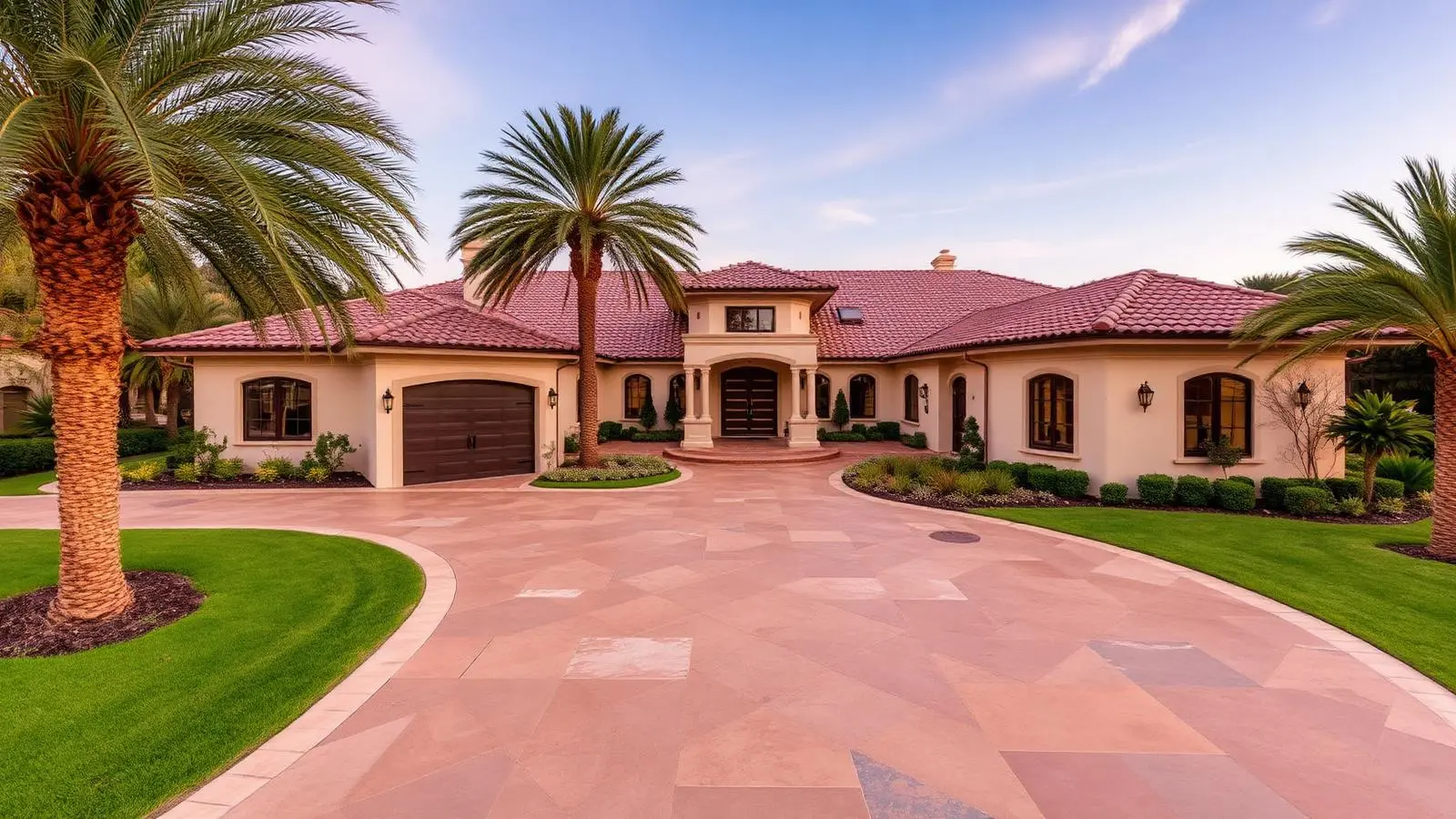
A long, curved decorative concrete driveway is one of the most photographed features of a Southern California estate. Done right, it elevates the entire approach to the home and reads as part of the architecture. Done wrong, it shows tire tracks within a year, fades unevenly within three, and costs more to maintain than the original install.
I've installed and repaired enough Rancho Santa Fe, Hidden Hills, and Santa Barbara estate driveways to know which decorative concrete systems hold up to a luxury market and which ones look great in the brochure but fail in service.
- ·Acid stain delivers the deepest, most authentic color but is unpredictable on patched or repaired slabs.
- ·Reactive water-based stains offer better consistency and color range but lack the depth of acid stain.
- ·Penetrating silane/siloxane sealers protect the slab without changing appearance — best for matte luxury finishes.
- ·Topical acrylic sealers give wet-look gloss but require recoating every 2–4 years to stay attractive.
Why decorative concrete fits luxury SoCal architecture
The Mediterranean, Spanish Revival, and contemporary architecture that dominates SoCal estate markets favors monolithic, naturalistic surfaces over pavers or asphalt. Decorative concrete delivers the seamless, troweled look that complements stucco walls, terracotta tile roofs, and integrated landscape lighting. It also outlives pavers by decades when properly sealed.
The hard part is that decorative concrete done badly is far more visible than decorative concrete done well. A streaky stain on a 2,500 sq ft circular drive is impossible to hide.
Acid stain vs. reactive water-based stain
Acid stains are dilute hydrochloric acid solutions with metallic salts. They chemically react with free lime in the concrete to produce permanent, mottled, naturalistic color. The result is unmatched in depth — an acid-stained drive looks like aged stone. The downside: acid stain reveals every patch, every repair, and every variation in the slab's mineral content. On a slab with multiple generations of repair, the result is unpredictable.
Reactive water-based stains use a similar metallic-salt chemistry without the acid carrier. They're more consistent on patched or repaired slabs, offer a wider color range (including cool tones that acid stains can't produce), and are safer to install. The trade-off is slightly less depth and a more uniform appearance.
Sealer choice — where most installs go wrong
There are three sealer families, and each makes the driveway look and behave differently:
- 01Penetrating silane/siloxane — invisible matte finish, breathes, lasts 8–12 years, no recoat required for performance. Best for naturalistic estate driveways.
- 02Acrylic topical (solvent-based) — wet-look gloss, deepens stain color, lasts 2–4 years before recoat, can develop tire-mark hot spots. Best for showcase short driveways.
- 03Polyurethane topical — high-gloss, very durable, expensive, requires aggressive prep to recoat. Best for short luxury entries with low traffic.
Cost on a typical estate driveway
On a 2,500 sq ft circular estate drive with new pour:
- 01Standard color-hardened broom finish: $9–14/sq ft = $22,500–35,000
- 02Acid-stained existing slab with penetrating sealer: $4–7/sq ft = $10,000–17,500
- 03Acid-stained existing slab with acrylic topical: $5–9/sq ft = $12,500–22,500
- 04New pour with integral color, sawcut pattern, and stain accent: $14–22/sq ft = $35,000–55,000
The maintenance honesty conversation
Every estate-driveway client I work with has the same conversation: "I want it to look like the brochure forever." The honest answer is that decorative concrete needs maintenance proportional to how dramatic the finish is. A penetrating-sealed acid stain ages gracefully and needs essentially nothing for a decade. A high-gloss acrylic-topical needs a re-seal every 2–4 years and a full strip-and-reseal every 8–10. There is no zero-maintenance high-gloss option in exterior SoCal sun.
When to walk away from staining a slab
Slabs with multiple generations of patching, severe efflorescence, or chronic moisture intrusion are bad candidates for staining. The chemistry that produces beautiful color also magnifies every defect in the slab. In those cases, a polymer-modified overlay (essentially a thin, controlled new pour over the old slab) gives you a clean canvas to stain on top of, at roughly $6–10/sq ft of additional cost.
Frequently asked questions
How long does staining take?
On a 2,500 sq ft drive: one day to clean and prep, one day to stain and neutralize, one day to seal. Plan for the drive to be unusable for 4–5 days total including cure.
Will tires leave marks on a sealed driveway?
Penetrating sealers don't show tire marks because there's no surface film for the rubber to interact with. Acrylic topicals can show hot tire marks in summer if low-quality sealer is used; high-grade acrylics avoid this.
Can a stained driveway be changed later?
Color can be deepened or layered later, but it can't be lightened — stain is permanent. If a complete color change is needed, a polymer overlay is the only path.
Coastal Corrosion: How Salt Air Destroys Resin Coatings (and What Stops It)
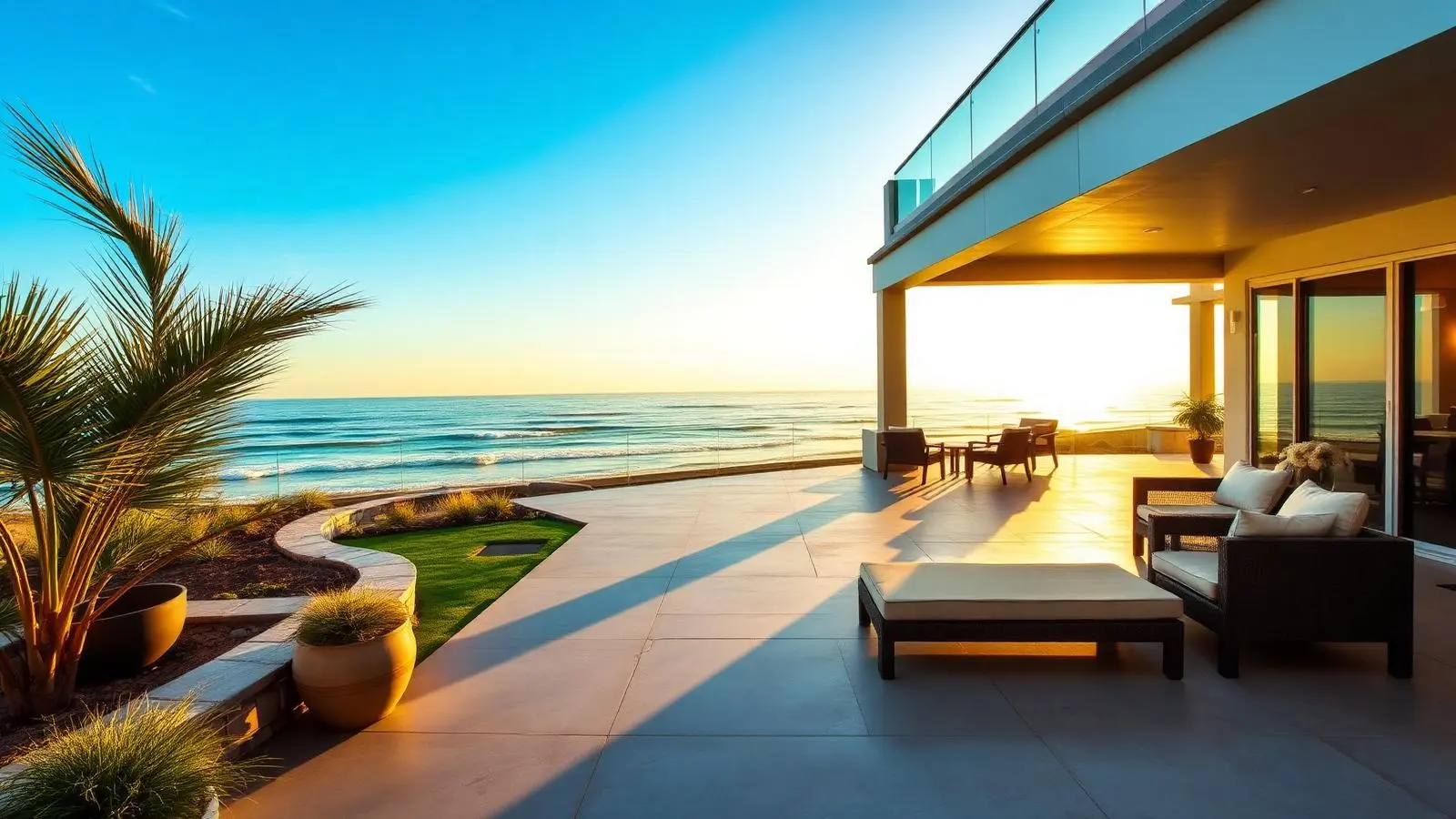
Why coatings fail faster within five miles of the SoCal coast — how salt fog, chloride intrusion, and UV combine to attack resin systems, and which products survive a beach environment.
Polished Concrete vs. Epoxy: Which Floor Wins in a Modern SoCal Home?
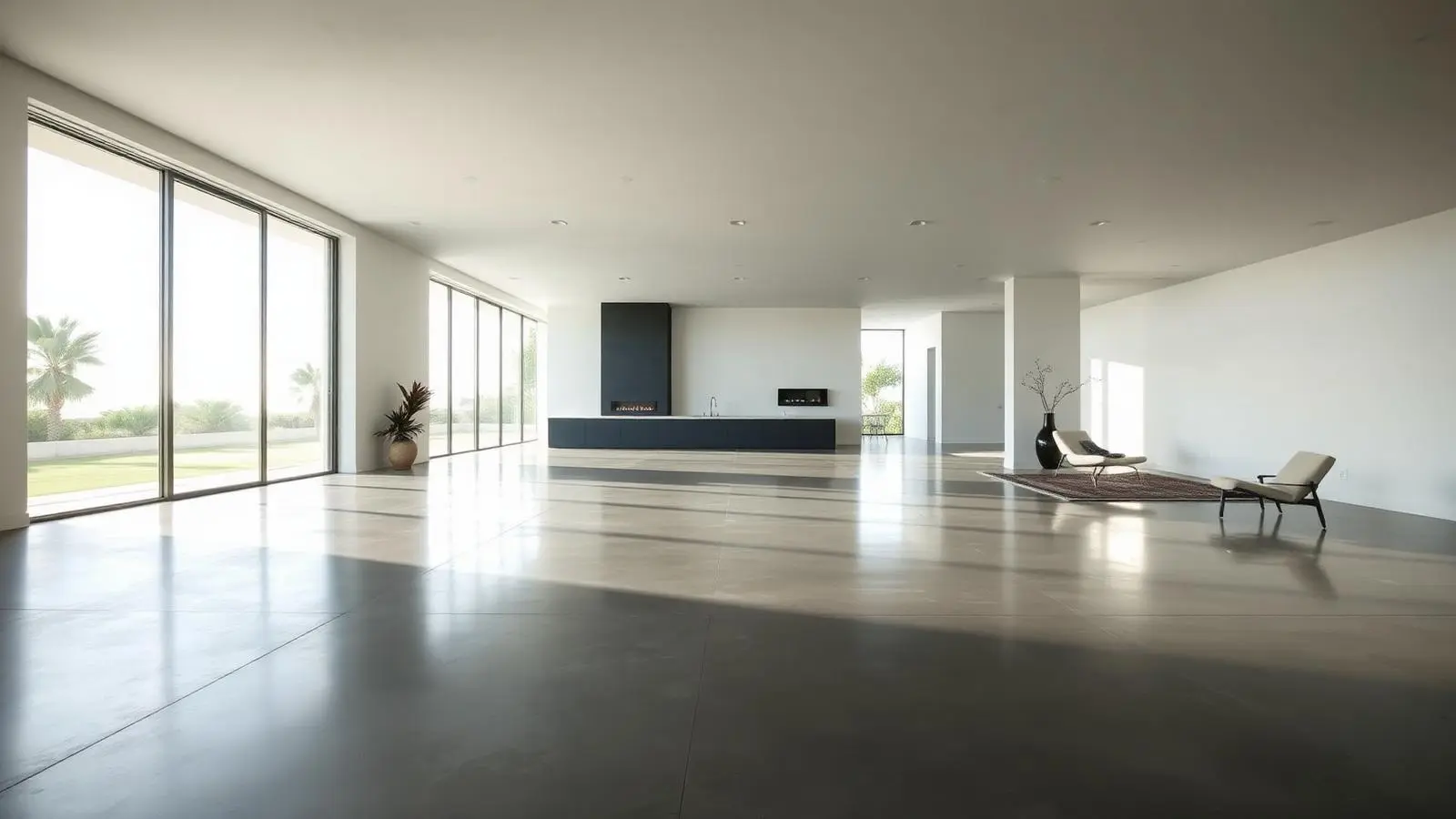
A working installer's comparison of polished concrete and epoxy resin floors for modern Southern California interiors — design, comfort, maintenance, cost, and where each one quietly fails.
Why Concrete Coating Cure Times Lie in a Southern California Summer
How heat, humidity, and slab temperature change the cure window of polyaspartic, epoxy, and polyurethane systems — and why the data sheet is just a starting point in SoCal summers.
Ready to specify your floor?
Reply within two business hours. On-site consult, written specification, and itemized quote — never a high-pressure sales visit.
(619) 304-6501