SoCal Luxury Surfaces
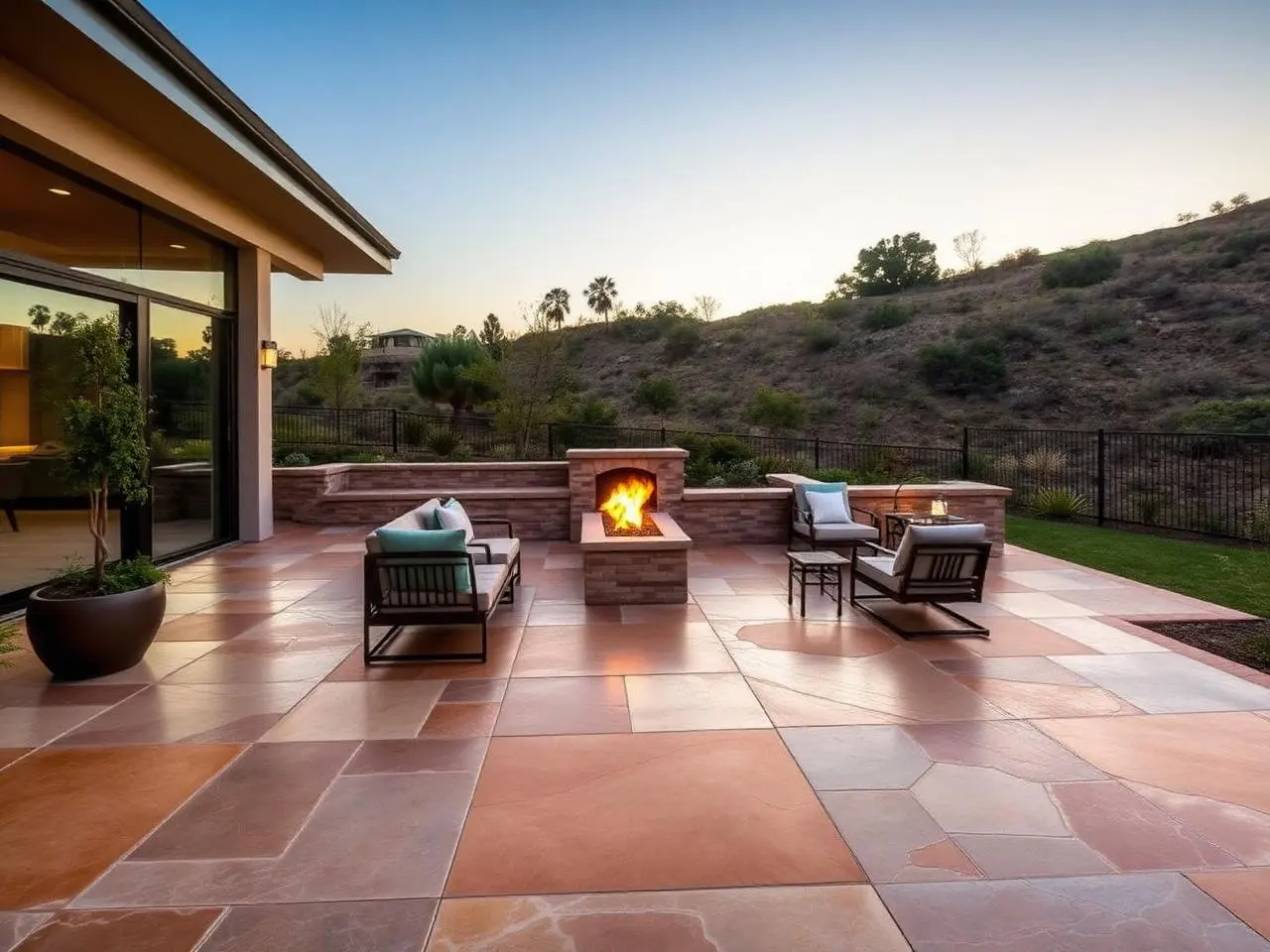
Resurfaced concrete patio with decorative overlay and stain
· Service · 12 / 15

Restore the slab. Save the budget.

Concrete resurfacing restores worn, stained or cosmetically tired slabs with decorative overlay, micro-topping, polish, stain or coating — instead of full tear-out. Typical 50–70% cost savings versus demolition and re-pour, with a 15–25 year service life when correctly specified.

20+
Years installing
2,400+
Floors completed
5.0 ★
Google rating
10–15 Yr
Written warranty
— TL;DR

The five-second answer.

  • Restore worn slabs vs. full tear-out — 50–70% cost savings.
  • Options: decorative overlay · micro-topping · coating · polishing · staining.
  • 15–25 year service life when correctly specified.
  • Cost: $5–$14/sq ft installed depending on system selected.
— Definition

What is Concrete Resurfacing?

Concrete resurfacing is the broader category of slab restoration — selecting from overlay, micro-topping, polish, stain, coating or hybrid systems based on substrate condition, design intent and use. The right resurfacing strategy starts with substrate evaluation: a sound but cosmetically tired slab with sub-millimeter wear can polish; a slab with surface laitance or minor unevenness can take micro-topping; a slab with depressions, slope problems or wear deeper than 3 mm needs self-leveling overlay; a slab with chemical attack or moisture damage needs primer plus coating. Every resurfacing project starts with the same step: ICRI-certified substrate evaluation to determine which system the slab can actually support, sequenced repairs first, decorative finish second.

System specification.

The numbers we'll write into your job file before any product is opened.

Resurfacing options
Overlay · micro-topping · polish · stain · coating · hybrid
Typical thickness added
0 mm (polish) to 12 mm (stampable overlay)
Service life (sealed/coated)
15–25 years
Cost vs. tear-out
50–70% savings
Substrate prep
Diamond grind to ICRI CSP appropriate to system
Documentation
ICRI moisture readings · pre-repair photos · spec sheet
Standards
ICRI 310.1R · 310.2R · ASTM F1869 · ASTM F2170
Warranty
10–15 year resurfacing warranty depending on system

Best for.

Where this system outperforms the alternatives. Linked to detailed application pages.

Our install process.

Documented, photographed and signed off step-by-step. Prep is 70% of lifespan.

  1. 01
    Substrate evaluation & ICRI walk
    Slab mapped for cracking, spalling, slope, drainage, chemical exposure and prior coatings. ICRI-certified inspection produces written restoration plan.
  2. 02
    Moisture test (ASTM F1869 / F2170)
    Calcium chloride MVER + RH probes at three locations. Determines whether moisture mitigation is required before any decorative finish.
  3. 03
    Repair sequence
    Cracks chased and filled, spalls rebuilt, joints honored. Repairs cure before resurfacing layer goes down.
  4. 04
    Diamond grind to ICRI CSP
    Profile depth specified by downstream system — CSP 1–2 for thin coatings, CSP 3 for overlay, CSP 4+ for high-build mortar.
  5. 05
    Moisture mitigation if required
    Two-part epoxy moisture vapor primer applied at full mil where moisture readings exceed thresholds.
  6. 06
    Resurfacing system installation
    Selected system — overlay, micro-topping, polish, coating — installed per its standard process. Spec details documented.
  7. 07
    Decorative finish & color
    Stain, dye, color hardener, polish or stamp pattern applied per design.
  8. 08
    Sealer / topcoat
    Penetrating silicate, topical acrylic, polyurethane or polyaspartic — selected by environment and gloss target.
  9. 09
    Walkthrough & maintenance plan
    Care kit, recoat schedule and 10–15 year warranty issued.
— Finish options

Color, texture, depth.

Color and finish depend on the resurfacing system chosen — see Concrete Polishing, Acid Staining, Concrete Overlay and Polyurea Polyaspartic pages for system-specific palettes. Sample boards on actual project slab are standard before any color commitment.

[REPLACE: swatch grid — actual finish samples on concrete coupons]

Resurface vs. tear-out and re-pour.

A practical head-to-head — what each system does well, and where the line is.

Recommended

Concrete Resurfacing

  • 50–70% cost savings
  • Days, not weeks
  • Existing slab stays in service
  • $5–$14/sq ft
Alternative

Tear-Out and Re-Pour

  • Fresh slab, no inherited problems
  • Permits, demo, formwork, hauling
  • 3–6 week schedule
  • $15–$30/sq ft + demo

Verdict: Resurfacing wins anywhere the slab is structurally sound. Tear-out wins where the slab is structurally compromised, where major slope/drainage changes are required, or where the slab is too thin to accept overlay without raising adjacent finish levels.

— Frequently asked

Specifics matter.

What does concrete resurfacing cost?
+
Resurfacing runs $5–$14/sq ft in SoCal depending on the system selected — polish at the floor of the range, decorative stampable overlay with sealer at the top. Pricing reflects substrate prep, repairs, the resurfacing system itself, decorative finish and sealer. Tear-out and re-pour for the same finished aesthetic typically runs $15–$30/sq ft including demo and disposal.
How do you choose between overlay and polishing?
+
Polishing wins when the existing slab is sound, level and the aggregate (cream, salt-and-pepper or full exposure) creates a finish you actually want. Overlay wins when the slab has surface laitance, minor unevenness, prior coating residue or you want a stamp pattern, dye color or finish that the existing concrete cannot deliver. Substrate evaluation drives the decision — we don't recommend overlay where polish would deliver a better floor.
How long does resurfacing take?
+
System-dependent. Polishing: 3–4 days for 1,000 sq ft. Micro-topping: 2–3 days. Self-leveling overlay: 3–4 days plus cure. Stampable overlay: 4–5 days. Coatings: 1–4 days. Larger floors scale linearly. We work in operational facilities by zoning the project.
Will the resurfacing add height to the floor?
+
Polishing adds zero height (it removes 1–2 mm of slab). Micro-topping adds 1–3 mm. Self-leveling overlay adds 3–10 mm. Stampable overlay adds 6–12 mm. Coating systems add 8–80 mil (0.2–2 mm). Where doorway clearances, floor-to-tile transitions or slope-to-drain matter, we calculate the build-up before selecting the system.
Can resurfacing fail?
+
Yes — same as any flooring system. The most common failure modes are skipping moisture testing, ignoring active cracks, using incompatible repair material chemistry, and installing the wrong system on the wrong substrate (e.g., overlay over a moving slab). We mitigate by ICRI-certified substrate evaluation, documented moisture readings, and selecting the resurfacing system to match what the slab can actually support.
What's the lifespan of a resurfaced floor?
+
15–25 years for sealed coatings and overlays. 50+ years for polished concrete (the floor IS the slab). Sealer cycles within those lifespans: penetrating silicate sealers run 10–15 years; topical urethane and polyaspartic sealers run 5–10 years before recoat. Recoat is fast and inexpensive — preserves the underlying decorative work indefinitely.
Get a Free Estimate

Ready to restore your slab without tearing it out?

Reply within two business hours. On-site consult, written specification, and itemized quote — never a high-pressure sales visit.

(619) 304-6501
Start in 10 seconds

We'll prefill the rest. No spam, no pressure — your details only go to our estimating team.