SoCal Luxury Surfaces
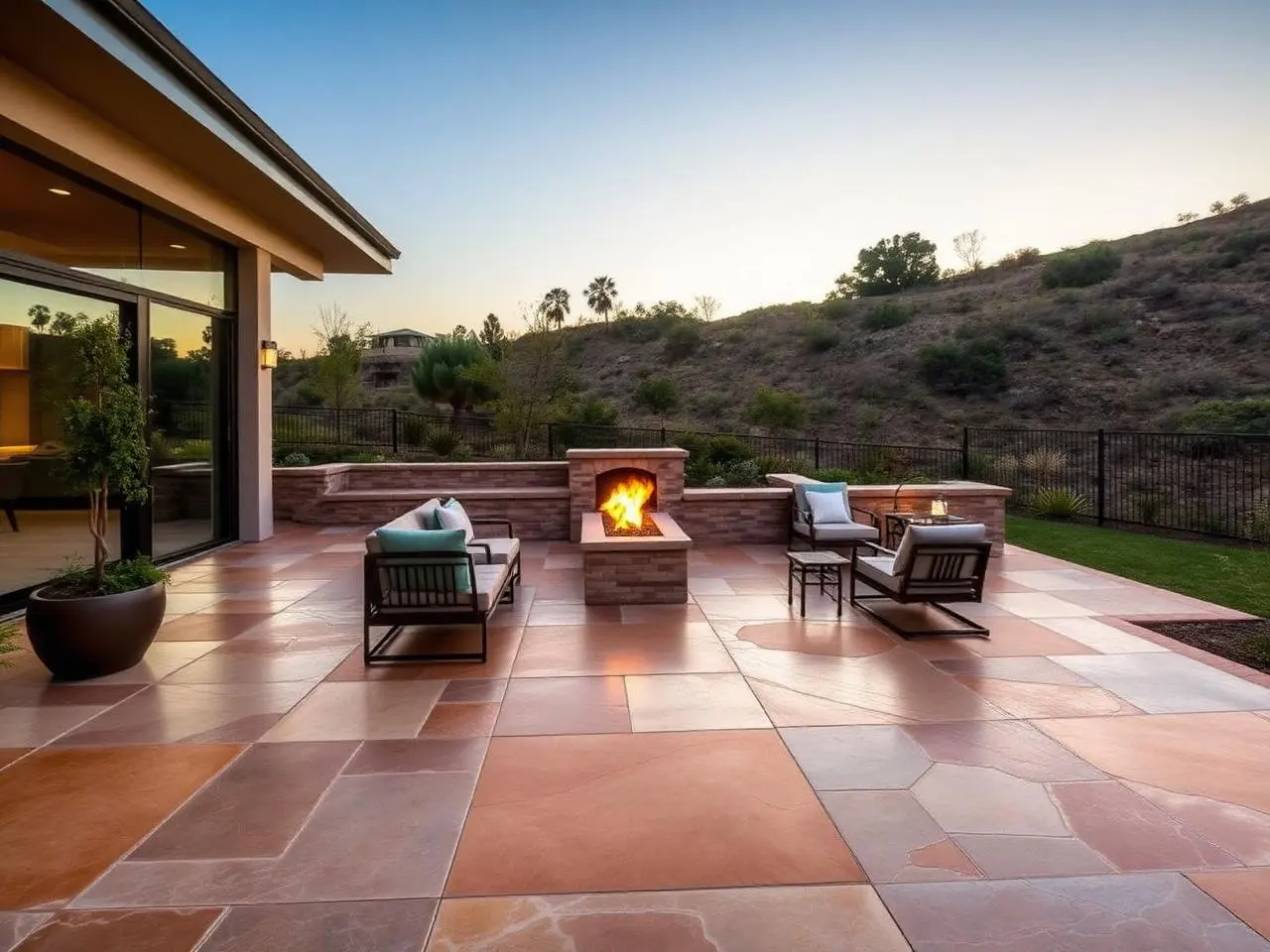
Decorative concrete overlay patio with stamped texture and stain
· Service · 10 / 15

Transform the slab. Skip the tear-out.

A concrete overlay is a polymer-modified cementitious topping bonded over an existing slab — micro-topping at 1–3 mm, self-leveling overlay at 3–10 mm, or stampable overlay at quarter to half inch. It transforms worn, stained or unsightly concrete without demolition, at $6–$14/sq ft installed.

20+
Years installing
2,400+
Floors completed
5.0 ★
Google rating
10–15 Yr
Written warranty
— TL;DR

The five-second answer.

  • Three types: micro-topping (1–3 mm) · self-leveling (3–10 mm) · stampable (1/4–1/2 in).
  • Transform an existing slab without tear-out or demolition.
  • Polymer-modified for bond, flexibility and crack resistance.
  • Cost: $6–$14/sq ft installed depending on system and decorative finish.
— Definition

What is Concrete Overlay?

Concrete overlay is a family of polymer-modified cementitious systems applied over a prepared existing slab to create a new finished surface. Micro-topping (1–3 mm) is a thin trowel-applied cementitious skim that smooths a slab and accepts color, stain or polish — ideal for cosmetic refresh of sound substrates. Self-leveling overlay (3–10 mm) is a flowable cementitious topping pumped or poured to true a slab that has dipped, sloped or worn unevenly — accepts polish, stain and decorative finishes. Stampable overlay (quarter to half inch) is a thicker trowel-applied system that takes mat-stamped patterns (slate, tile, brick, ashlar) for decorative exterior work. All three bond with a polymer-modified primer / scratch coat to a substrate that has been mechanically prepared (typically diamond-ground to ICRI CSP 3) and tested for bond.

System specification.

The numbers we'll write into your job file before any product is opened.

Resin / binder
Polymer-modified portland cement (acrylic / SBR / latex)
Thickness — micro-topping
1–3 mm (1/16 to 1/8 in)
Thickness — self-leveling
3–10 mm (1/8 to 3/8 in)
Thickness — stampable
6–12 mm (1/4 to 1/2 in)
Walk-on cure
12–24 hours
Decorative finish options
Polish · stain · dye · stamp · stencil · color hardener
Sealer
Penetrating silicate · topical acrylic · polyaspartic
Slip rating (ANSI A326.3 wet DCOF)
0.42–0.70 (depends on finish and sealer)
Lifespan
15–25 years sealed
Warranty
10-year overlay adhesion

Best for.

Where this system outperforms the alternatives. Linked to detailed application pages.

Our install process.

Documented, photographed and signed off step-by-step. Prep is 70% of lifespan.

  1. 01
    Substrate evaluation
    Existing slab evaluated for bond strength (ASTM C1583 pull-off test if questionable), cracking, slope and prior coating residue.
  2. 02
    Crack and joint detail
    Static cracks chased and filled; expansion joints honored through overlay (will telegraph if not honored).
  3. 03
    Diamond grind to ICRI CSP 3
    Aggressive surface profile required for overlay bond. Edge-grind to walls and around fixtures.
  4. 04
    Polymer primer / scratch coat
    Polymer-modified bond primer rolled or scratch-troweled to lock overlay-to-substrate bond.
  5. 05
    Overlay placement
    Micro-topping troweled at 1–3 mm; self-leveling pumped or poured and spiked-rolled flat; stampable troweled to spec thickness.
  6. 06
    Decorative finish
    Stamp, stencil, color hardener, broom or trowel finish applied per design before final cure.
  7. 07
    Color treatment
    Acid stain, dye or integral color worked into overlay or applied between cure and sealer step.
  8. 08
    Sealer application
    Penetrating silicate (interior matte) or topical acrylic / polyaspartic (exterior, gloss) selected by environment.
— Finish options

Color, texture, depth.

Color from integral cement pigments, color hardeners, dye and acid stain. Earth-tone palette dominates exterior decorative work — sandstone, terracotta, slate, dove. Interior overlay palette is broader because dye and integral color are easier to control. Stampable patterns include flagstone, slate, ashlar, tile, brick.

[REPLACE: swatch grid — actual finish samples on concrete coupons]

Overlay vs. tear-out and re-pour.

A practical head-to-head — what each system does well, and where the line is.

Recommended

Concrete Overlay

  • No demolition, no debris removal
  • Days, not weeks
  • 50–70% cost savings vs. tear-out
  • $6–$14/sq ft
Alternative

Tear-Out and Re-Pour

  • Fresh slab, full design freedom
  • Permits, demo, hauling, formwork
  • 3–6 week schedule
  • $15–$30/sq ft

Verdict: Overlay wins anywhere the existing slab is structurally sound but cosmetically tired. Tear-out wins where the slab is structurally compromised, where a major slope or drainage change is required, or where the existing thickness cannot accommodate overlay.

— Frequently asked

Specifics matter.

What does a concrete overlay cost?
+
Overlay runs $6–$14/sq ft in SoCal. Micro-topping with stain at the floor of the range; stampable overlay with color hardener and topical sealer at the top. Pricing reflects substrate prep, polymer primer, overlay material, decorative finish and sealer. Tear-out and re-pour for the same finished result typically runs $15–$30/sq ft including demo, debris removal and permits.
Will the overlay crack along old slab cracks?
+
Static cracks that have been chased and filled with polyurea before overlay generally do not telegraph. Active or moving cracks WILL telegraph through the overlay because the slab beneath is moving — for those substrates we either elastomeric-isolate the crack with a soft joint detail or recommend tear-out. Expansion joints are honored through the overlay; ignoring them guarantees cracking.
How long does an overlay take?
+
Micro-topping: 2–3 days. Self-leveling overlay: 3–4 days. Stampable overlay: 4–5 days. Cure cycles add 24 hours between major steps. Walk-on resumes 24 hours after sealer; full traffic at 5 days.
Can I overlay an outdoor slab?
+
Yes — exterior overlay is one of the most common SoCal applications (patios, pool decks, walkways). We use polymer-modified systems with high acrylic content for exterior bond and flexibility, sealed with UV-stable acrylic or polyaspartic. Micro-topping is too thin for heavy exterior traffic; self-leveling or stampable overlay is the better exterior choice.
What thickness should I choose?
+
Micro-topping (1–3 mm) for cosmetic refresh of sound substrates where you want to preserve doorway clearances. Self-leveling overlay (3–10 mm) where the slab needs trueing for finish flooring or where a polishable decorative pour is the goal. Stampable overlay (1/4–1/2 in) for textured exterior decorative work — flagstone, slate, brick patterns.
Can an overlay accept polish?
+
Yes — self-leveling overlays are commonly polished. We pour at 3–10 mm thickness, allow full cure (typically 7–14 days), then progress through the standard polishing sequence to CPAA Levels 1–3. Color is added either as integral pigment, dye or acid stain. Exterior overlays are rarely polished — they are typically sealed acrylic or topical urethane finished.
Get a Free Estimate

Ready to refresh your slab without tearing it out?

Reply within two business hours. On-site consult, written specification, and itemized quote — never a high-pressure sales visit.

(619) 304-6501
Start in 10 seconds

We'll prefill the rest. No spam, no pressure — your details only go to our estimating team.