SoCal Luxury Surfaces
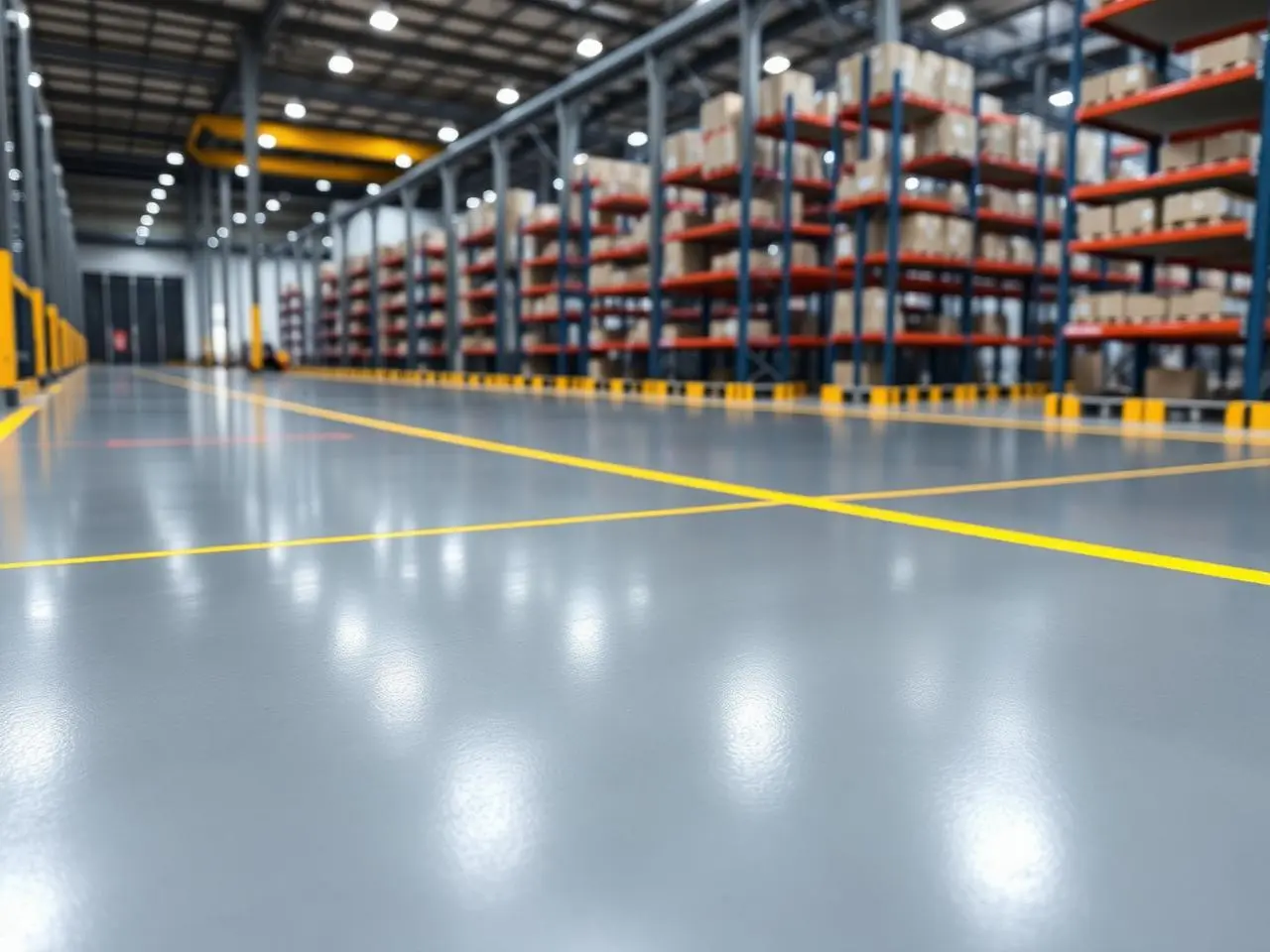
Solid epoxy warehouse floor with safety striping and forklift lanes
· Service · 05 / 15

Industrial workhorse. Built to take it.

Solid epoxy is a 100%-solids pigmented industrial coating, 20–40 mil dry build, with safety striping, line marking and color-coded zone delineation installed in-coating. The default spec for warehouses, manufacturing and back-of-house industrial across SoCal at $5–$9/sq ft installed.

20+
Years installing
2,400+
Floors completed
5.0 ★
Google rating
10–15 Yr
Written warranty
— TL;DR

The five-second answer.

  • 100%-solids pigmented epoxy at 20–40 mil dry-film build.
  • OSHA-compliant safety striping and color-coded zoning installed in-coating.
  • Best for warehouses, manufacturing, distribution and industrial back-of-house.
  • Cost: $5–$9/sq ft installed depending on substrate and prep.
— Definition

What is Solid Epoxy?

Solid epoxy is a high-build 100%-solids pigmented industrial coating designed for high-traffic, abuse-tolerant environments. Applied as primer, pigmented base and topcoat — total dry-film thickness 20–40 mil — over a diamond-ground substrate at ICRI CSP 3. Safety striping, forklift lanes, hazard zones and color-coded compliance markings are installed in-coating using vinyl masking and second-pour pigmented epoxy, which makes the markings part of the floor system rather than surface paint that wears off in months. UV stability is provided by an aliphatic topcoat where exterior or daylight exposure exists; pure interior installs run as 100%-solids epoxy throughout.

System specification.

The numbers we'll write into your job file before any product is opened.

Resin
100% solids pigmented epoxy + optional aliphatic topcoat
Mil thickness (dry)
20–40 mil total
Layers
Primer · pigmented base · in-coating striping · topcoat
Walk-on cure
12–24 hours
Forklift cure
72 hours
Full chemical cure
5–7 days
UV stability
10+ years with aliphatic topcoat
Slip rating (ANSI A326.3 wet DCOF)
0.40–0.65 with broadcast aggregate
VOC content
<50 g/L (100% solids)
Warranty
10-year commercial adhesion

Best for.

Where this system outperforms the alternatives. Linked to detailed application pages.

Our install process.

Documented, photographed and signed off step-by-step. Prep is 70% of lifespan.

  1. 01
    Substrate evaluation & spec
    Slab moisture-tested per ASTM F1869, joints mapped, lift loads and chemical exposure documented.
  2. 02
    Diamond grind to ICRI CSP 3
    Aggressive surface profile per ICRI Guideline 310.2R for high-build coating bond.
  3. 03
    OSHA silica dust control
    Dust-shroud vacuum on every grinder per OSHA 29 CFR 1926.1153.
  4. 04
    Spall and crack repair
    Polyurea crack fill and polymer-modified mortar at spalls; expansion joints maintained.
  5. 05
    100% solids epoxy primer
    Primer rolled at full mil to seal substrate and lock bond.
  6. 06
    First pigmented base coat
    Base color rolled at 12–18 mil wet film thickness.
  7. 07
    Mask & install striping
    Vinyl masking installed for OSHA safety striping, forklift lanes, color-coded hazard zones.
  8. 08
    Second base / striping pour
    Contrasting pigmented epoxy poured into masked zones; mask pulled wet.
  9. 09
    Topcoat
    Final 100% solids epoxy or aliphatic topcoat at full mil for chemical and abrasion resistance.
  10. 10
    Cure & sign-off
    Walk-on 12–24 hr, forklift 72 hr. Care kit, batch records and 10-year commercial warranty issued.
— Finish options

Color, texture, depth.

Industrial palette — gray, charcoal, light gray, safety yellow, OSHA red, hazard orange, forklift-lane white, equipment-pad blue. Custom corporate brand colors matched to Pantone or RAL on request.

[REPLACE: swatch grid — actual finish samples on concrete coupons]

Solid epoxy vs. polyaspartic.

A practical head-to-head — what each system does well, and where the line is.

Recommended

Solid Epoxy

  • High-build 20–40 mil film
  • In-coating OSHA striping standard
  • Excellent chemical resistance
  • $5–$9/sq ft
Alternative

Polyaspartic

  • 1-day install vs 3–5 day
  • UV-stable aliphatic chemistry
  • Higher elongation, less brittle
  • $8–$12/sq ft

Verdict: Solid epoxy wins for industrial environments where high-build film, chemical resistance and in-coating safety striping matter more than turnaround. Polyaspartic wins for residential and any project where 24-hour vehicle return is non-negotiable.

— Frequently asked

Specifics matter.

What does solid epoxy cost per square foot?
+
Solid epoxy installs at $5–$9/sq ft in SoCal industrial work. Pricing reflects diamond grinding, moisture testing, primer, base, in-coating safety striping (priced separately by linear foot), and topcoat. Larger industrial projects (10,000+ sq ft) drop closer to $5/sq ft due to mobilization economy.
How long does industrial install take?
+
Standard solid epoxy install runs 3–4 days for a typical 5,000 sq ft warehouse: prep + primer (Day 1), base coat (Day 2), striping pour (Day 3), topcoat (Day 4). Walk-on at 12–24 hours after topcoat. Forklift return at 72 hours. We work weekends and night shifts to accommodate operational requirements.
Will the safety striping wear off?
+
No. Striping is installed in-coating — vinyl masked into the wet first base, second pigmented base poured, mask pulled wet — so the striping is a continuous part of the floor system, not surface paint. It wears at the same rate as the rest of the floor (decades), not the months you get from painted-on lines.
How does solid epoxy hold up to chemicals?
+
100%-solids epoxy resists most industrial chemistries — battery acid, brake fluid, hydraulic oil, gasoline, diesel, lubricants — without staining or softening. Strong solvents (MEK, acetone) and concentrated acids will eventually attack any epoxy; we spec novolac epoxy or urethane cement where continuous solvent exposure is in play.
Does solid epoxy yellow under UV?
+
Pure epoxy ambers under direct UV. Where daylight exposure exists (skylights, open dock doors), we top the system with aliphatic polyurethane or polyaspartic to maintain color. Pure interior industrial installs without UV exposure run as 100%-solids epoxy throughout — which is why interior warehouse floors stay color-true for decades.
Can solid epoxy go over an existing coating?
+
Sometimes — depends on the existing system. We test bond at three locations (cross-cut adhesion test) before quoting overcoat. If existing coating fails the bond test, full removal by diamond grind to ICRI CSP 3 is required. Quoting overcoat without bond testing is the most common failure mode in industrial recoats.
Get a Free Estimate

Ready to spec your industrial floor?

Reply within two business hours. On-site consult, written specification, and itemized quote — never a high-pressure sales visit.

(619) 304-6501
Start in 10 seconds

We'll prefill the rest. No spam, no pressure — your details only go to our estimating team.