SoCal Luxury Surfaces
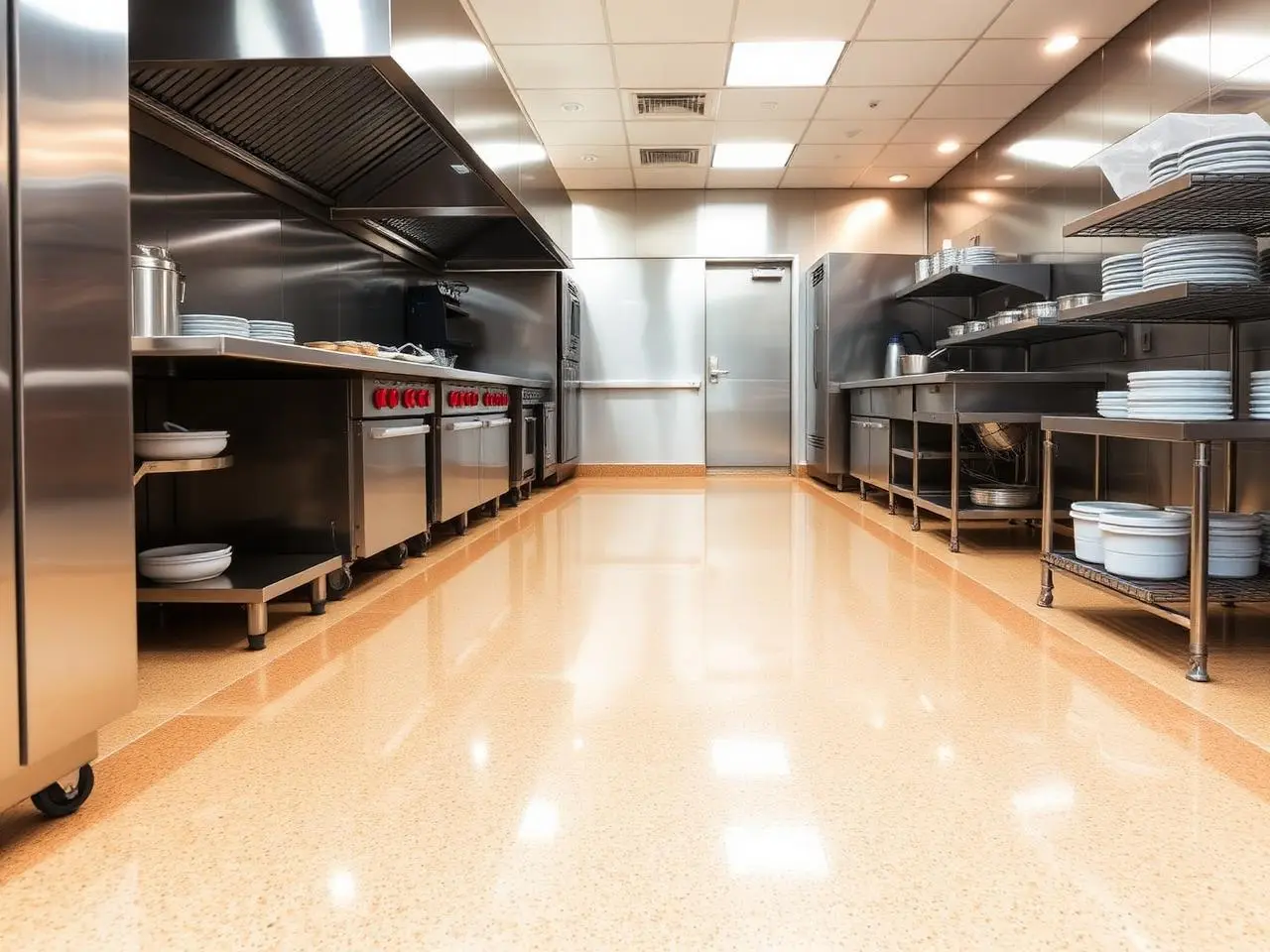
Urethane cement floor in a brewery with floor drains and integral cove
· Service · 07 / 15

Steam-cleaned. Freezer-cycled. Bombproof.

Urethane cement is a three-part polyurethane mortar — resin, hardener and graded aggregate — installed at 3–9 mm thick. It tolerates thermal shock, steam cleaning, freezer cycling and aggressive sanitation chemistry that destroys epoxy. The standard spec for breweries, dairies, food processing and cold storage.

20+
Years installing
2,400+
Floors completed
5.0 ★
Google rating
10–15 Yr
Written warranty
— TL;DR

The five-second answer.

  • Three-part polyurethane mortar at 3–9 mm thick.
  • Tolerates thermal shock, steam cleaning and freezer cycling.
  • USDA / FDA compliant — food processing, breweries, cold storage.
  • Cost: $10–$18/sq ft installed.
— Definition

What is Urethane Cement?

Urethane cement is a heavy-duty seamless flooring system formulated from three components — polyurethane resin, isocyanate hardener and graded silica aggregate — troweled or self-leveled at 3–9 mm thick. The high coefficient of thermal expansion match between urethane cement and concrete is the technical reason the system tolerates thermal shock that cracks epoxy: a brewery floor at 35 °F that gets hit with 180 °F sanitation water (a 145 °F swing) expands and contracts in concert with the slab below, never delaminating. The system is USDA/FDA/NSF compliant for food contact, integrally coved to wall, and chemically resistant to lactic, citric, hydrofluoric and most cleaning acids.

System specification.

The numbers we'll write into your job file before any product is opened.

Resin
Three-part polyurethane resin / hardener / aggregate mortar
Mil thickness
3–9 mm (1/8 to 3/8 inch)
Layers
Primer · urethane cement mortar · pigmented seal coat · optional UV topcoat
Walk-on cure
12–24 hours
Forklift cure
48–72 hours
Thermal range
−40 °F to +250 °F (continuous)
Steam cleaning
Tolerated continuously
Slip rating (ANSI A326.3 wet DCOF)
0.65–0.80 with broadcast aggregate
Compliance
USDA / FDA / NSF food-contact compliant
Warranty
15-year commercial adhesion

Best for.

Where this system outperforms the alternatives. Linked to detailed application pages.

Our install process.

Documented, photographed and signed off step-by-step. Prep is 70% of lifespan.

  1. 01
    Substrate evaluation
    Existing slab evaluated for moisture vapor, slope-to-drain and previous coating residue.
  2. 02
    Moisture test (ASTM F1869 / F2170)
    Urethane cement tolerates higher slab moisture than epoxy but documentation is required for warranty.
  3. 03
    Diamond grind / shot blast to ICRI CSP 4–5
    Aggressive surface profile required — typically shot-blasted, not just ground, for full mortar bond.
  4. 04
    Crack and joint detail
    Polyurea crack fill; expansion joints honored through the urethane cement layer.
  5. 05
    Integral cove base
    4–6 inch cove base poured to wall before field mortar — eliminates floor-to-wall seam.
  6. 06
    Polyurethane primer
    Specialty primer rolled to lock bond between concrete and mortar.
  7. 07
    Trowel-down mortar
    Three-part urethane cement mortar mixed on-site, troweled at 3–9 mm to spec thickness.
  8. 08
    Pigmented seal coat
    Color seal coat broadcast with aggregate for slip resistance and decorative finish.
  9. 09
    Inspection & sign-off
    Drains tested, cove base inspected, DCOF spot-checked. Care kit and warranty issued.
— Finish options

Color, texture, depth.

Industrial palette — slate, dove gray, brewery brown, dairy white, hunter, brick. Color depth limited compared to decorative epoxy; functional environments favor solid utilitarian tones.

[REPLACE: swatch grid — actual finish samples on concrete coupons]

Urethane cement vs. epoxy quartz.

A practical head-to-head — what each system does well, and where the line is.

Recommended

Urethane Cement

  • Thermal-shock & freezer rated
  • Tolerates higher slab moisture
  • −40 °F to +250 °F continuous
  • $10–$18/sq ft
Alternative

Epoxy Quartz

  • Decorative color flexibility
  • Cost-effective for general sanitary spec
  • Limited thermal cycling
  • $9–$14/sq ft

Verdict: Urethane cement wins anywhere steam cleaning, freezer cycling or thermal shock is a routine condition. Epoxy quartz wins for general commercial kitchen, healthcare and pharma spec where decorative options and cost matter more than thermal performance.

— Frequently asked

Specifics matter.

What does urethane cement cost per square foot?
+
Installed urethane cement runs $10–$18/sq ft in SoCal commercial work. Pricing reflects shot-blast prep, polyurethane primer, three-part mortar at 3–9 mm thickness, integral cove base, pigmented seal coat and topcoat. Larger installs (10,000+ sq ft brewery or food-processing plants) drop closer to $10/sq ft.
How long does install take?
+
Urethane cement typically takes 4–6 days for a 5,000 sq ft commercial install: prep + primer (Day 1–2), cove base (Day 2), mortar pour (Day 3), seal coat (Day 4), cure (Day 5–6). Walk-on at 12–24 hours after seal coat. Forklift and full operational return at 48–72 hours.
Why is urethane cement preferred over epoxy in breweries?
+
Breweries see continuous wet conditions, hot sanitation cycles (180 °F+), CO₂ exposure, lactic and acetic acid spills, and constant cleaning. Epoxy fails on thermal shock alone — a hot wash hitting a cold floor cracks the bond line within months. Urethane cement's coefficient of thermal expansion matches concrete, so the floor expands and contracts in concert with the slab. Result: 15+ year service in conditions that destroy epoxy in 18 months.
Does urethane cement need integral cove base?
+
Yes for sanitary environments. Cove base eliminates the floor-to-wall seam where bacteria, food residue and moisture collect — required by USDA/FDA inspectors and good practice in any wet processing environment. Cove is poured before field mortar so the system is continuous from floor to wall.
Can urethane cement go in cold storage / freezers?
+
Yes — urethane cement is the standard spec for cold storage, IQF freezers and blast-chill rooms. Continuous thermal range is −40 °F to +250 °F. We've installed in both walk-in freezers and adjacent thaw rooms in the same project where the temperature differential between rooms hit 180 °F.
What's the slip resistance like?
+
Urethane cement seal coats broadcast with aggregate deliver wet DCOF 0.65–0.80 per ANSI A326.3 — among the highest available in any seamless floor. Aggressive aggregate options for ware-wash and beverage-line zones; standard aggregate for general production floors. We tune the texture to the environment during spec.
Get a Free Estimate

Ready to spec your processing-grade floor?

Reply within two business hours. On-site consult, written specification, and itemized quote — never a high-pressure sales visit.

(619) 304-6501

Start in 10 seconds

We'll prefill the rest. No spam, no pressure — your details only go to our estimating team.