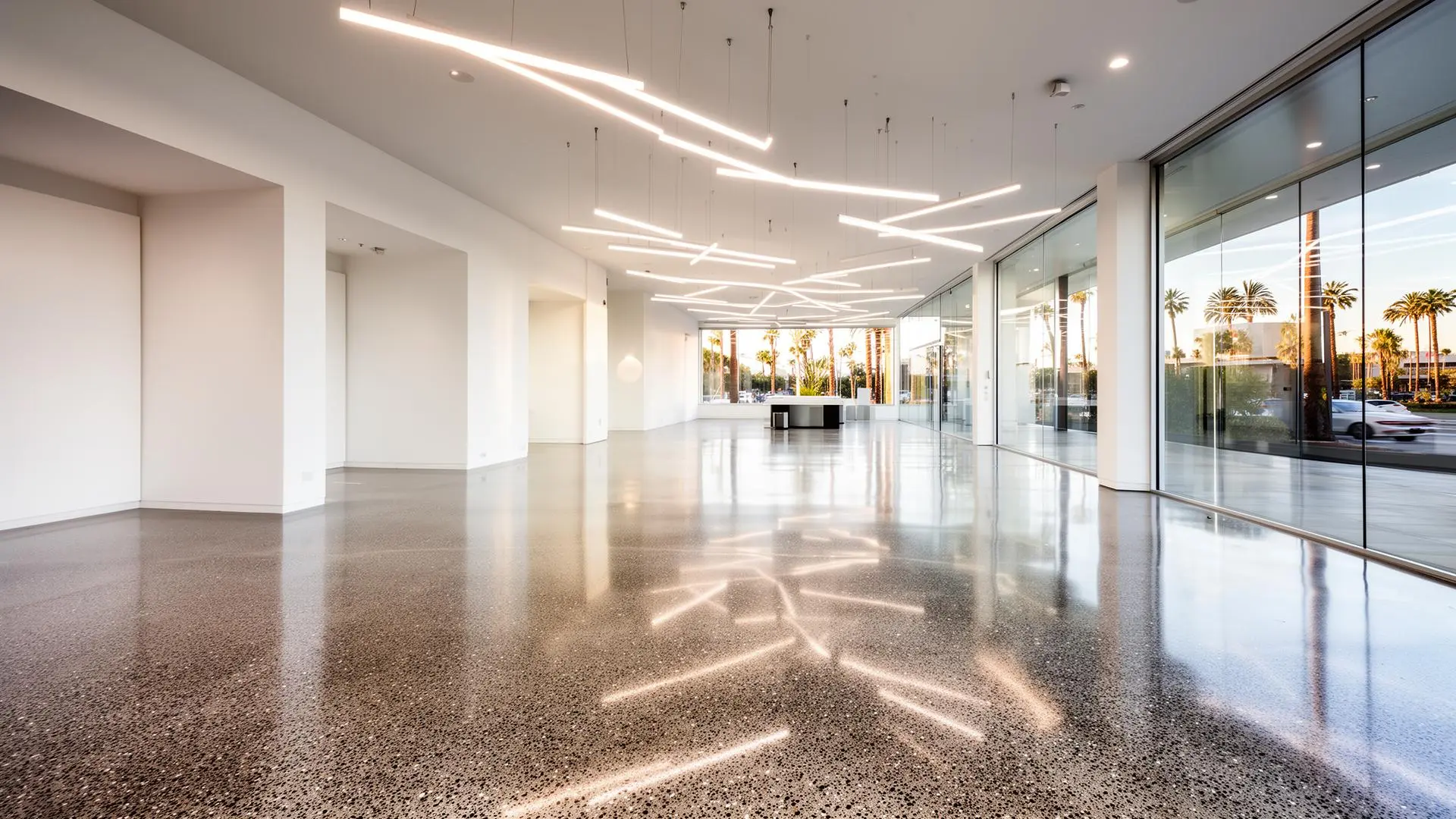
Acid staining is a reactive coloring process in which metallic-salt chemistry penetrates concrete and reacts with calcium hydroxide to form permanent translucent variegated coloration. No two floors are alike — the result depends on the chemistry of the slab itself, the stain reaction, and how it is sealed.
The numbers we'll write into your job file before any product is opened.
Where this system outperforms the alternatives. Linked to detailed application pages.
Documented, photographed and signed off step-by-step. Prep is 70% of lifespan.
Standard reactive palette includes English red, terracotta, amber, malayan buff, copper, sea-foam, bayou, charcoal black. Two-color overlay possible — primary stain plus accent on raised pattern. No two slabs respond identically; sample patches required before commitment.
[REPLACE: swatch grid — actual finish samples on concrete coupons]
A practical head-to-head — what each system does well, and where the line is.
Verdict: Acid stain wins for old-world, translucent, character-driven floors where uniqueness is the point. Dye wins for uniform color, wider palette and predictable result — especially when a specific brand color or design reference must be hit precisely.
Last updated: April 2026
Reply within two business hours. On-site consult, written specification, and itemized quote — never a high-pressure sales visit.
(619) 304-6501