SoCal Luxury Surfaces
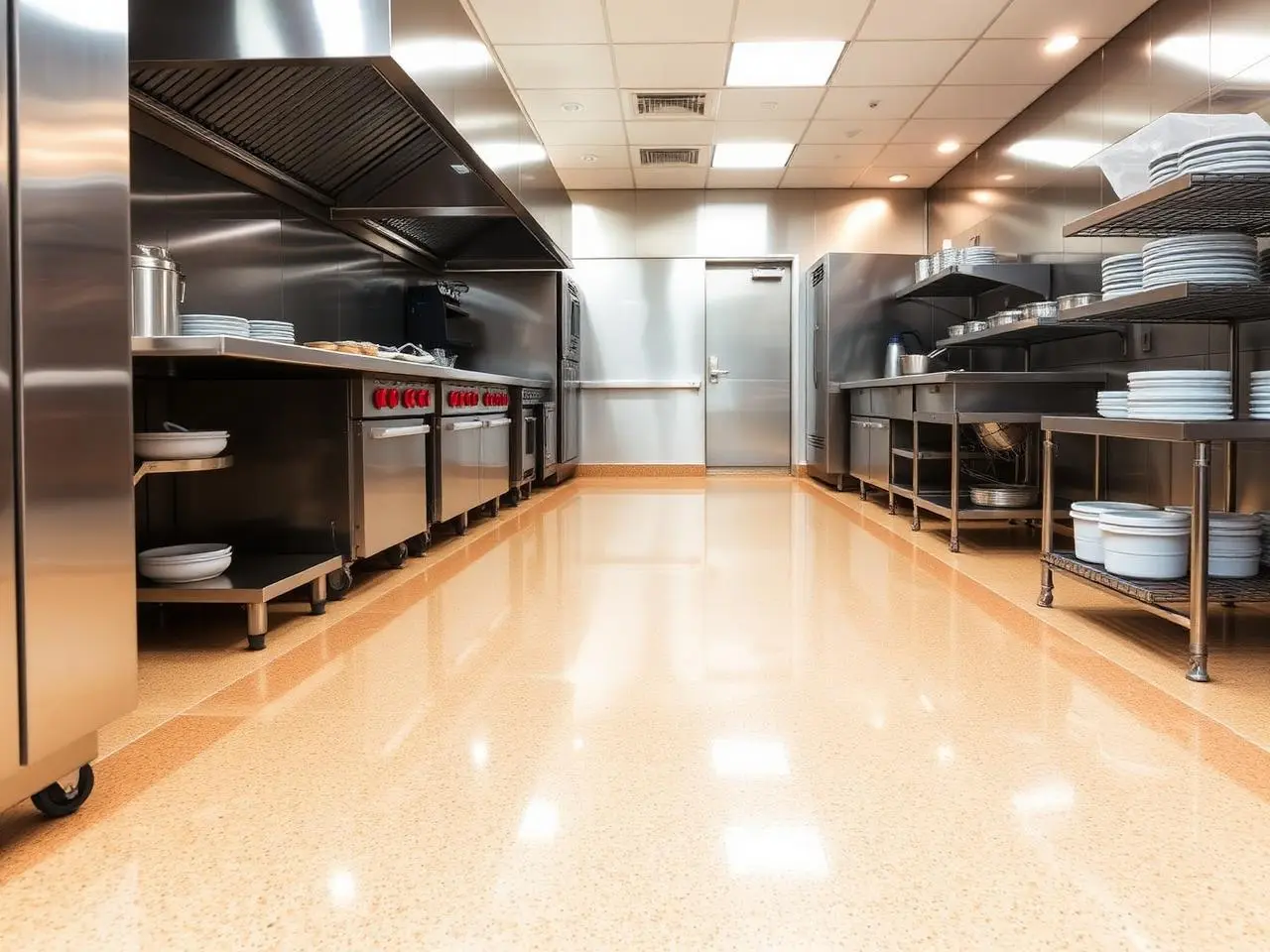
Commercial kitchen quartz floor
· Commercial · Kitchens

Health-Department-pass. Day one.

A commercial kitchen floor has to clear health inspection cold: USDA/FDA-rated chemistry, fully seamless, integral cove base at all walls, and slip-rated to ANSI A326.3 DCOF ≥ 0.6 — and it has to keep clearing it after years of grease, hot water, and acid wash..

20+
Years installing
2,400+
Floors completed
5.0 ★
Google rating
10–15 Yr
Written warranty
— TL;DR

The five-second answer.

  • Cost $9–$18/sq ft installed.
  • USDA/FDA-rated chemistry. Seamless. Integral cove base.
  • Epoxy quartz: standard spec. Urethane cement: aggressive wash-down, steam, freezer.
  • Wet DCOF ≥ 0.6 (ANSI A326.3) — what the inspector measures.
— The problem

Most kitchen floors fail inspection by year three.

Quarry tile chips and the grout joints harbor bacteria. Painted concrete fails on grease and hot water in months. The right specifications are seamless, USDA/FDA-rated resin systems with an integral cove base coved up the wall — no joint, no harboring point, no failure surface. Epoxy quartz is the standard kitchen spec; urethane cement is the upgrade where steam cleaning, freezer cycling, or aggressive degreasers are in the daily routine. Both are installed by ICRI-trained crews to the substrate prep spec the manufacturer requires.

What we engineer around.

Substrate, environment, downtime — every spec gets evaluated before product is selected.

Health Department spec

USDA/FDA-rated, seamless, cleanable, integral cove base — verified before quoting.

Wet slip rating

ANSI A326.3 DCOF ≥ 0.6 wet. Aggregate broadcast or textured topping — not optional.

Thermal shock

Urethane cement only where steam cleaning, freezer-to-warm cycling, or hot oil spillage is routine.

Chemical exposure

Acid sanitizers, caustic degreasers, fryer oil — chemistry chosen against the actual use chemistry.

Downtime

Full kitchen install in a single weekend (urethane cement) or 4–5 day phased install (quartz). Coordinated with FOH.

Drainage & slope

Existing slope to drains is verified; slope corrections done with self-leveling underlayment before the resin spec.

— Typical timeline

3–5 days. Urethane cement can install over a weekend with Monday open. Quartz typically 4–5 days phased.

— Typical cost range

$9–$18/sq ft installed. Quartz at the low-mid; urethane cement at the high end. Drain replacements / slope corrections priced separately.

Final spec quoted on-site after substrate evaluation.

— Frequently asked

Specifics matter.

Will my kitchen floor pass Health Department inspection?
+
All recommended systems are spec'd to clear health inspection: USDA/FDA-rated resins, fully seamless across the floor, integral cove base coved 4–6 inches up the wall, slip-rated to ANSI A326.3 DCOF 0.6+ wet. We hand off the manufacturer datasheets and the installer's project file at completion — typical paperwork the inspector asks for. Hundreds of inspections passed; never a floor failure on a project we installed to spec.
Quartz or urethane cement — which one?
+
Quartz is the standard. It handles grease, hot water, sanitizers, normal kitchen chemistry — at $9–$13/sq ft installed it's the right answer for most commercial kitchens. Urethane cement is the upgrade for aggressive use: regular steam cleaning, freezer-to-warm thermal cycling, hot oil spills, or aggressive caustic degreasers. It's 30–50% more expensive but indestructible in those conditions. We'll spec based on your daily wash-down routine.
How fast can you install without closing the kitchen?
+
Urethane cement (3-component polyurethane mortar) can install Friday night, cure over the weekend, and be in service Monday morning. Quartz double-broadcast is typically a 4–5 day phased install — we work zones around the cooking line so the kitchen stays partially operational, or we install over a planned closure. Either way, install schedule is built around your service hours.
What about the cove base — does it have to be integral?
+
Yes for any food service inspection. Integral cove means the floor coating coves up the wall 4–6 inches without a seam — no joint at the floor-wall corner where bacteria can harbor. It's installed as part of the floor system, not added after. This is the single most-cited deficiency on health inspections of older kitchen floors with vinyl base over tile.
How long will it last?
+
Quartz: 15–20 years in a typical kitchen, longer in lighter-use back of house. Urethane cement: 20–30 years even in aggressive wash-down environments. Re-coat (not full replacement) is typically required at the wear point under the cooking line every 8–12 years. We hand off a maintenance schedule with the project closeout package.
Get a Free Estimate

Ready to spec your kitchen?

Reply within two business hours. On-site consult, written specification, and itemized quote — never a high-pressure sales visit.

(619) 304-6501

Start in 10 seconds

We'll prefill the rest. No spam, no pressure — your details only go to our estimating team.