SoCal Luxury Surfaces
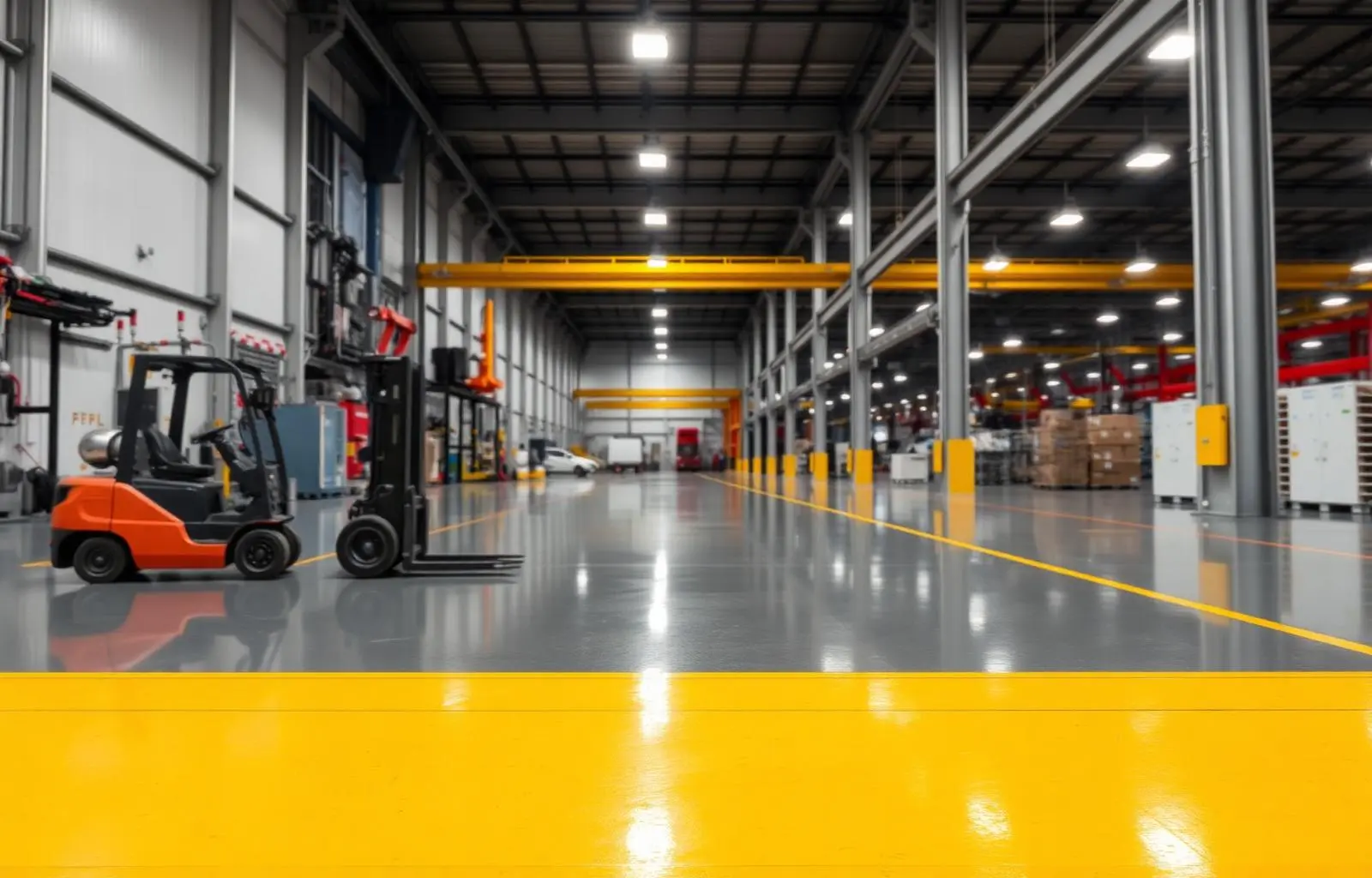
Factory floor solid epoxy with safety striping
· Commercial · Factories

Heavy load. Zero downtime.

A factory floor takes point loads from forklifts and equipment, chemical exposure from process lines, and absolutely cannot take the production line down for re-coat — the spec has to be right the first time, installed phased, and warranted for the actual use..

20+
Years installing
2,400+
Floors completed
5.0 ★
Google rating
10–15 Yr
Written warranty
— TL;DR

The five-second answer.

  • Cost $5–$18/sq ft depending on system and zone.
  • Solid epoxy with safety striping — general factory standard.
  • Urethane cement — aggressive chemical, thermal, or wash-down zones.
  • Phased install around production schedule. We don't take the line down.
— The problem

Factory floors fail at the line, not at the wall.

Concentrated forklift traffic, dropped tools, hot process spills, and aggressive degreasers — that's where coatings fail first. Most factory failures we see are from spec'ing a single product across an entire facility instead of zoning. The right plan is to map the actual use chemistry zone by zone, spec urethane cement in the aggressive areas (hot wash, chemical line) and solid epoxy in general zones with OSHA-compliant safety striping installed in-coating. Phased install around production. No downtime.

What we engineer around.

Substrate, environment, downtime — every spec gets evaluated before product is selected.

Point load rating

Compressive strength of the system rated against forklift PSI. Solid epoxy at 9,000+ PSI; urethane cement at 12,000+ PSI.

Chemical zone mapping

Use chemistry mapped zone by zone — coating spec'd against the actual chemicals, not generic 'industrial.'

Safety striping (OSHA)

Striping for traffic lanes and equipment outlines installed in-coating, not painted on after — won't wear off.

Thermal shock

Urethane cement only where hot process spills or freezer-to-warm cycling are routine.

Downtime

Phased night/weekend install. Polyaspartic re-coats with 24-hour return-to-service when full system isn't required.

Substrate condition

Existing slab profile (CSP) read on-site; ICRI CSP 4–6 typical prep for solid epoxy or urethane cement.

— Typical timeline

Phased 3–7 nights per zone depending on system. Polyaspartic re-coats: 24-hour turnaround.

— Typical cost range

$5–$18/sq ft installed. Solid epoxy at the low end; urethane cement at the high end. Striping included.

Final spec quoted on-site after substrate evaluation.

— Frequently asked

Specifics matter.

Can you install around our production schedule?
+
Yes — most of our factory work is phased night and weekend installs. We zone the floor against the production line, install one zone at a time with temporary barriers and equipment relocation coordinated with the plant manager. Polyaspartic re-coats can return to service in 24 hours; full solid epoxy systems need 48–72 hours per zone before forklift traffic. We've installed full plants without lost production.
What system handles forklift traffic?
+
Solid epoxy at 20–40 mil with a manufacturer compressive strength rating of 9,000+ PSI handles standard forklift traffic. Where load is heavier (steel-wheel pallet jacks, high-tonnage forklifts) we step up to a urethane cement at 12,000+ PSI. Both systems include in-coating safety striping for OSHA traffic-lane compliance, installed once and not painted on. Lifespan in heavy-load zones: 15–25 years.
Is urethane cement worth the cost?
+
In aggressive zones, yes — urethane cement is roughly 50% more expensive than solid epoxy but 5–10× more durable against thermal shock, hot oil, aggressive degreasers, and freezer cycling. Where the line uses steam-cleaning, hot caustic, or has freezer-to-warm transitions, urethane cement pays back inside 5 years. In general factory floor zones, solid epoxy is the better economic answer.
How does the safety striping hold up?
+
OSHA traffic-lane striping is installed in-coating — pigmented strips broadcast and locked into the basecoat, then top-coated. It can't wear off because it's not a paint layer; it's part of the floor system. Forklift traffic, sweepers, and degreasers don't lift it. Lifespan matches the underlying floor (15–25 years). Painted-on striping wears out in 6–18 months and gets repainted constantly — wrong spec.
Get a Free Estimate

Ready to spec your factory?

Reply within two business hours. On-site consult, written specification, and itemized quote — never a high-pressure sales visit.

(619) 304-6501

Start in 10 seconds

We'll prefill the rest. No spam, no pressure — your details only go to our estimating team.