SoCal Luxury Surfaces
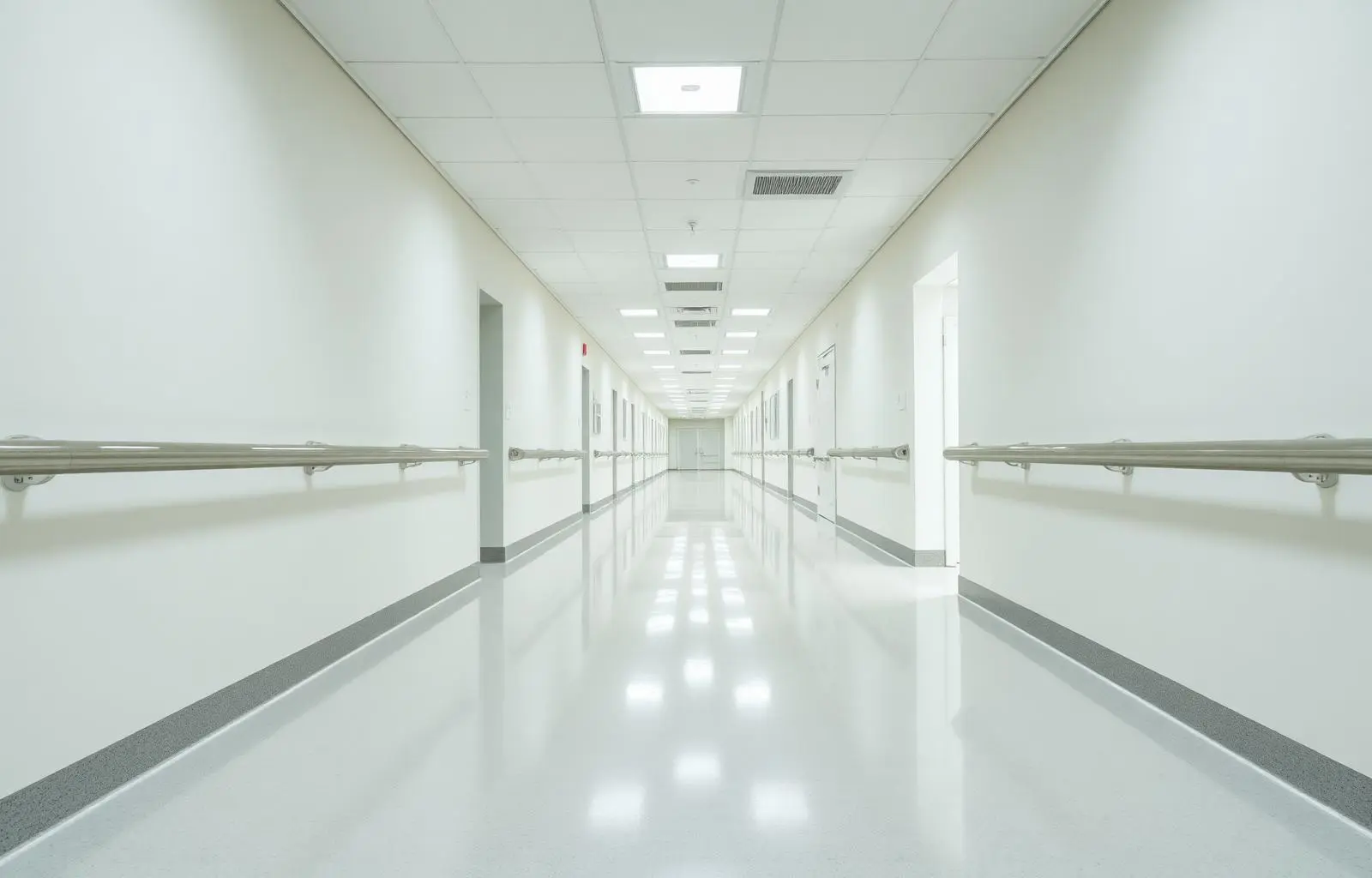
Hospital corridor with seamless quartz floor and cove base
· Commercial · Hospitals

Infection control. Zero compromise.

Hospital flooring is an infection-control system before it's anything else — fully seamless, integral cove base, cleanable to surgical-grade chemistry, and slip-rated wet for staff and patients moving through it 24/7..

20+
Years installing
2,400+
Floors completed
5.0 ★
Google rating
10–15 Yr
Written warranty
— TL;DR

The five-second answer.

  • Cost $9–$18/sq ft installed.
  • Epoxy quartz: standard hospital spec. USDA/FDA, seamless, integral cove.
  • Urethane cement: kitchens, cage wash, morgue — aggressive wash-down zones.
  • DCOF 0.6+ wet, infection-control cleanable, phased install around 24/7 operations.
— The problem

A joint in a hospital floor is an infection vector.

Tile grout, vinyl seam tape, and any joint or transition in a hospital floor harbors bacteria. The infection-control spec is fully seamless across the floor with an integral cove base 4–6 inches up the wall — no horizontal-vertical joint anywhere. Quartz and urethane cement systems install seamless and clean to surgical-grade chemistry. We sequence install around 24/7 operations: phased zones, temporary barriers, low-odor low-VOC chemistry, and a clean-room handoff.

What we engineer around.

Substrate, environment, downtime — every spec gets evaluated before product is selected.

Infection control

Fully seamless, integral cove base coved 4–6" up wall. No horizontal/vertical joint.

Cleanable chemistry

Surgical-grade disinfectants, hydrogen peroxide, quaternary ammonium — chemistry tested against the use.

Wet slip rating

ANSI A326.3 DCOF ≥ 0.6 wet for staff and patient safety. Aggregate broadcast standard.

24/7 phased install

Zones planned around department schedules. Temporary barriers, HEPA, low-VOC, low-odor chemistry.

Cove transitions

Cove-to-floor and cove-to-wall transitions detailed and inspected before topcoat.

Indoor air quality

Zero-VOC and low-odor chemistry available for occupied install. Coordinated with facility IAQ.

— Typical timeline

Phased 3–6 nights per zone. Surgical and clean spaces planned around department off-hours.

— Typical cost range

$9–$18/sq ft installed. Quartz at the low-mid; urethane cement at the high end.

Final spec quoted on-site after substrate evaluation.

— Frequently asked

Specifics matter.

What makes a floor 'infection-control'?
+
Fully seamless installation across the entire floor — no tile grout, no vinyl seams, no transition strips. Integral cove base coved 4–6 inches up the wall with no horizontal-to-vertical joint. Chemistry that cleans to surgical-grade disinfectants without degrading. Slip-rated wet to ANSI A326.3 DCOF 0.6+. All four together — that's the infection-control spec hospitals require.
Can you install while the hospital is open?
+
Yes — this is most of the hospital work we do. Phased zone installs (typically 1,000–2,000 sf nightly), temporary plastic-and-zipper barriers with HEPA negative-pressure containment, low-VOC and low-odor chemistry, and clean-room handoff at zone completion. Department schedules coordinate the zone plan; we've never closed a hospital department for a floor install.
Quartz or urethane cement for an OR?
+
Operating rooms typically spec quartz — USDA/FDA-rated, seamless, integral cove, DCOF 0.7+, and cleans to OR-grade chemistry. Urethane cement is the spec for hospital kitchens, cage wash, morgue, and central sterile — wherever steam, hot water, or aggressive caustic is in routine use. Cost difference is meaningful; we spec by zone, not building-wide.
What about static control flooring?
+
Electrostatic-dissipative (ESD) and static-conductive epoxy/quartz systems are available for surgical, electronics, and pharma areas requiring static control. Spec is to ANSI/ESD S20.20 or the facility's published standard. We grounding-strap-coordinate with the building electrical at install. Available on request.
How long will it last in a 24/7 facility?
+
Quartz: 15–20 years in patient-care zones. Urethane cement: 20–30 years even in cage wash and steam-clean kitchens. Re-coat at the high-traffic wear points (entrances, transfer zones) typically required at year 8–12. Hospital floors get cleaned harder than almost any other floor type, and quartz / urethane cement systems are engineered for it.
Get a Free Estimate

Ready to spec your hospital floor?

Reply within two business hours. On-site consult, written specification, and itemized quote — never a high-pressure sales visit.

(619) 304-6501
Start in 10 seconds

We'll prefill the rest. No spam, no pressure — your details only go to our estimating team.